Selecting the correct industrial bearing for high-load environments directly determines equipment reliability, lifecycle cost, and operational safety. Industrial Bearing Selection is not simply a catalog-based decision; it is an engineering process that integrates load analysis, operating conditions, material science, and lubrication strategy. High-load Bearings, especially in heavy machinery, must withstand extreme radial and axial forces while maintaining dimensional stability and fatigue resistance. This guide provides a structured, data-driven framework to support accurate selection decisions using updated industry practices and 2026 engineering standards.
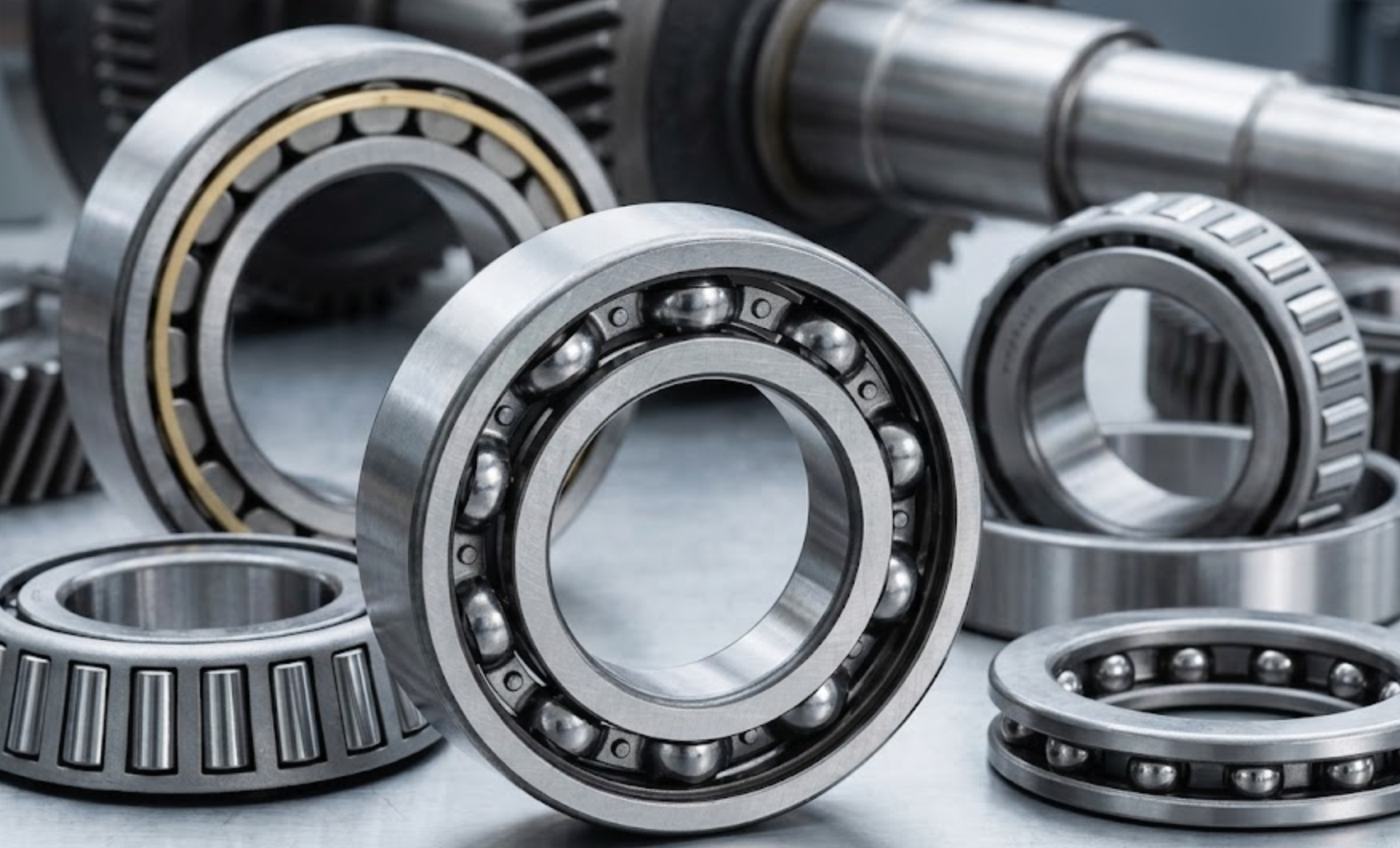
Industrial Bearing Selection Fundamentals for High-Load Applications
Industrial Bearing Selection refers to the systematic process of matching bearing design, material, and performance parameters with application requirements. High-load applications include mining equipment, construction machinery, steel processing lines, and wind turbines, where load magnitudes often exceed several hundred kilonewtons.
According to data from the U.S. Department of Energy (energy.gov), improper bearing selection contributes to nearly 40% of rotating equipment failures. This statistic highlights the importance of precise engineering evaluation rather than heuristic selection.
Key selection variables include:
- Load magnitude (static and dynamic)
- Load direction (radial, axial, combined)
- Rotational speed
- Operating temperature
- Environmental contamination
What Are High-load Bearings? Definition and Key Characteristics
High-load Bearings are engineered components designed to sustain elevated radial or axial forces without premature fatigue or deformation. These bearings typically feature reinforced raceways, optimized rolling elements, and advanced metallurgy.
Core characteristics include:
- High dynamic load rating (C value)
- Enhanced contact surface geometry
- Improved material hardness and fatigue resistance
- Low friction under heavy stress conditions
A report from the National Institute of Standards and Technology (nist.gov) indicates that bearing materials with optimized heat treatment can increase fatigue life by up to 30% in high-load scenarios.
Industrial Bearing Types and Uses in Heavy Machinery
Different bearing types respond differently to load conditions. Selecting the correct type is essential for achieving optimal performance.
Common High-load Bearing Types
| Bearing Type | Load Capacity | Typical Use Case |
|---|---|---|
| Cylindrical Roller Bearings | Very high radial | Gearboxes, compressors |
| Spherical Roller Bearings | High radial + axial | Mining, construction equipment |
| Tapered Roller Bearings | Combined loads | Automotive axles, heavy trucks |
| Needle Roller Bearings | Moderate radial | Compact industrial assemblies |
Spherical roller bearings are widely used in heavy-duty roller bearings applications due to their ability to accommodate shaft misalignment while maintaining high load capacity.
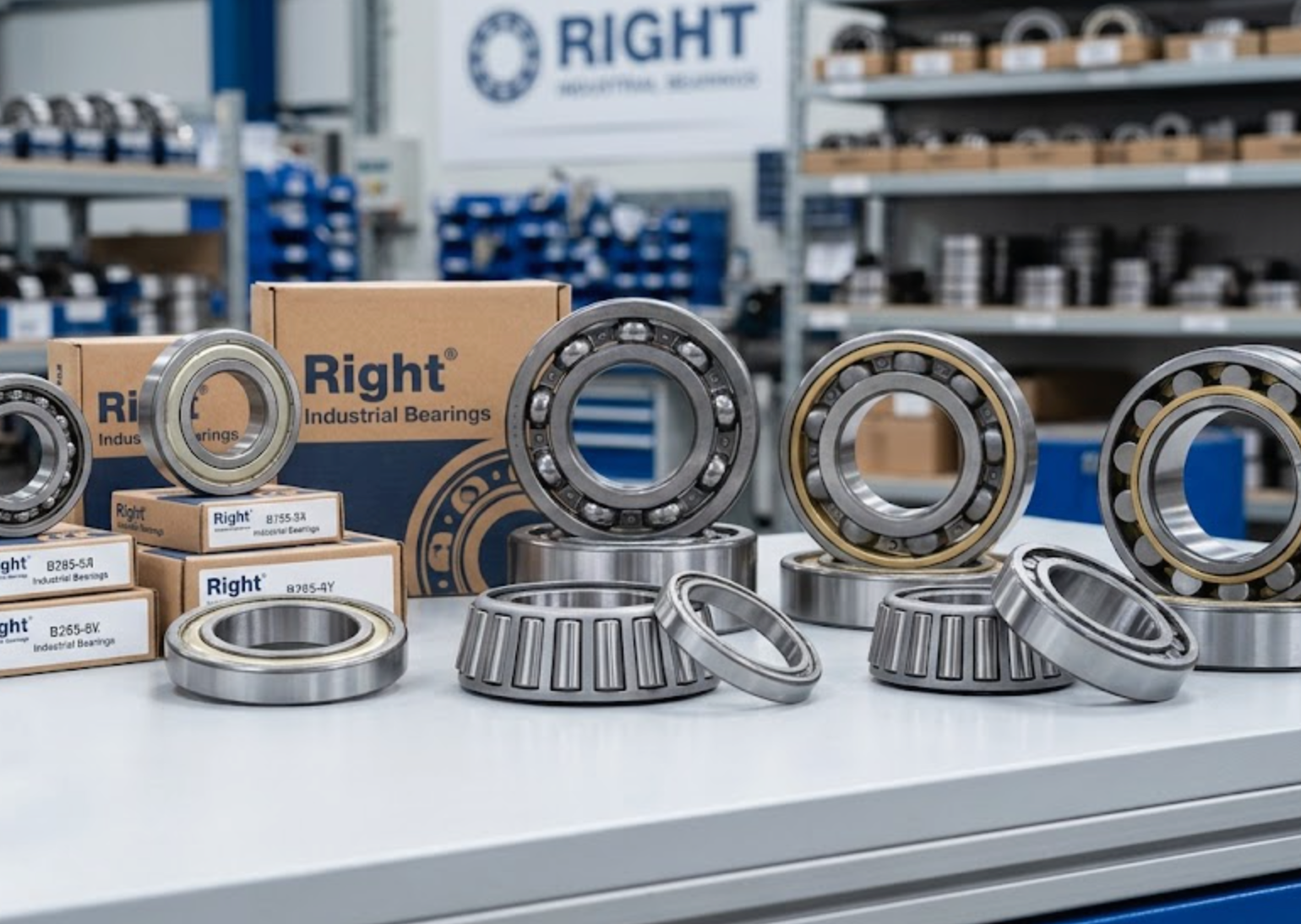
How to Choose Bearings for Heavy Machinery: Step-by-Step Framework
Selecting bearings for heavy machinery requires a structured engineering approach rather than trial-and-error.
Step 1: Define Load Conditions
Determine:
- Static load (maximum force at rest)
- Dynamic load (operating conditions)
- Shock loads (impact forces)
The International Organization for Standardization (ISO) provides calculation standards under ISO 281.
Step 2: Calculate Bearing Load Capacity
Bearing load capacity is typically calculated using dynamic load rating formulas.
L10=(CP)pL_{10} = \left(\frac{C}{P}\right)^pL10=(PC)p
Where:
- L10L_{10}L10 = bearing life (million revolutions)
- CCC = dynamic load rating
- PPP = equivalent dynamic load
- ppp = exponent (3 for ball bearings, 10/3 for roller bearings)
According to SKF engineering data (skf.com), increasing load by just 10% can reduce bearing life by approximately 30–40%, demonstrating the nonlinear relationship between load and lifespan.
Step 3: Evaluate Operating Environment
Environmental conditions significantly affect bearing performance:
- High temperatures reduce lubricant viscosity
- Dust contamination accelerates wear
- Moisture leads to corrosion
The U.S. Geological Survey (usgs.gov) reports that particulate contamination can reduce bearing life by up to 70% in mining environments.
Step 4: Select Material and Heat Treatment
Material selection directly impacts fatigue strength. Common materials include:
- Through-hardened bearing steel (AISI 52100)
- Case-hardened alloy steels
- Ceramic hybrid materials for extreme conditions
Advanced materials used in Demy Bearings 2026 catalog emphasize surface hardening technologies that improve wear resistance.
Step 5: Lubrication Strategy
Lubrication reduces friction and heat generation. Options include:
- Grease lubrication for sealed systems
- Oil bath lubrication for high-speed applications
- Circulating oil systems for heavy industrial loads
The American Society of Mechanical Engineers (asme.org) indicates that proper lubrication can extend bearing life by 50% or more.
Best Bearings for High Load Capacity: Engineering Comparison
Choosing the best bearings depends on balancing load capacity, durability, and application constraints.
Performance Comparison Table
| Parameter | Ball Bearings | Roller Bearings | Spherical Bearings |
|---|---|---|---|
| Load Capacity | Moderate | High | Very High |
| Shock Resistance | Low | Moderate | High |
| Misalignment Tolerance | Low | Low | High |
| Lifespan (Heavy Load) | Shorter | Longer | Longest |
Roller-based designs dominate high-load applications due to line contact instead of point contact, which distributes stress more effectively.
Demy Bearing Catalog 2026: Key Technical Highlights
The Demy Bearings product range focuses on high-load industrial applications with enhanced durability and performance consistency.
Key technical advancements include:
- Optimized roller geometry for improved load distribution
- Advanced surface finishing reducing friction coefficients
- Improved sealing systems for contamination resistance
- Extended service intervals under heavy-duty conditions
Typical product categories include:
- Heavy-duty roller bearings
- High-load spherical bearings
- Precision-engineered tapered bearings
Recommended internal links (example anchor strategy):
- Industrial bearing solutions for mining equipment
- Heavy-duty roller bearings for construction machinery
- High-load bearing systems for steel industry
- Bearing lubrication systems for industrial use
- Custom bearing design services
Common Mistakes in Industrial Bearing Selection
Incorrect Industrial Bearing Selection often results from oversimplification.
Frequent Errors
- Ignoring shock load factors
- Underestimating environmental impact
- Selecting based only on price
- Improper lubrication choice
- Misinterpreting load ratings
A study from MIT (mit.edu) shows that over 60% of premature bearing failures are preventable through correct selection and maintenance.
Key Takeaways for High-load Bearings Selection
- High-load Bearings require precise engineering analysis, not generic selection
- Load calculations must follow ISO standards for accuracy
- Roller bearings outperform ball bearings in heavy-load conditions
- Environmental factors significantly influence bearing lifespan
- Lubrication and material selection are critical for durability
FAQ: Industrial Bearing Selection for High-Load Applications
What are high-load bearings?
High-load bearings are specialized components designed to handle significant radial or axial forces in industrial machinery. These bearings use reinforced materials, optimized geometry, and advanced heat treatment processes to prevent deformation and fatigue under extreme operating conditions.
How to calculate bearing load capacity?
Bearing load capacity is calculated using dynamic load rating formulas such as L10 life equations. Engineers evaluate equivalent dynamic load, operating conditions, and expected lifespan to determine whether a bearing can sustain required loads without failure.
Which bearing is best for heavy loads?
Roller bearings, especially spherical and tapered types, are generally the best choice for heavy loads. These designs distribute stress over a larger contact area, making them more suitable for industrial machinery compared to ball bearings.
What factors affect bearing lifespan in heavy machinery?
Key factors include load magnitude, lubrication quality, contamination levels, temperature, and alignment. Even small increases in load or contamination can significantly reduce bearing life in high-load environments.
How to choose bearings for heavy machinery applications?
The selection process involves defining load conditions, calculating capacity, evaluating environmental factors, selecting materials, and determining lubrication methods. Using standardized engineering frameworks ensures reliability and prevents premature failure.
Post time: Apr-15-2026