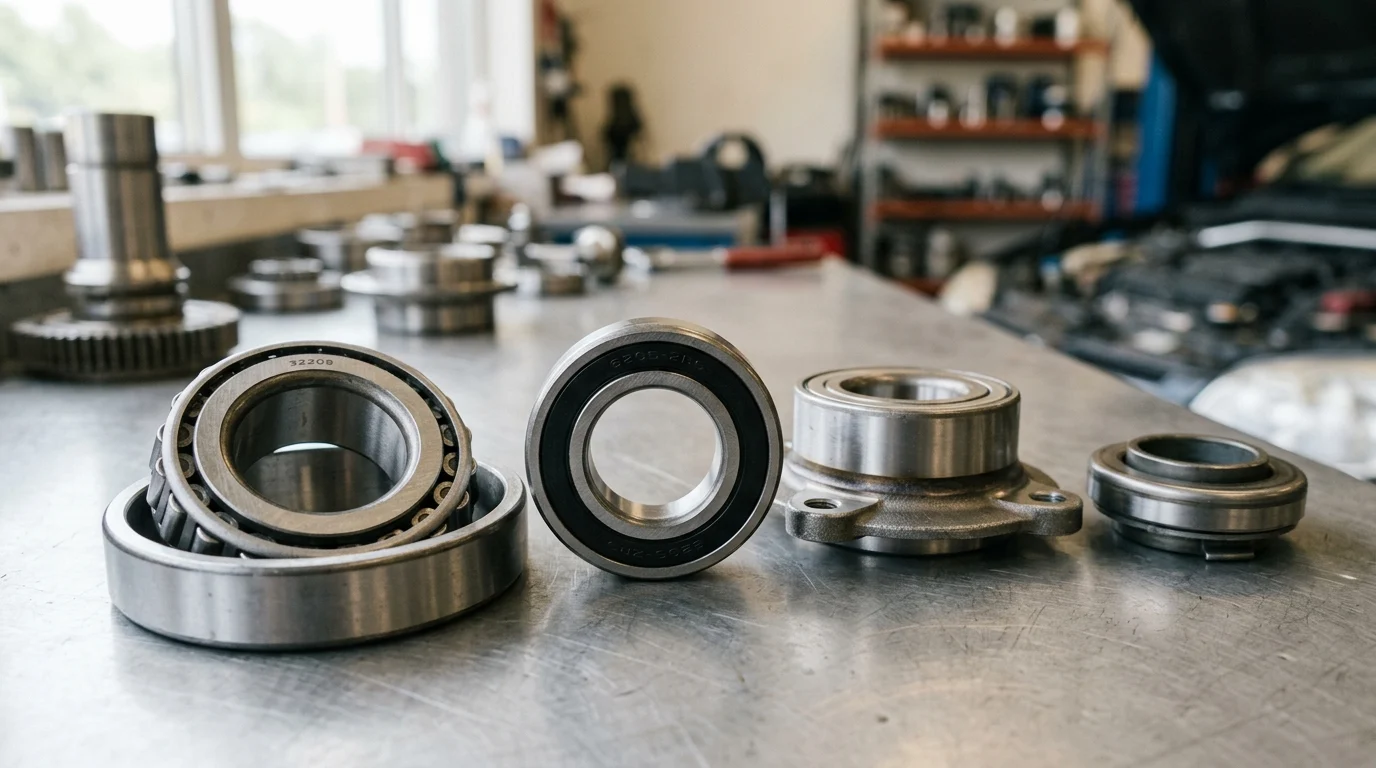
How Automotive Bearings Improve Vehicle Performance
Automotive bearings serve as the critical interface between moving components, directly influencing the mechanical efficiency, safety, and longevity of a vehicle. For B2B procurement teams and automotive engineers, understanding the operational impact of these components is foundational to optimizing supply chains and ensuring end-product reliability.
As the automotive industry evolves, the performance thresholds required from rolling elements have become increasingly stringent. Sourcing the right precision bearings is no longer merely a matter of friction reduction, but a strategic imperative for modern vehicle design.
Why Bearings Matter for Efficiency and Noise Control
The transition toward electric vehicles (EVs) and the enforcement of stricter global emissions standards have elevated the demand for low-friction, high-precision bearings. Advanced bearing designs can reduce mechanical friction by up to 30%, which translates directly into improved fuel economy for internal combustion engines and an estimated 1% to 3% extension in battery range for electric platforms.
Furthermore, tight control over Noise, Vibration, and Harshness (NVH) is paramount. High-quality bearings achieve vibration levels below 15 microns per second, ensuring the silent operation necessary to meet modern automotive cabin comfort standards. Precision tolerances, often measured against ABEC or ISO standards, ensure that energy transfer is maximized while thermal losses are kept to an absolute minimum.
Key Vehicle Systems That Rely on High-Precision Bearings
Modern vehicles integrate dozens of bearings across various high-stress environments, each engineered for specific kinematic duties. Wheel hub units require robust angular contact or tapered roller designs to manage combined radial and axial loads during dynamic cornering.
Inside the powertrain, transmission bearings must endure high torque and operating temperatures frequently exceeding 120°C. Meanwhile, EV traction motors present unique challenges, demanding deep groove ball bearings capable of sustaining rotational speeds in excess of 15,000 RPM while resisting electrical pitting through specialized ceramic rolling elements or advanced insulating coatings.
Types of Automotive Bearings and Selection Criteria
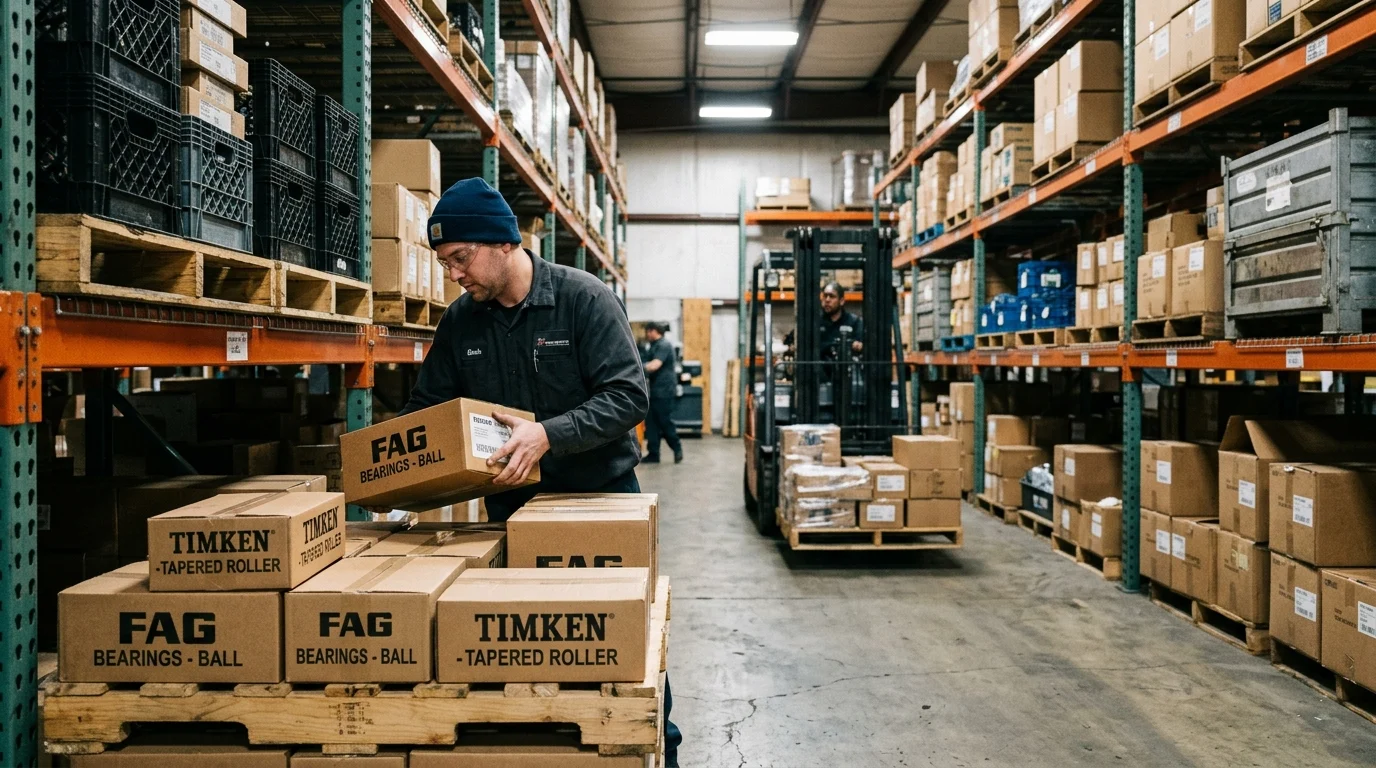
Procurement engineers must align bearing specifications with the precise kinematic demands of the target automotive assembly. Selecting the correct topology and material grade prevents premature fatigue, reduces lifecycle costs, and mitigates the risk of catastrophic system failure.
Ball, Tapered Roller, and Needle Bearings Compared
Different bearing architectures are engineered to handle specific load profiles and spatial constraints within the vehicle chassis and powertrain. Understanding these distinctions is critical for effective sourcing.
| Bearing Type | Primary Load Handled | Speed Capability | Typical Automotive Application |
|---|---|---|---|
| Deep Groove Ball | Radial (Moderate Axial) | Very High (up to 20,000 RPM) | Alternators, EV Motors, Water Pumps |
| Tapered Roller | Heavy Radial & Axial | Moderate | Wheel Hubs, Differential Pinions |
| Needle Roller | Heavy Radial (Compact) | Moderate to High | Transmissions, Universal Joints |
Ball bearings excel in high-speed, low-friction environments, whereas tapered roller bearings offer maximum rigidity for heavy-duty load paths. Needle bearings provide a superior load-carrying capacity within a minimal radial cross-section, making them ideal for densely packed transmission assemblies.
Technical Specifications Buyers Should Evaluate
Beyond physical dimensions, buyers must evaluate critical technical specifications such as internal clearance, load ratings, and lubrication. Bearings operating in high-heat zones require C3 or C4 internal clearances to accommodate thermal expansion up to 150°C without seizing.
The dynamic load rating (Cr) and static load rating (Cor) must exceed the application’s maximum anticipated forces by a reliable safety factor, typically at least 1.5 for automotive uses. Additionally, the choice of factory fill grease—such as polyurea-based thickeners for high-temperature stability—directly impacts the maintenance-free lifecycle of the component.
How to Match Bearing Type to Load and Application
Matching the bearing to the application requires a rigorous analysis of the duty cycle. For instance, a clutch release bearing must accommodate intermittent axial thrust loads and high rotational speeds immediately upon engagement. Conversely, suspension strut bearings require high static load resistance and smooth, low-speed articulation.
Engineering teams rely on L10 life calculations to ensure the selected bearing topology will survive a minimum of 300,000 kilometers under standard operating conditions before exhibiting any statistical signs of rolling contact fatigue.
How B2B Buyers Should Source Automotive Bearings
Sourcing high-performance automotive bearings requires moving beyond basic price comparisons to evaluate the underlying manufacturing competence and quality control infrastructure of the supplier. For OEMs and Tier 1 suppliers, vendor selection is a highly structured process.
Supplier Capabilities That Indicate Reliability
A reliable bearing manufacturer must demonstrate stringent quality management, universally evidenced by IATF 16949 (formerly ISO/TS16949) certification. Leading facilities utilize automated grinding and assembly lines coupled with in-house metallurgical testing.
These advanced capabilities ensure consistent raceway geometry and steel purity, driving defect rates down to sub-50 Parts Per Million (PPM). Buyers should verify that suppliers utilize advanced metrology, including roundness testers, profilometers, and contour graphs, to consistently validate precision grades.
How to Assess MOQ, Customization, and Cost
Commercial terms vary significantly based on the level of engineering required. Standard deep groove ball bearings often command Minimum Order Quantities (MOQs) between 2,000 and 5,000 units, with baseline unit costs ranging from $0.50 to $3.00 depending on size, precision class, and sealing type.
Custom-engineered solutions, such as integrated sensor bearings for ABS systems, may require dedicated tooling investments and higher MOQs exceeding 10,000 units. Procurement teams must actively negotiate volume tier pricing and tooling amortization to protect gross margins as vehicle production scales.
A Practical Qualification Process for Procurement Teams
The qualification process for automotive components is notoriously rigorous. Procurement teams must mandate a Production Part Approval Process (PPAP) Level 3 submission, which encompasses dimensional results, material certifications, and comprehensive control plans.
Before mass production is authorized, buyers should request a pilot run of 100 to 300 pieces to validate manufacturing stability and capability index (Cpk). On-site or third-party factory audits remain essential to assess raw material traceability, machine maintenance schedules, and the supplier’s protocols for handling non-conforming inventory.
Compliance, Packaging, and Logistics for Automotive Bearings
Securing high-quality bearings is only half the procurement equation; ensuring those precision components arrive at the assembly line free of contamination, corrosion, and customs delays is equally critical to maintaining production schedules.
Quality Documentation and Traceability Requirements
Automotive OEMs require unbroken traceability from the steel mill to the final vehicle assembly. Bearing suppliers must provide comprehensive quality documentation, including heat treatment logs, steel grade certificates (such as SAE 52100 or GCr15), and batch-level dimensional inspection reports.
Each production batch should be laser-etched with unique alphanumeric codes to facilitate rapid root-cause analysis in the event of a warranty claim. Failure to maintain strict IATF 16949 documentation can result in severe financial penalties, line stoppages, or permanent vendor disqualification.
Export Packaging and Corrosion Protection Considerations
Bearings are highly susceptible to oxidation and micro-pitting during maritime transit. Export packaging must utilize Volatile Corrosion Inhibitor (VCI) bags and premium rust-preventative oils, guaranteeing a minimum shelf life of 24 to 36 months under standard warehouse conditions.
Outer packaging typically consists of double-corrugated cartons packed onto heat-treated wooden pallets compliant with ISPM 15 standards. For heavy-duty industrial or commercial vehicle bearings, reinforced wooden crates are necessary to prevent deformation during container loading and unloading.
Trade and Import Factors Buyers Should Review
Global trade dynamics heavily influence bearing procurement strategies. Buyers must classify shipments under accurate Harmonized System (HS) codes, such as 8482.10 for ball bearings or 8482.20 for tapered roller bearings, to ensure accurate tariff assessment.
Depending on the country of origin and destination, anti-dumping duties (ADD) can inflate landed costs by 20% to over 100%. Factoring in standard ocean freight, buyers should plan for 30 to 45 days of transit time, necessitating robust safety stock calculations to prevent costly assembly line disruptions.
How OEMs and Distributors Can Build a Bearing Buying Strategy
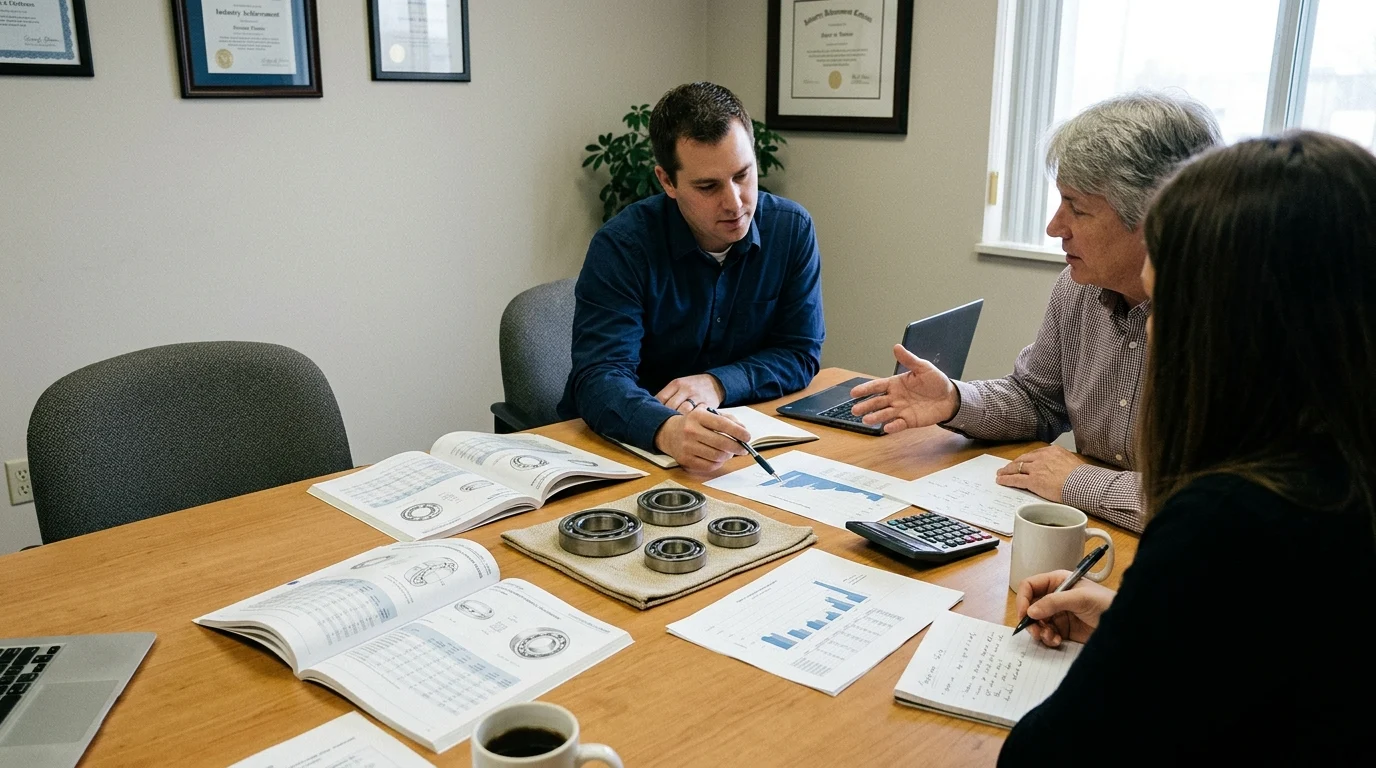
B2B buyers, wholesale distributors, and automotive OEMs must adopt a strategic approach to bearing procurement that prioritizes long-term stability and total cost of ownership over short-term, transactional unit savings.
How to Balance Unit Price and Lifecycle Value
While low-cost bearings may offer upfront margin improvements, premature failures incur catastrophic downstream costs. A minor $2 saving on a wheel hub bearing can easily result in a $300 warranty claim, severe brand damage, and potential safety recalls.
| Cost Factor | Transactional Sourcing Model | Strategic Sourcing (High-Quality) | Net Impact |
|---|---|---|---|
| Unit Price | $3.00 | $3.50 | +$0.50 upfront cost |
| Defect Rate | 500 PPM | < 50 PPM | 90% reduction in line rejections |
| Warranty Claims | 1.5% annually | 0.1% annually | Significant aftermarket savings |
| Total Cost of Ownership | High (hidden costs) | Low (predictable) | Superior lifecycle ROI |
Evaluating the Total Cost of Ownership (TCO) requires factoring in sorting costs, assembly downtime, and expected service life, consistently proving that investing in IATF 16949-certified components yields superior financial performance.
How to Build a Preferred Supplier Strategy
Building a resilient supply chain requires transitioning from spot purchasing to strategic partnerships. Distributors and OEMs should implement a dual-sourcing strategy, allocating approximately 70% of volume to a primary preferred supplier with proven capacity, and 30% to a qualified secondary source to mitigate geopolitical or logistical risks.
Long-Term Agreements (LTAs) spanning 12 to 36 months should include raw material indexing clauses—tying unit costs to global steel indices. This approach equitably shares market volatility risks between the buyer and the manufacturer, ensuring stable, uninterrupted supply through fluctuating economic cycles.
Key Takeaways
- Wholesale sourcing and supply-chain implications for Automotive Bearings
- Specifications, compliance, and commercial terms buyers should validate
- Actionable recommendations for distributors and procurement teams
Frequently Asked Questions
How do automotive bearings improve vehicle efficiency?
They reduce friction in wheels, motors, and transmissions, helping improve fuel economy or EV range while lowering heat and wear.
Which bearing types are commonly used in automotive systems?
Deep groove ball bearings suit high-speed motors and pumps, tapered roller bearings fit wheel hubs, and needle bearings work well in compact transmissions.
What specifications should buyers check before ordering automotive bearings?
Confirm load ratings, internal clearance, speed limit, operating temperature, lubrication type, and required precision grade for the exact vehicle application.
Are DEMY Bearings suitable for OEM and distributor automotive sourcing?
Yes. DEMY offers a broad automotive bearing range with catalog support, consistent production capacity, and ISO/TS16949-based manufacturing.
How can I choose the right bearing for an EV motor or wheel hub?
Use deep groove or insulated ceramic options for high-speed EV motors, and tapered or angular contact designs for wheel hubs with combined radial and axial loads.
Post time: Apr-16-2026