Introduction
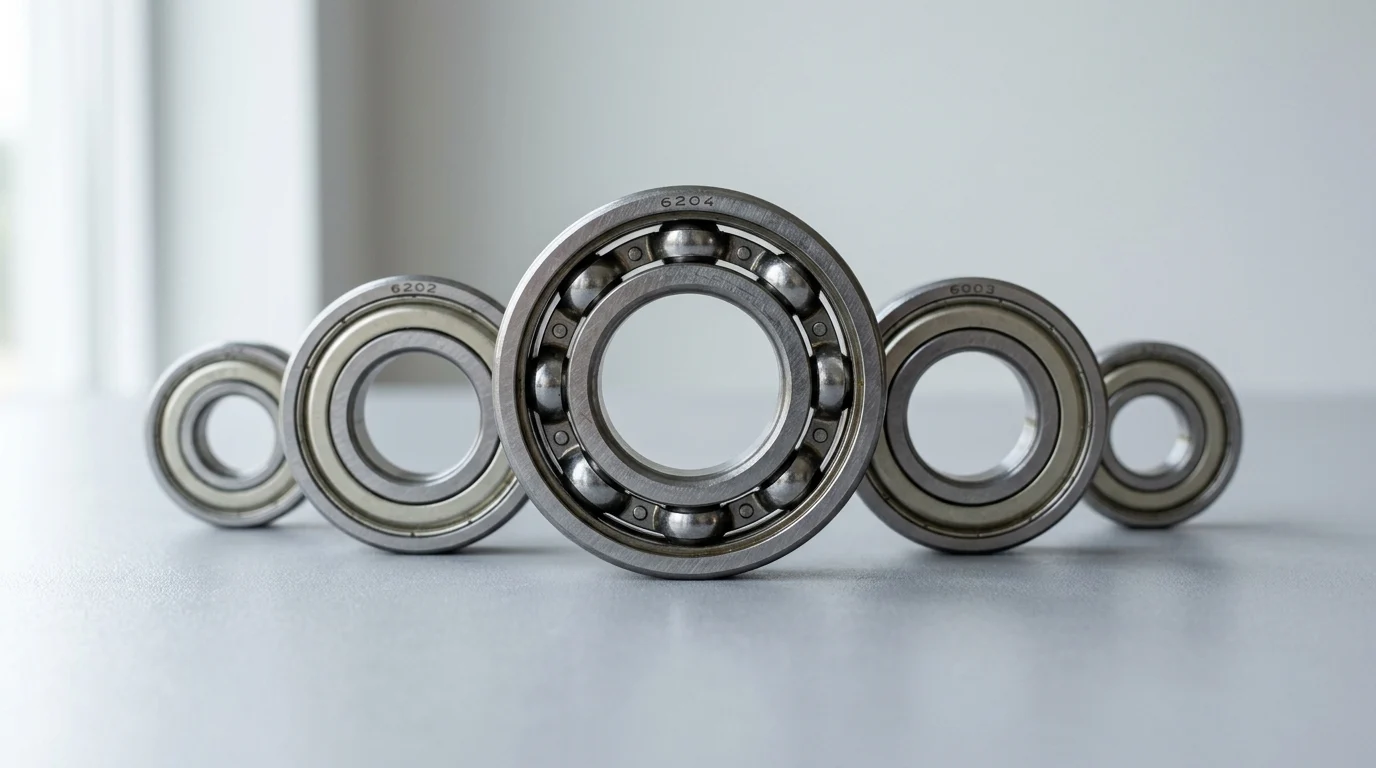
When equipment must run fast without sacrificing stability, bearing choice becomes a design constraint rather than a minor detail. Deep groove ball bearings are widely used in high-speed applications because they combine low friction, compact geometry, and reliable handling of radial loads with moderate axial loads. Their design supports smooth rotation, manageable heat generation, and long service life across electric motors, pumps, fans, gearboxes, and precision machinery. This article explains the practical advantages that make them effective at elevated speeds, including efficiency, operating limits, lubrication behavior, and application fit, so readers can better judge when this bearing type is the right solution.
Why Deep Groove Ball Bearings Matter in High-Speed Applications
Deep groove ball bearings (DGBBs) represent the most ubiquitous rolling element configuration in modern engineering, largely due to their exceptional versatility and capacity to accommodate high-speed rotational demands. Unlike bearing designs optimized solely for heavy, low-speed loads, DGBBs strike a critical balance between structural resilience and minimal rolling resistance.
How to frame their role in high-speed systems
In high-speed systems, DGBBs serve the primary function of minimizing rolling resistance while effectively managing centrifugal forces. The limiting speed of a bearing is often denoted by its dN value, calculated by multiplying the bearing bore diameter in millimeters by its operational speed in revolutions per minute (RPM). Standard deep groove ball bearings routinely achieve dN values of 500,000, while specialized, high-precision variants can exceed 1,000,000 dN. This high-speed capability establishes them as essential components for maintaining the kinematic stability of rapid-cycle machinery.
Which industries rely on them most
Applications demanding rigorous high-speed performance heavily utilize DGBB technology across multiple sectors. In the automotive industry, electric vehicle (EV) traction motors rely on these bearings to sustain continuous operational speeds exceeding 20,000 RPM without catastrophic thermal breakdown. Additionally, industrial machine tool spindles, aerospace auxiliary power units, and high-velocity HVAC blowers depend on the low-friction characteristics of DGBBs to ensure continuous, reliable operation under demanding dynamic stresses.
What Makes Deep Groove Ball Bearings Suitable for High-Speed Duty
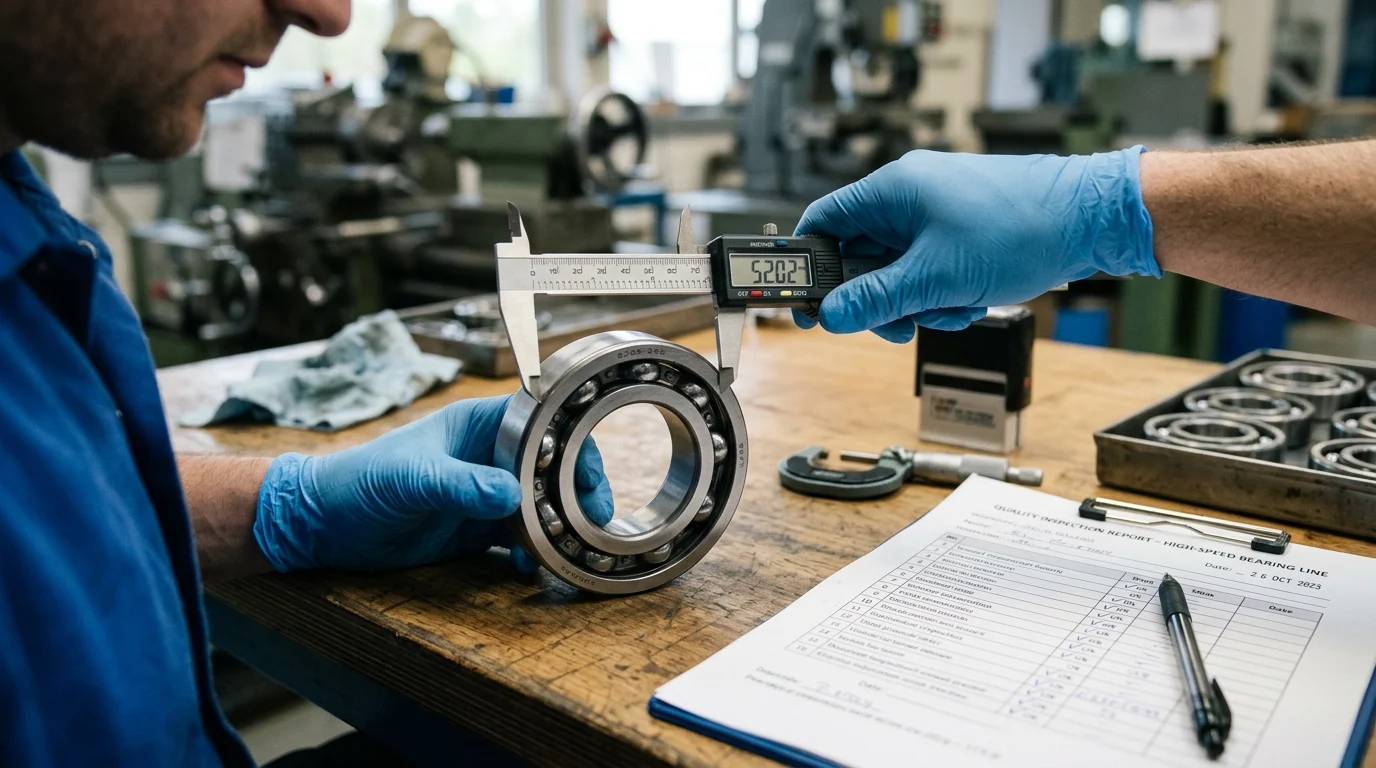
The inherent geometry and material composition of deep groove ball bearings dictate their operational limits. Optimizing these internal elements is critical for mitigating heat generation, managing centrifugal stress, and preventing premature fatigue at elevated velocities.
Which design features support higher speeds
The fundamental architecture of a DGBB involves deep, uninterrupted raceway grooves that closely conform to the spherical rolling elements. This conformity ratio—typically engineered between 51% and 53% of the ball diameter—strikes a vital mechanical balance. A tighter conformity increases the overall load capacity but generates excessive friction and heat at high speeds, whereas a looser conformity reduces friction but compromises load distribution. This precise geometric optimization allows the bearing to handle moderate radial loads and bidirectional axial loads simultaneously without overheating.
How cage design, clearance, and precision affect performance
At extreme rotational speeds, standard stamped steel cages are prone to failure due to high centrifugal forces and poor dynamic balance. Consequently, high-speed applications frequently utilize machined brass, phenolic resin, or polyetheretherketone (PEEK) cages, which offer superior stability and lower mass. Engineers must also specify appropriate internal clearances, such as C3 or C4, to accommodate the thermal expansion of the inner ring caused by high-speed friction. Precision is equally vital; specifying ISO P4 (ABEC 7) tolerances ensures dimensional accuracy, drastically reducing runout and destructive vibration at high frequencies.
Which materials and heat treatment improve fatigue life
While high-carbon chromium steel (AISI 52100) remains the industry standard, advanced metallurgy and treatments are necessary for extreme duty cycles. Vacuum-degassed steel minimizes non-metallic inclusions, significantly extending the sub-surface fatigue life of the raceways. For the most demanding high-speed regimes, engineers deploy hybrid bearings featuring silicon nitride (Si3N4) ceramic balls. Ceramic balls are approximately 40% less dense than their steel counterparts. This mass reduction drastically limits the centrifugal loading on the outer raceway and lowers operating temperatures, thereby extending both bearing and lubricant life.
How Deep Groove Ball Bearings Compare with Other Bearing Types
Selecting the optimal bearing configuration requires a rigorous comparison of kinematic behavior, load distribution, and friction coefficients across different rolling element designs. While multiple bearing types can support rotational motion, their high-speed profiles vary significantly.
Where they outperform angular contact and roller bearings
DGBBs offer distinct advantages over angular contact ball bearings (ACBBs) and cylindrical roller bearings in specific high-speed scenarios. While cylindrical roller bearings provide superior radial load capacity, their line-contact geometry generates higher friction, effectively capping their maximum speed threshold. Conversely, DGBBs utilize point contact, minimizing the friction torque. Compared to ACBBs, which require precise axial preloading and paired arrangements to handle bidirectional thrust, a single DGBB can accommodate thrust in both directions natively, simplifying shaft design and reducing assembly complexity.
Which performance factors should be compared
Engineers must evaluate friction torque, heat dissipation, and limiting speeds when comparing bearing typologies. High-speed performance is heavily dictated by the bearing’s ability to operate without generating excess heat that degrades the lubricant. The table below illustrates typical comparative metrics for standardized bearings of similar bore dimensions operating under high-speed conditions.
| Bearing Type | Contact Geometry | Relative Speed Capability | Friction Coefficient (μ) | Dominant Load Capacity |
|---|---|---|---|---|
| Deep Groove Ball | Point | Excellent (Up to 1.0M dN) | 0.0015 | Radial & Moderate Axial |
| Angular Contact | Point | Excellent (Up to 1.2M dN) | 0.0020 | Radial & High Unidirectional Axial |
| Cylindrical Roller | Line | Moderate (Up to 0.5M dN) | 0.0011 | High Radial Only |
What trade-offs engineers should consider
The primary trade-off when selecting a DGBB over an ACBB is the limitation in axial load capacity. DGBBs operate with a nominal 0° contact angle, whereas ACBBs feature engineered contact angles ranging from 15° to 40°, allowing them to support substantially higher thrust loads. If a high-speed application involves dominant, heavy axial forces—such as in specialized machine tool spindles or heavy-duty pumps—the DGBB may experience premature raceway fatigue. Engineers must weigh the mechanical simplicity and lower baseline friction of the DGBB against the robust, unidirectional thrust capabilities of angular contact alternatives.
Which Specifications Matter Most for Reliable High-Speed Performance
Translating theoretical bearing advantages into reliable field performance requires meticulous attention to operational specifications. High-speed environments are unforgiving of suboptimal lubrication, inadequate sealing, or improper tolerancing.
How speed rating and load rating influence selection
The dynamic load rating (C) and the thermal reference speed are foundational metrics in the selection process. While high load ratings indicate robust fatigue resistance, over-sizing a bearing for a high-speed application can be highly detrimental. Larger rolling elements increase the centrifugal forces and internal friction, paradoxically reducing the limiting speed. Engineers typically aim for an L10h basic rating life exceeding 10,000 hours by carefully matching the required dynamic capacity with a physical footprint that maintains a safe operating speed margin.
Why lubrication and sealing are critical
At elevated speeds, the hydrodynamic film thickness separates the rolling elements from the raceways, preventing metal-to-metal contact. For grease-lubricated DGBBs, the grease fill volume is strictly controlled—typically limited to 25% to 30% of the bearing’s free internal space—to prevent churning and excessive heat generation. Sealing mechanisms also play a critical role; standard contact seals (RS) create severe aerodynamic and physical drag. Therefore, high-speed applications necessitate non-contact labyrinth seals (RZ or ZZ) that exclude contaminants without imposing a frictional speed penalty.
How tolerance, vibration, noise, and preload affect results
High rotational velocity amplifies minor dimensional inaccuracies, leading to destructive resonance and accelerated wear. Specifying tight tolerances (ABEC 5 or higher) and stringent vibration classes (such as V3 or V4) ensures smooth operation. Additionally, applying a controlled axial preload eliminates internal clearance, ensuring stable ball kinematics and preventing skidding during rapid acceleration.
| Lubrication Method | Maximum Speed Factor (dN) | Cooling Efficiency | Maintenance Complexity |
|---|---|---|---|
| Standard Grease | Up to 400,000 | Low | Low (Sealed for life) |
| Oil Bath | Up to 500,000 | Moderate | Moderate (Requires housing) |
| Oil Mist / Air-Oil | > 1,000,000 | High | High (Requires external system) |
How to Select the Right Deep Groove Ball Bearing

Procurement and engineering teams must collaborate to navigate the complex landscape of bearing selection, ensuring that the chosen components meet both technical requirements and commercial viability for high-speed systems.
What selection process buyers and engineers should follow
The selection workflow begins with a comprehensive load-speed profile mapping. Engineers must quantify radial forces, axial thrust, operating temperatures, and peak RPM. Standard 52100 steel bearings are typically dimensionally stabilized for operating temperatures up to 120°C. If the high-speed application generates localized heat exceeding this threshold, buyers must specify heat-stabilized variants (e.g., S0 or S1 rings) to prevent catastrophic dimensional expansion, loss of clearance, and subsequent seizure during operation.
Which sourcing and quality checks reduce risk
Mitigating supply chain risk involves rigorous supplier qualification and quality assurance protocols. Sourcing high-speed DGBBs requires verifying material certifications, specifically ensuring the use of ultra-clean, vacuum-degassed steel. Quality control checks should include auditing the manufacturer’s metrology reports for critical parameters. For instance, demanding high-speed applications require a radial runout of less than 2.5 micrometers to guarantee dynamic stability. Independent batch testing for vibration and acoustic emissions further safeguards against premature field failures.
What final decision guidelines to use
Final procurement decisions should be guided by a Total Cost of Ownership (TCO) analysis rather than unit price alone. While hybrid ceramic DGBBs or ultra-precision ABEC 7 bearings command a significant premium, their extended service life, reduced maintenance intervals, and lower lubrication requirements often yield a lower TCO in critical high-speed machinery. By aligning technical specifications with lifecycle economic models, organizations can achieve optimal reliability and operational efficiency in their high-speed rotational systems.
Key Takeaways
- The most important conclusions and rationale for Deep Groove Ball Bearings
- Specs, compliance, and risk checks worth validating before you commit
- Practical next steps and caveats readers can apply immediately
Frequently Asked Questions
Why are deep groove ball bearings good for high-speed applications?
They use low-friction point contact, balanced raceway geometry, and stable ball motion to reduce heat and support high RPM operation in motors, fans, conveyors, and precision equipment.
What clearance is best for high-speed deep groove ball bearings?
C3 or C4 clearance is often used when heat causes inner-ring expansion. The best choice depends on speed, load, fit, and operating temperature.
When should I choose ceramic hybrid deep groove ball bearings?
Choose ceramic hybrid bearings for very high speeds, lower heat generation, longer lubricant life, or applications where reduced centrifugal force is critical.
How do deep groove ball bearings compare with roller bearings at high speed?
Deep groove ball bearings usually run faster because their point contact creates less friction than roller bearings, though roller bearings handle heavier radial loads.
Can DEMY supply deep groove ball bearings for OEM projects?
Yes. DEMY Bearings manufactures and exports deep groove ball bearings for OEMs, distributors, and industrial buyers, with catalog support and quality-focused production.
Post time: Apr-22-2026