Introduction
Choosing auto bearings is not just a parts decision; it directly affects friction, heat, noise, service life, and overall vehicle reliability. The right bearing must match operating speed, load direction, temperature range, lubrication method, and application type, whether in wheel hubs, transmissions, or electric motors. A poor match can lead to premature wear, efficiency losses, and costly failures under demanding conditions. This article explains the main bearing types, the specifications that matter most, and the practical factors to compare before selecting one, so you can make a more informed choice for both performance and long-term durability.
Why Auto Bearings Matter
Automotive bearings act as the critical interface between stationary and rotating components, facilitating seamless motion while bearing extreme dynamic loads. From the engine block and transmission to the wheel hubs and differential, these precision components are foundational to vehicle safety, efficiency, and operational longevity.
Performance and durability impact
The efficiency of a vehicle’s drivetrain and wheel assemblies relies heavily on minimizing parasitic friction. Optimized auto bearings can reduce overall drivetrain energy losses by 1.5% to 3.0%, a crucial margin for meeting stringent emissions targets in internal combustion engines (ICE) and extending the range of electric vehicles (EVs). Furthermore, bearing durability directly dictates the noise, vibration, and harshness (NVH) profile of the vehicle over its lifecycle, ensuring that mechanical tolerances remain tight and cabin acoustics remain uncompromised.
Risks of incorrect bearing selection
Specifying incorrect bearings exposes automotive architectures to severe mechanical and commercial risks. Undersized load ratings or inadequate thermal tolerances inevitably lead to premature spalling, localized overheating, and eventual catastrophic failure. In modern EV platforms, where electric motors routinely exceed rotational speeds of 15,000 RPM, selecting a bearing with insufficient speed capability or improper cage material risks rapid thermal runaway, lubricant degradation, and complete motor seizure.
Auto Bearing Types and Key Specifications
Selecting the optimal bearing architecture requires a rigorous evaluation of the mechanical forces at play within the specific automotive subsystem. Each bearing type offers distinct kinematic advantages tailored to varying load vectors and spatial constraints.
Ball, roller, tapered, needle, and hub bearings
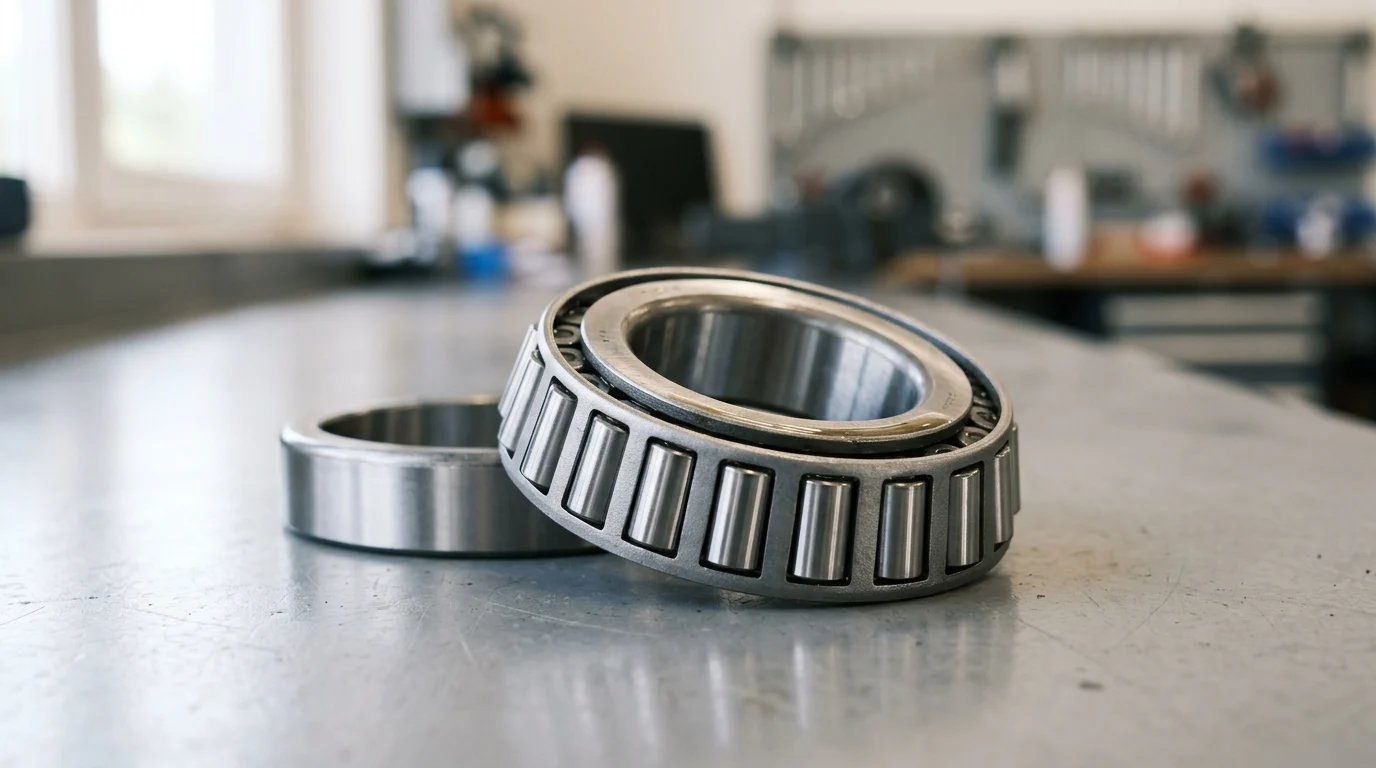
Deep groove ball bearings are predominantly utilized in high-speed applications like alternators and electric motors due to their low frictional torque. Cylindrical roller bearings excel in accommodating heavy radial loads within transmissions. Tapered roller bearings are the industry standard for wheel hubs, as their conical geometry manages simultaneous radial and axial loads efficiently. Needle bearings provide high load capacity in space-constrained environments such as planetary gear sets. Meanwhile, integrated hub bearing assemblies (Generations 1, 2, and 3) simplify installation and reduce unsprung mass by consolidating the bearing, mounting flange, and ABS sensors into a single unit.
Load rating, speed, clearance, and fit
Engineers must calculate the dynamic load rating (C) for operational lifespan and the static load rating (C0) to prevent plastic deformation under shock loads. Speed ratings dictate the maximum RPM before lubrication breaks down or thermal limits are breached. Internal clearance is equally critical; for instance, a C3 clearance designation typically provides 13 to 28 micrometers of radial play in a standard ball bearing, allowing for thermal expansion in high-temperature engine compartments without inducing excessive preload or binding.
How to compare bearing options
To systematically compare bearing options, engineers utilize matrix evaluations that weigh geometric constraints against load profiles and speed requirements. The table below outlines the primary operational characteristics of common automotive bearings.
| Bearing Type | Primary Load Capacity | Speed Capability | Typical Auto Application |
|---|---|---|---|
| Deep Groove Ball | Radial (Moderate) | Very High | Alternators, EV Motors |
| Tapered Roller | Radial & Axial (High) | Moderate | Wheel Hubs, Differentials |
| Cylindrical Roller | Radial (Very High) | High | Transmissions |
| Needle Roller | Radial (High) | Moderate | Gearboxes, U-Joints |
Matching Bearings to Operating Conditions
A bearing’s theoretical life is only achievable if the component is precisely matched to its real-world operating environment. Environmental and operational stressors dictate bearing material, cage design, and lubrication choices.
Temperature, contamination, vibration, and misalignment
Automotive bearings routinely operate in harsh microclimates, with ambient temperatures ranging from -40°C during winter cold-starts to exceeding 150°C near exhaust manifolds or heavy braking systems. Managing contamination requires robust sealing solutions, such as dual-lip elastomeric seals (2RS), which prevent the ingress of water and road silica. Furthermore, suspension and drivetrain components must tolerate high-frequency vibrations and minor shaft misalignments, often necessitating self-aligning bearing profiles or specialized cage designs to prevent edge loading and premature fatigue.
Common failure modes and warning signs
Recognizing early warning signs such as elevated NVH levels or localized heat generation can prevent secondary damage to surrounding components. Common mechanical failure modes include subsurface fatigue spalling, brinelling from impact loads, and abrasive wear from contaminated grease. In the rapidly expanding EV sector, fluting—caused by electrical arcing across the bearing raceway—is a primary concern. This phenomenon typically occurs when induced shaft voltages exceed 1.5V to 2.0V, requiring the specification of ceramic rolling elements or specialized conductive greases to mitigate electrical discharge.
Step-by-step selection process
The selection process follows a deterministic engineering workflow. First, engineers map the multidirectional force vectors and calculate the required L10 nominal fatigue life based on vehicle warranty targets. Next, environmental stressors are analyzed to determine the optimal seal configuration and lubricant viscosity index. Finally, the shaft and housing tolerances are defined to ensure the correct interference fit, preventing fretting corrosion while maintaining the required internal clearance during dynamic operation.
Sourcing, Quality Control, and Compliance
Securing high-performance auto bearings extends beyond engineering specifications; it requires rigorous supply chain management and strict adherence to global automotive quality protocols to ensure batch-to-batch consistency.
OEM, aftermarket, and private-label options
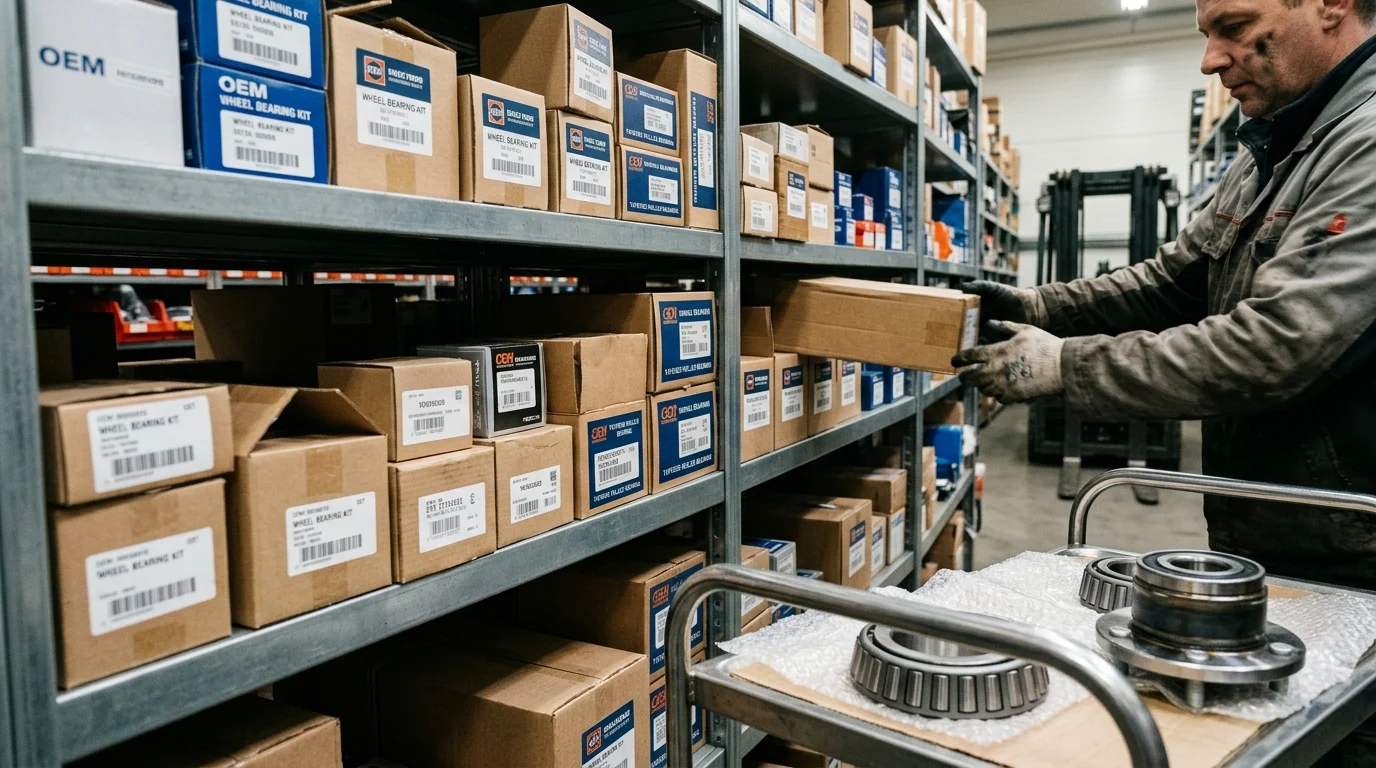
The supply chain is segmented into OEM (Original Equipment Manufacturer) suppliers, aftermarket replacements, and private-label brands. Tier 1 OEM bearings offer the highest traceability and are engineered for specific vehicle platforms, ensuring exact fitment and longevity. Aftermarket and private-label options provide cost advantages for legacy platforms and out-of-warranty repairs, but they require careful vetting to ensure their metallurgical properties and dimensional tolerances match the original equipment specifications.
Manufacturing and quality inspection indicators
Advanced manufacturing relies on precise grinding and honing processes to minimize friction and wear. Quality inspection protocols prioritize macro-geometry, such as roundness and cylindricity, alongside micro-geometry metrics. For high-precision automotive applications, raceway surface roughness (Ra) must consistently measure below 0.2 micrometers. Additionally, 100% automated acoustic and vibration testing is employed on production lines to detect microscopic subsurface defects before the components are packaged and shipped to the assembly plant.
Standards, certifications, and supplier documents
Suppliers must operate under stringent quality management systems, predominantly IATF 16949, which builds upon ISO 9001 with specific automotive requirements for defect prevention and supply chain variation reduction. Component validation is governed by the Production Part Approval Process (PPAP), which ensures the supplier understands all customer engineering design records.
| PPAP Level | Submission Requirement | Use Case |
|---|---|---|
| Level 1 | Warrant only | Minor changes to existing parts |
| Level 2 | Warrant with product samples and limited data | Standard localized supplier updates |
| Level 3 | Warrant with product samples and complete supporting data | New part introduction or major engineering changes |
| Level 4 | Warrant and other requirements defined by customer | Highly customized OEM requests |
| Level 5 | Warrant with product samples reviewed at supplier location | High-risk components or new supplier audits |
Decision Framework for Choosing Auto Bearings
Finalizing the specification of an auto bearing requires an objective framework that balances engineering ideals with commercial viability, ensuring that the chosen component delivers optimal value over the vehicle’s lifespan.
Balancing cost, performance, and service life
Procurement decisions must center on the Total Cost of Ownership (TCO) rather than the absolute minimum unit price. Specifying a sub-optimal bearing to save marginal costs upfront often results in disproportionate warranty expenses and reputational damage. For example, an OEM may willingly absorb a 15% to 20% cost premium for an advanced Generation 3 hub unit if the enhanced sealing and integrated sensors reduce field warranty claim rates from an industry average of 200 PPM (parts per million) down to below 50 PPM over a standard 100,000-mile lifecycle.
How to shortlist the best option
To shortlist the best option, cross-functional teams comprising engineering, quality, and procurement professionals utilize weighted scoring matrices. These matrices evaluate suppliers based on technical capability, historical defect rates, production capacity, and logistical resilience. Once the top candidates are identified, physical prototypes undergo rigorous bench testing—including accelerated life testing, extreme temperature cycling, and salt-spray exposure—to validate that the theoretical L10 life aligns with real-world performance, ultimately securing a robust automotive component.
Key Takeaways
- The most important conclusions and rationale for auto bearings
- Specs, compliance, and risk checks worth validating before you commit
- Practical next steps and caveats readers can apply immediately
Frequently Asked Questions
Which auto bearing type is best for wheel hubs?
Tapered roller bearings or integrated hub units are typically best because they handle combined radial and axial loads and simplify installation.
How do I choose the right clearance for high-temperature auto bearings?
Use clearance based on heat and fit conditions; C3 is commonly chosen where thermal expansion is expected, such as motors or hot engine areas.
What factors matter most when selecting bearings for EV motors?
Prioritize high speed rating, low-noise performance, heat resistance, and stable lubrication to handle RPM above 15,000 and reduce NVH.
How can I reduce premature auto bearing failure?
Match load, speed, clearance, seals, and lubrication to the application, and avoid contamination, misalignment, and improper mounting.
Where can OEMs or distributors compare DEMY auto bearing options?
Use the DEMY Bearings e-catalog to review ball, roller, tapered, needle, hub, and specialty bearing options by application and specification.
Post time: May-26-2026