Introduction
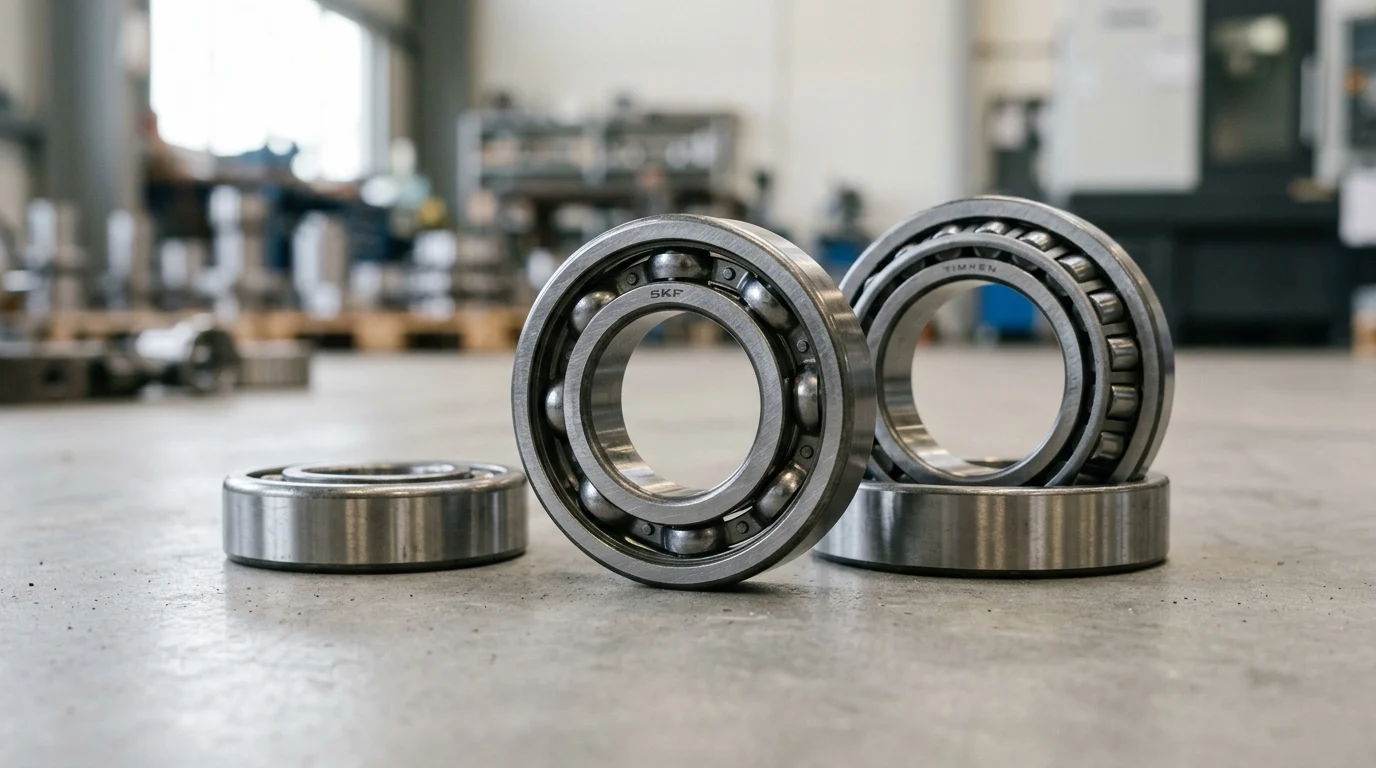
Choosing bearings for OEM equipment affects far more than fit and price. The right specification shapes load capacity, service life, maintenance intervals, noise, energy efficiency, and the risk of costly downtime once machines reach the field. This guide explains how to evaluate industrial bearings as a total-cost decision, not just a catalog purchase, with attention to operating conditions, performance requirements, material and sealing choices, and supply considerations. By the end, readers should have a practical framework for comparing bearing options, aligning engineering and procurement priorities, and selecting components that support both reliability and long-term product economics.
Why Industrial Bearing Selection Matters for OEM Cost and Reliability
The specification of industrial bearings within Original Equipment Manufacturer (OEM) applications represents a critical engineering crossroads where mechanical reliability intersects with unit economics. Because bearings serve as the foundational articulation points for rotating machinery, their selection influences the entire product lifecycle—from initial assembly efficiency to long-term field maintenance. For engineering and procurement teams, treating bearing selection as a strategic imperative rather than a commoditized afterthought is essential for maintaining a competitive edge in industrial markets.
Framing Bearing Selection as a Total Cost Decision
Evaluating bearing selection strictly by the initial piece price is a common procurement misstep that frequently leads to disproportionate downstream expenses. A holistic Total Cost of Ownership (TCO) model must account for acquisition costs, installation labor, maintenance intervals, and the financial impact of premature failure. For example, while substituting a premium deep groove ball bearing with a lower-tier alternative might save $2.50 per unit at high volumes, a premature failure in a heavy-duty industrial conveyor system can easily result in unscheduled downtime costs exceeding $10,000 per hour.
Furthermore, OEMs must factor in warranty liabilities. A bearing failure often causes catastrophic secondary damage to shafts, housings, and adjacent gearing. By framing the selection process around TCO, organizations can justify specifying higher-grade materials or advanced sealing technologies that drastically reduce the probability of early-stage fatigue and costly field recalls.
Operating Conditions That Drive Bearing Performance
The physical environment in which the equipment operates is the primary driver of bearing architecture and performance degradation. Theoretical fatigue life is typically evaluated using the L10 life calculation, which predicts the timeframe wherein 90% of a bearing population will continue operating under a specified load, baselined against 1,000,000 revolutions. However, this theoretical calculation assumes ideal operating conditions, which are rarely encountered in real-world industrial applications.
Temperature extremes, contamination, and vibration severely alter actual bearing longevity. Standard bearing steel is generally stable up to 120°C, but applications operating continuously at 150°C to 200°C require specialized heat treatments to prevent dimensional instability. Similarly, high-particulate environments, such as mining or agricultural machinery, necessitate advanced multi-lip contact seals to prevent abrasive ingress. Understanding these specific environmental variables is mandatory before moving into detailed technical specification.
Technical Criteria for Industrial Bearing Selection
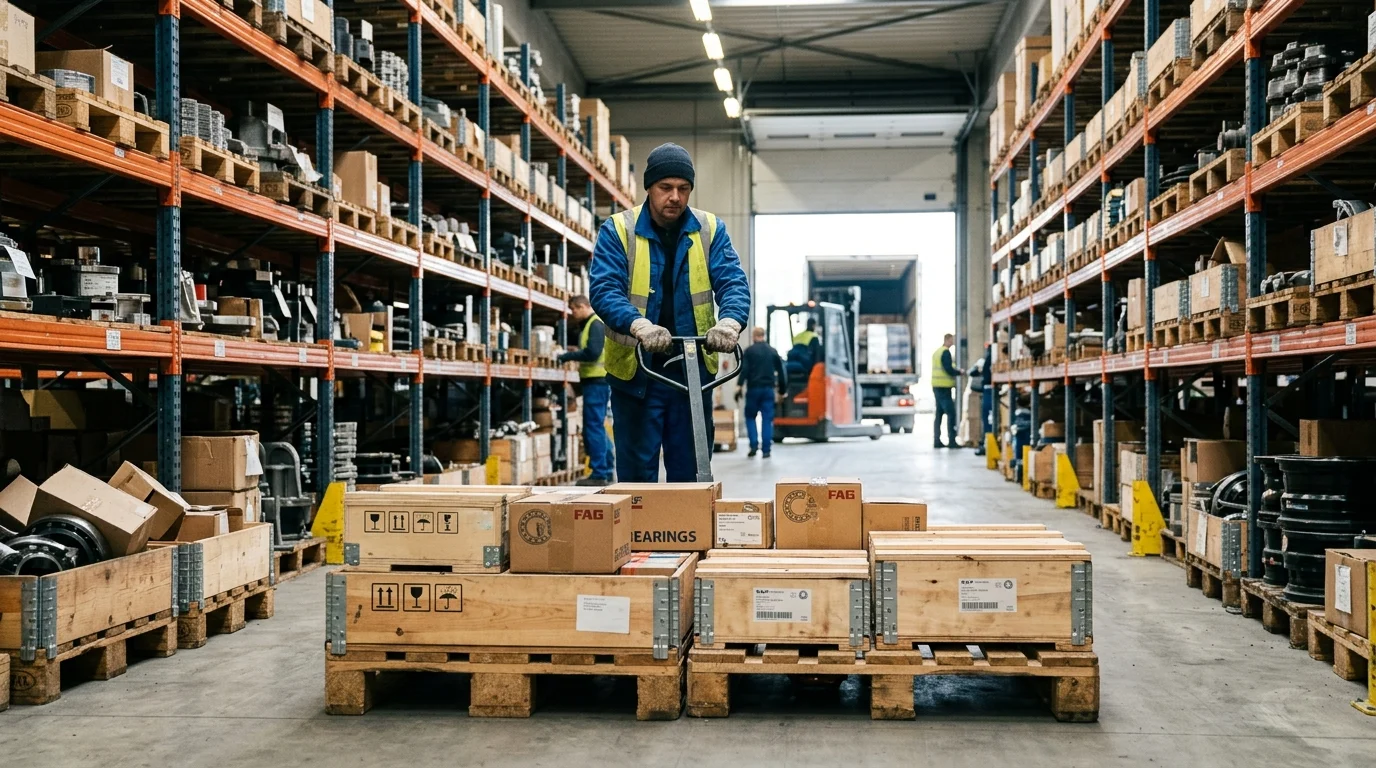
Translating operational requirements into a concrete bearing specification requires aligning mechanical demands with established international standards, such as ISO or ABEC ratings. This technical translation ensures that the chosen component possesses the exact geometric tolerances and load-carrying capacities required to survive the application’s duty cycle.
Load, Speed, Duty Cycle, and Precision Requirements
The core mechanical requirements of any industrial bearing are dictated by its dynamic load rating (C) and static load rating (C0). The dynamic load rating is used to calculate the bearing’s fatigue life under continuous rotation, while the static load rating represents the maximum load the bearing can withstand before permanent plastic deformation of the raceways exceeds 0.0001 times the rolling element diameter. Peak transient loads during equipment startup or shock events must never exceed the C0 rating.
Speed capabilities are equally critical and are evaluated using the dN value, calculated by multiplying the bearing bore diameter in millimeters by the maximum rotational speed in RPM. High-speed spindle applications frequently operate at dN values exceeding 1,000,000, necessitating specialized cage designs and ultra-precision tolerances. Precision classes range from standard ABEC 1 (suitable for most general industrial gearboxes) to ABEC 7 or 9, which are strictly reserved for machine tools, aerospace actuators, and high-speed robotics where runout must be minimized to fractions of a micron.
Materials, Lubrication, Sealing, and Internal Clearance
Material selection directly dictates a bearing’s resistance to wear, temperature, and corrosion. While SAE 52100 chrome steel is the ubiquitous standard due to its excellent fatigue resistance, corrosive environments demand alternatives. Internal clearance, or radial play, is another vital specification; clearances like C3 or C4 are intentionally designed larger than normal (CN) to accommodate thermal expansion when the inner ring operates at a significantly higher temperature than the outer ring.
| Material Type | Max Operating Temp | Corrosion Resistance | Relative Cost Multiplier |
|---|---|---|---|
| 52100 Chrome Steel | 120°C (Standard) | Low | 1.0x (Baseline) |
| 440C Stainless Steel | 150°C | High | 1.5x – 2.5x |
| Silicon Nitride (Ceramic) | >800°C | Excellent | 5.0x – 10.0x |
Lubrication and sealing work in tandem to protect the internal metallurgy. The choice between oil and grease depends on the operating speed and heat dissipation requirements. For sealed-for-life bearings, selecting a polyurea-thickened grease over a standard lithium complex can extend the oxidation life of the lubricant by up to 400%, effectively matching the mechanical life of the bearing itself under moderate loads.
Comparing Bearing Options Across Suppliers
Transitioning from engineering design to procurement requires evaluating supplier capabilities, production capacity, and the economic feasibility of the chosen bearing architecture. The global bearing market is heavily fragmented, ranging from premium multinational manufacturers to specialized regional producers, requiring OEMs to carefully match their sourcing strategy to their specific volume and performance requirements.
Key Criteria in Supplier and Product Comparison
Supplier selection hinges on a manufacturer’s ability to deliver consistent quality at scale. When comparing suppliers, procurement teams must evaluate production capacity, tooling flexibility, and logistical reliability. Lead times currently average 12 to 16 weeks for standard high-volume industrial bearings, while specialized aerospace or heavy-industrial grades can stretch beyond 40 weeks due to raw material constraints.
Minimum Order Quantities (MOQs) are a major differentiating factor when dealing directly with factories rather than through distribution networks. Direct factory sourcing typically demands MOQs ranging from 5,000 to 50,000 units per run, depending on the bearing size. OEMs must weigh the unit cost savings of high-volume direct sourcing against the inventory holding costs and cash flow implications of maintaining massive safety stocks.
Tradeoffs Between Standard, Modified, and Custom Bearings
A fundamental architectural decision is whether to use a standard off-the-shelf bearing, a modified standard, or a fully custom engineered solution. Standard bearings benefit from immense economies of scale, immediate availability, and proven historical performance data. However, they may require the OEM to compromise on adjacent housing designs to accommodate standard metric or imperial dimensions.
| Bearing Strategy | Tooling / NRE Cost | Typical MOQ | Standard Lead Time |
|---|---|---|---|
| Standard (Off-the-shelf) | $0 | Low (<500) | 1 – 4 Weeks |
| Modified Standard | $500 – $2,000 | Medium (1,000+) | 6 – 10 Weeks |
| Full Custom | $5,000 – $25,000 | High (10,000+) | 16 – 24 Weeks |
Custom bearings offer optimized integration, potentially reducing the overall weight and part count of the final assembly by integrating mounting flanges or specialized gear teeth directly into the bearing races. The tradeoff involves significant Non-Recurring Engineering (NRE) and tooling costs, which can span $5,000 to $25,000 depending on complexity. Modified standards—such as applying a custom grease fill or a specialized proprietary seal to a standard bearing envelope—often provide the best middle ground, delivering application-specific performance without the massive NRE burden.
Reducing Risk Through Sourcing, Quality, and Compliance
Supply chain volatility and the proliferation of counterfeit components demand rigorous risk mitigation strategies from OEM procurement teams. Ensuring that a bearing meets its theoretical specifications requires deep visibility into the manufacturer’s quality assurance protocols and regulatory compliance frameworks.
Manufacturing Quality Controls and Traceability
Top-tier bearing manufacturers separate themselves through the implementation of rigorous Statistical Process Control (SPC). By continuously monitoring production lines, these facilities maintain defect rates well below 50 Parts Per Million (PPM). OEM auditors should look for comprehensive traceability practices, where a finished bearing can be tracked back to the exact steel heat lot and forging batch.
Physical validation of tolerances is equally critical. Advanced manufacturing facilities use Coordinate Measuring Machines (CMM) and specialized roundness testers to verify raceway geometries to within 0.001 millimeters. Surface finish, typically measured in Ra (roughness average), must be strictly controlled; a variation of just a few micro-inches on the raceway surface can drastically increase operating noise, accelerate lubricant breakdown, and reduce the L10 life by over 20%.
Compliance, Documentation, and Supply Chain Considerations
Regulatory compliance and formalized documentation are non-negotiable for OEMs operating in regulated sectors. ISO 9001:2015 certification serves as the baseline for quality management, while automotive OEMs strictly demand IATF 16949 compliance. For aerospace and defense contractors, AS9100 certification is mandatory to ensure the highest levels of process control and risk management.
Environmental compliance also plays a major role in modern bearing selection. Lubricants, seal materials, and polymer cage resins must adhere to REACH and RoHS directives, particularly for equipment destined for the European market. Sourcing teams must ensure that suppliers maintain up-to-date Safety Data Sheets (SDS) and material declarations, as non-compliance can result in severe customs delays and market exclusions.
Building a Practical Bearing Selection Framework
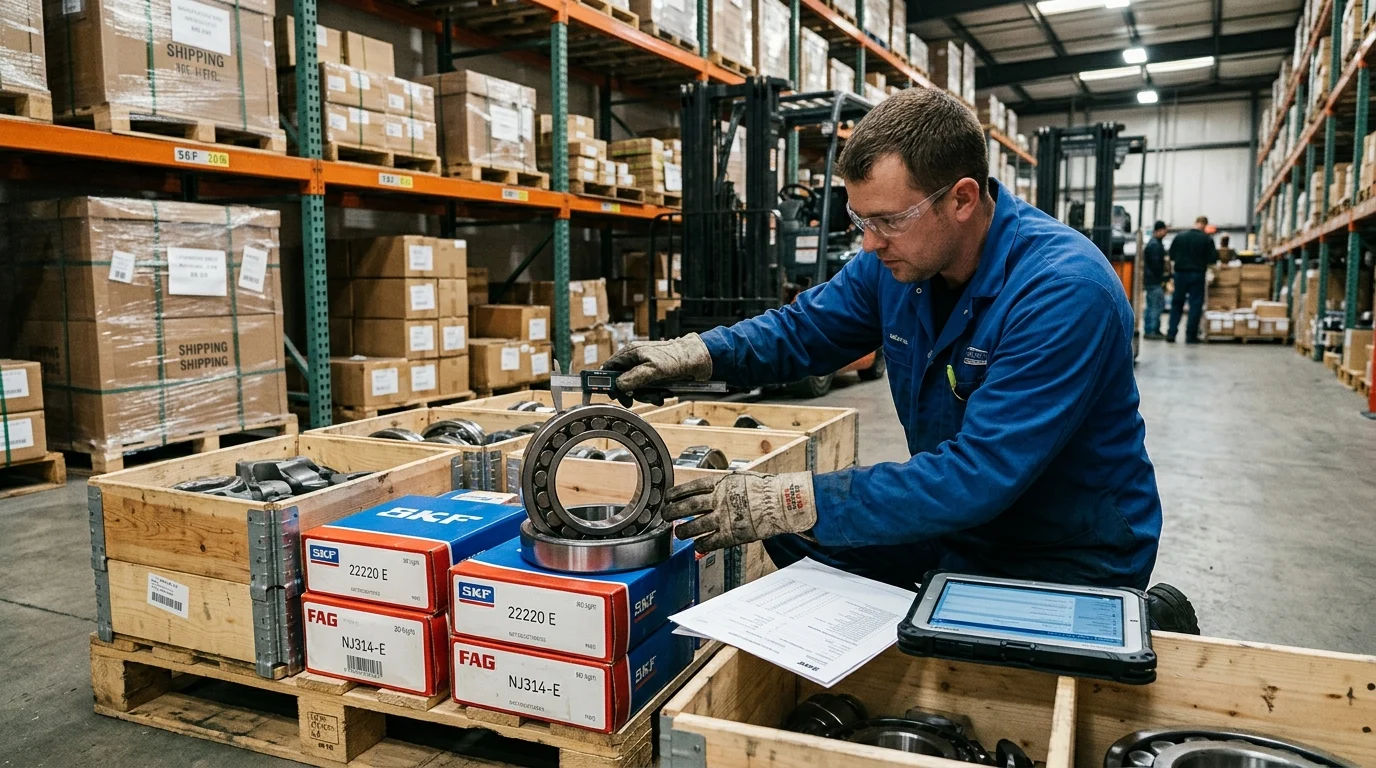
Establishing a formalized bearing selection framework bridges the gap between mechanical engineering, quality assurance, and supply chain management. By standardizing the evaluation process, OEMs can accelerate time-to-market while simultaneously reducing the risk of catastrophic field failures.
A Step by Step Workflow for OEM Teams
A robust selection workflow begins during the initial conceptual design phase, well before CAD models are finalized. The first step involves defining the absolute peak and continuous load profiles, followed by calculating the required L10 life. Engineers then select the bearing type—such as cylindrical roller bearings for high radial loads or angular contact bearings for combined axial/radial loads—and determine the necessary precision class.
Once a theoretical candidate is selected, the workflow transitions to physical prototyping. Accelerated Life Testing (ALT) is standard practice, typically spanning 500 to 2,000 hours on specialized test rigs. These tests simulate peak loads, extreme temperatures, and contamination ingress to verify lubricant retention and fatigue limits. Only after successful ALT validation should the procurement team initiate vendor negotiations and supply chain integration.
Balancing Performance, Cost, and Availability
The ultimate goal of the bearing selection framework is value engineering: achieving the perfect equilibrium between mechanical performance, unit cost, and supply chain availability. Over-engineering a bearing specification leads to bloated BOM costs and unnecessary lead times, while under-engineering guarantees elevated warranty claims.
For example, reducing the piece price by 15% through a lower-tier supplier is mathematically counterproductive if it increases the overall warranty claim rate by just 3% across an installed base of high-value industrial machinery. Optimal selection maximizes the intersection of validated technical performance and total lifecycle economics, ensuring that the chosen industrial bearings serve as a foundation for long-term product reliability and brand reputation.
Key Takeaways
- The most important conclusions and rationale for industrial bearings
- Specs, compliance, and risk checks worth validating before you commit
- Practical next steps and caveats readers can apply immediately
Frequently Asked Questions
How do OEMs choose the right industrial bearing type?
Match bearing type to load, speed, and alignment needs: deep groove for general use, tapered for combined loads, spherical for misalignment, and needle where space is limited. DEMY’s e-catalog helps compare options quickly.
When should C3 or C4 internal clearance be specified?
Use C3 or C4 when heat, high speed, or tight fits will reduce internal clearance during operation. For many motor and conveyor OEM applications, C3 is a common practical starting point.
What matters more for OEM bearing selection: price or total cost?
Total cost matters more. A lower-priced bearing can increase downtime, warranty claims, and maintenance. Choosing a reliable, properly sealed bearing often reduces overall equipment cost in the field.
Which bearing materials work best in corrosive or high-temperature environments?
Stainless steel suits wet or corrosive conditions, while heat-stabilized bearing steel is better for sustained elevated temperatures. For demanding OEM projects, confirm operating temperature and media before finalizing material.
How can buyers verify bearing quality before ordering in volume?
Request drawings, tolerance data, test reports, and sample validation. DEMY highlights ISO/TS16949-supported production, measuring instruments, and product support resources, which can help OEMs qualify bearings before mass purchase.
Post time: Apr-28-2026