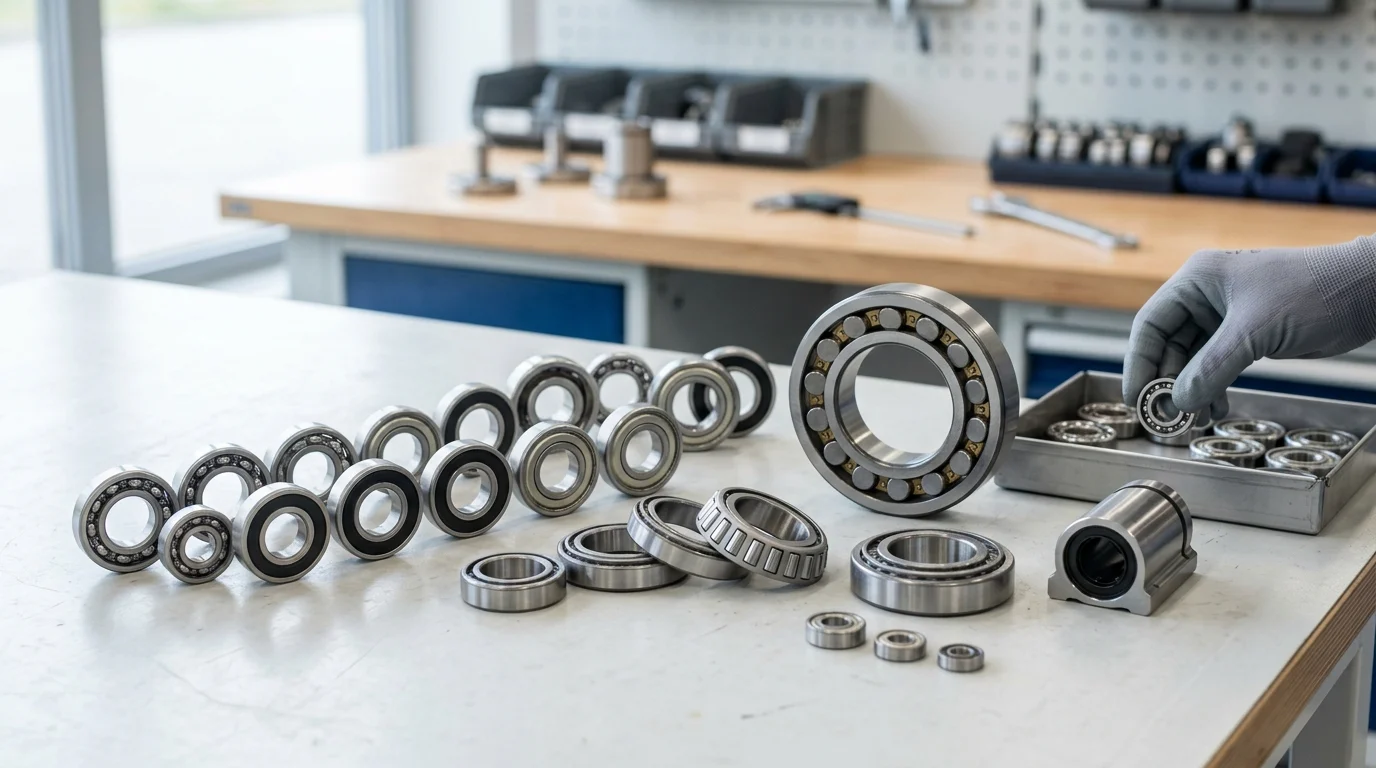
Why Source Bearings from Chinese Manufacturers
China has solidified its position as the world’s leading hub for bearing manufacturing, producing billions of units annually that serve diverse applications from automotive assemblies to heavy agricultural machinery. For B2B buyers, distributors, and original equipment manufacturers (OEMs), sourcing from this region is no longer just a cost-reduction exercise; it is a strategic imperative to access scalable production and advanced metallurgy.
The evolution of the Chinese bearing industry has shifted from low-cost, high-volume commodity production to highly automated, precision-engineered manufacturing. Leading factories now operate with ISO/TS16949 or IATF 16949 certifications, utilizing automatic grinding and assembly lines that rival established European and Japanese facilities.
Cost, scale, and product range
The primary driver for shifting procurement to Chinese bearing manufacturers remains the unparalleled combination of scale and cost efficiency. By leveraging localized raw material supply chains, particularly for high-carbon chromium bearing steel (GCr15), top-tier factories can offer unit cost reductions of 15% to 30% compared to Western alternatives, without compromising mechanical integrity.
Furthermore, the breadth of the product portfolio available from major hubs is exhaustive. A single capable supplier can often consolidate a buyer’s vendor base by offering deep groove ball bearings, angular contact, tapered roller, cylindrical, spherical, and needle bearings. Advanced manufacturers also cater to specialized demands, producing ceramic, stainless steel, clutch release, and oil-free self-lubricating bearings under one operational umbrella.
Best-fit buyer profiles
While the advantages are significant, this sourcing strategy yields the highest return on investment for specific buyer profiles. High-volume OEMs requiring reliable, long-service-life components for electric motors, conveyors, or textile machinery are optimally positioned to benefit from economies of scale, often procuring upwards of 50,000 to 100,000 units per month.
Similarly, aftermarket automotive distributors and industrial hardware importers looking to establish or expand private-label (white-label) bearing brands find Chinese manufacturers to be ideal partners. These buyers typically possess the internal engineering bandwidth to validate technical drawings and quality control (QC) reports, ensuring the imported batches meet local market compliance and performance expectations.
What Product and Supplier Capabilities to Verify First
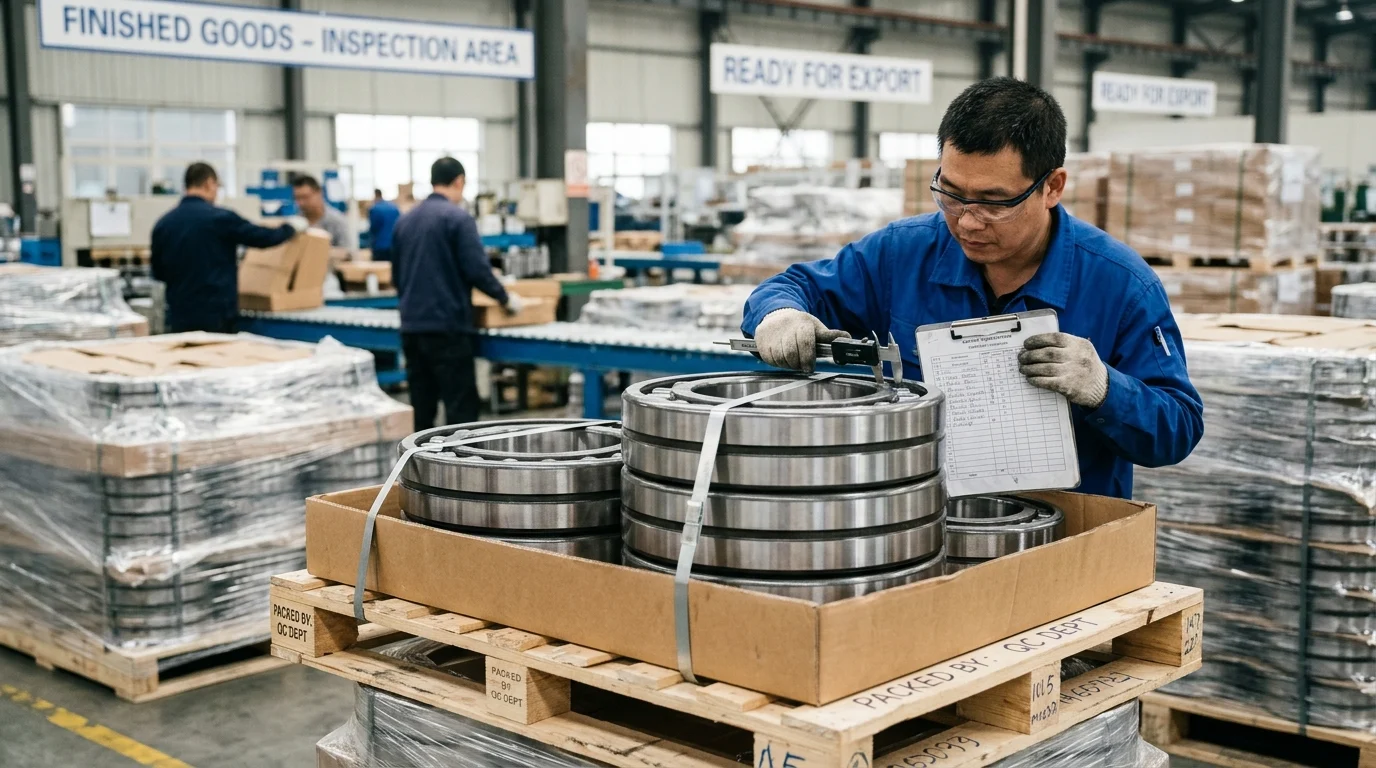
Before engaging in commercial negotiations, procurement teams must rigorously audit a supplier’s technical baseline. The bearing market is highly fragmented, with thousands of registered entities ranging from sophisticated vertically integrated manufacturers to small-scale trading companies. Verifying technical capacity early prevents catastrophic product failures in the field.
Bearing types, precision grades, and materials
A supplier’s true capability is defined by the precision grades and materials they can consistently process. Industrial buyers should mandate adherence to recognized tolerance standards, such as ABEC (Annular Bearing Engineering Committee) grades or ISO equivalents. While ABEC-1 (ISO P0) suffices for low-speed agricultural hubs, high-speed electric motors demand ABEC-5 (ISO P5) or ABEC-7 (ISO P4) tolerances.
Material science is equally critical. Standard industrial bearings rely on GCr15 chrome steel, but specialized applications require advanced metallurgy. Buyers must verify if the factory has proven experience machining 440C stainless steel for corrosive environments, or assembling Si3N4 silicon nitride ceramic balls for high-temperature, low-friction applications.
Manufacturing capacity and technical strengths
Manufacturing capacity extends beyond stated monthly output; it is a function of machine automation and in-house testing infrastructure. The most reliable Chinese bearing factories utilize fully automatic CNC grinding lines and automated assembly stations, which drastically reduce human error and ensure batch-to-batch consistency.
Equally important is the testing laboratory. Buyers should look for suppliers equipped with roundness testers, profilometers, and metallurgical microscopes. For applications sensitive to acoustics and vibration—such as HVAC equipment or household appliances—the supplier must demonstrate capability in noise and vibration testing, specifically achieving Z2V2 or Z3V3 ratings.
Supplier comparison criteria
To effectively segment potential partners, buyers should categorize suppliers into tiers based on verifiable data rather than marketing claims. This segmentation helps align the supplier’s true capabilities with the buyer’s risk tolerance and application requirements.
| Supplier Tier | Target Market | Typical Tolerance | Defect Rate Target | Automation Level |
|---|---|---|---|---|
| Tier 1 | Automotive / OEM | ABEC-5 to ABEC-7 | < 50 PPM | Fully automated grinding & assembly |
| Tier 2 | Standard Industrial | ABEC-1 to ABEC-3 | < 500 PPM | Semi-automated with CNC |
| Tier 3 | Budget Aftermarket | ABEC-1 | < 1500 PPM | Manual assembly, basic testing |
Using a comparative framework allows procurement teams to quickly filter out Tier 3 suppliers when sourcing for high-reliability applications, focusing audit resources entirely on Tier 1 and Tier 2 candidates.
Which Key Sourcing Factors Matter Most
Once technical competence is established, the focus must shift to the commercial and operational factors that dictate supply chain stability. A technically flawless bearing is useless if it cannot be delivered on time, within budget, and with the necessary compliance documentation.
Quality systems, certifications, and traceability
Quality assurance in bearing manufacturing requires strict adherence to international management systems. For any buyer supplying the automotive sector, IATF 16949 (formerly ISO/TS16949) certification is a non-negotiable prerequisite. This standard ensures the factory employs advanced product quality planning (APQP) and statistical process control (SPC).
Traceability is the backbone of these quality systems. Buyers must ensure the supplier can provide complete batch traceability, linking a specific bearing failure back to the exact heat of raw steel, the specific grinding machine used, and the date of assembly. This requires robust enterprise resource planning (ERP) systems and laser-etched lot numbers on the bearing rings.
MOQ, customization, packaging, and lead times
Minimum Order Quantities (MOQs) in the Chinese bearing sector vary heavily based on the degree of customization. Standard deep groove ball bearings (e.g., the 6200 series) might carry MOQs of 1,000 to 5,000 pieces, whereas custom self-lubricating bearings or specialized automotive hubs may require tooling investments and MOQs exceeding 10,000 units.
Packaging and lead times must also be contracted explicitly. Industrial buyers often prefer bulk tube packaging (10-20 pieces per plastic tube) to minimize waste on the assembly line, while distributors require single-color box packaging for retail. Standard lead times typically range from 30 to 45 days, but customized packaging or non-standard seal colors can add 15 days to the production cycle.
Pricing, landed cost, and logistics reliability
Pricing must be analyzed through the lens of Total Landed Cost (TLC), not just the Ex-Works (EXW) or Free on Board (FOB) unit price. Bearings are inherently dense and heavy; a standard pallet of steel bearings can easily weigh over 1,000 kg. Consequently, ocean freight, port handling fees, and import tariffs significantly impact the final margin.
Logistics reliability is closely tied to the supplier’s location. Factories situated near major export hubs like Ningbo, Shanghai, or Qingdao offer distinct advantages in inland freight costs and container availability. Buyers must factor in an additional $0.10 to $0.30 per kilogram for logistics and duties when calculating the landed cost of imported bearings.
How to Qualify and Shortlist Suppliers
The high concentration of trading companies in the bearing sector requires buyers to deploy a strict qualification process. Differentiating a genuine, large-scale manufacturer from a middleman ensures direct communication with engineering teams and avoids hidden markups.
Step-by-step supplier evaluation process
A robust evaluation process begins with a comprehensive Request for Information (RFI) to gather baseline data, followed by a Request for Quotation (RFQ) on a standard, high-volume item to benchmark pricing. Once commercial viability is confirmed, buyers must mandate sample testing.
| Evaluation Criteria | Weighting | Minimum Requirement | Ideal Target |
|---|---|---|---|
| Quality Systems | 35% | ISO 9001 Active | IATF 16949 with full traceability |
| Production Capacity | 25% | 100,000 units/month | 500,000+ units/month with surge capacity |
| Technical Validation | 25% | Basic dimensional checks | In-house Z3V3 noise/vibration testing |
| Commercial Terms | 15% | Standard Ex-Works | FOB with Net 30 payment terms |
Following sample approval, a formal facility audit—either conducted by the buyer’s internal team or a contracted third-party agency (like SGS or TUV)—is mandatory. This audit must verify the existence of the claimed automated grinding lines and testing laboratories.
Checks to validate factory claims
Factory claims must be subjected to independent validation. Buyers should request the factory’s business license and verify their registered capital; genuine bearing manufacturers typically require substantial capital expenditures, often reflected in registered capital exceeding $1 million USD equivalent.
Furthermore, buyers should demand Material Test Certificates (MTC) for the raw steel used in their specific batches. Cross-referencing the factory’s ISO/TS16949 or IATF 16949 certificate number against the official issuing body’s database is a simple yet effective check to expose forged documentation. Reviewing the supplier’s export records or requesting anonymized references from existing buyers in similar industrial sectors can also validate their export experience.
What Final Decision Framework Buyers Should Use
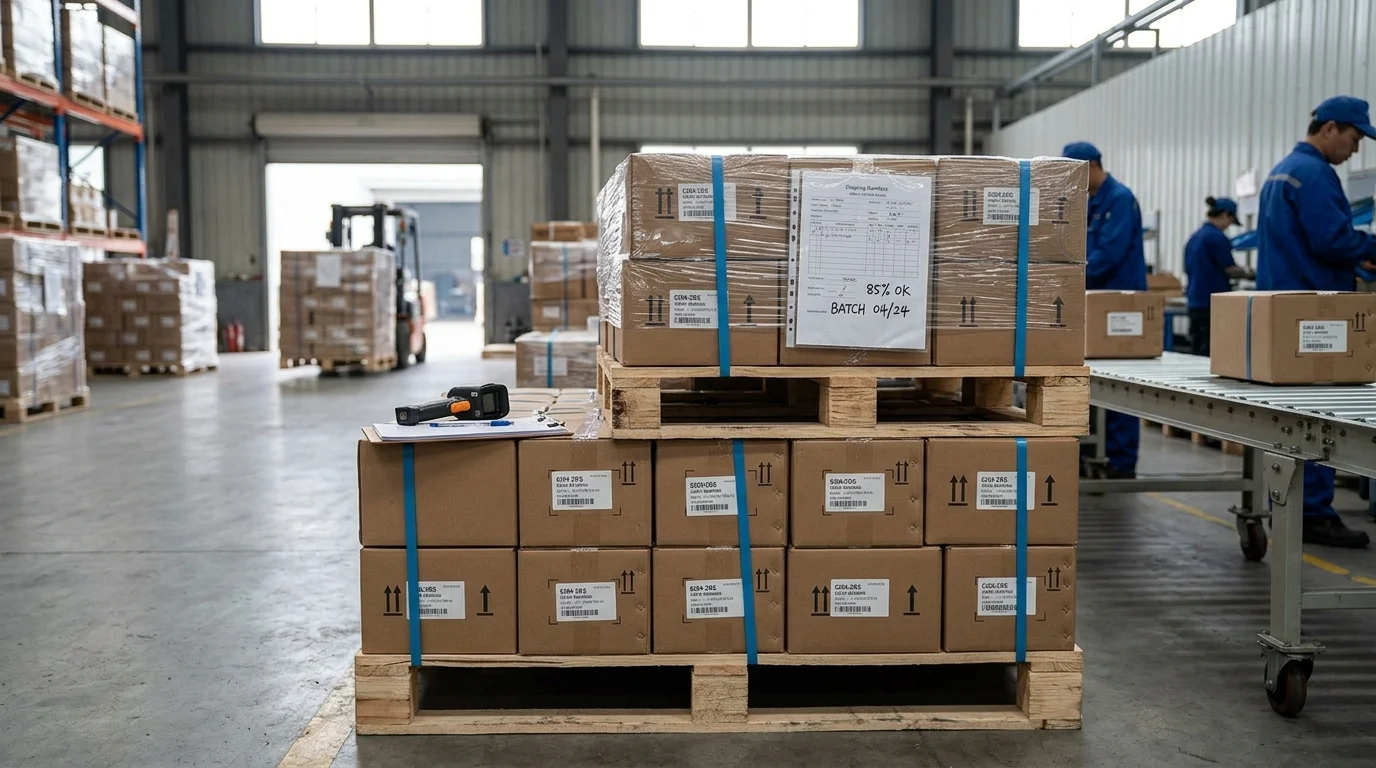
The final selection of a bearing supplier should not be reduced to a simple spreadsheet exercise comparing unit prices. Procurement leaders must synthesize the technical audit data, commercial terms, and strategic alignment to build a resilient supply chain.
Balancing technical fit and commercial terms
Buyers must utilize a Total Cost of Ownership (TCO) framework that balances technical fit with commercial realities. A bearing priced at $1.00 with a 2% defect rate is ultimately more expensive than a $1.05 bearing with a 0.1% defect rate, once machine downtime, warranty claims, and replacement labor are factored in.
Contract negotiations should reflect this balance. Commercial terms should include clear Service Level Agreements (SLAs) dictating acceptable Quality Acceptance Limits (AQL), typically set at AQL 1.5 or stricter for critical dimensions. Penalty clauses for late deliveries or batch rejections should be established prior to issuing the first mass production purchase order.
Building long-term supplier partnerships
Sourcing bearings is rarely a transactional endeavor; the integration of a component into a motor or vehicle requires long-term stability. Buyers should seek suppliers willing to engage in joint Research and Development (R&D). A manufacturer capable of co-designing a custom insert bearing with a specific housing, or modifying a seal design to improve grease retention in agricultural environments, acts as an extension of the buyer’s engineering team.
To cement these partnerships, buyers can negotiate volume rebate tiers, incentivizing the supplier to reserve production capacity during peak seasons. By treating the Chinese manufacturing partner as a strategic stakeholder rather than a disposable vendor, B2B buyers can secure priority lead times, consistent quality, and a sustainable competitive advantage in their respective markets.
Key Takeaways
- Wholesale sourcing and supply-chain implications for Sourcing Bearings
- Specifications, compliance, and commercial terms buyers should validate
- Actionable recommendations for distributors and procurement teams
Frequently Asked Questions
What certifications should I check when sourcing bearings from China?
Prioritize ISO/TS16949 or IATF 16949 for automotive-grade supply, plus ISO quality management. Ask for valid certificates, scope details, audit reports, and production-line evidence before approving a manufacturer.
Which bearing types can DEMY supply for industrial buyers?
DEMY offers deep groove, angular contact, thrust, tapered, cylindrical, spherical, needle, wheel, motor, clutch release, ceramic, stainless steel, and self-lubricating bearings for OEMs, distributors, and equipment manufacturers.
How can I verify bearing quality before placing a bulk order?
Request samples, material certificates, dimensional inspection reports, noise and vibration test results, and hardness data. For critical use, arrange a factory audit or third-party inspection before mass production.
What precision grade should I choose for my application?
Use ABEC-1 or ISO P0 for low-speed general machinery, ABEC-3 for standard industrial use, and ABEC-5 or ABEC-7 for high-speed motors, automotive systems, and precision equipment.
Why is manufacturing automation important when selecting a bearing supplier?
Automatic grinding and assembly lines improve consistency, reduce human error, and support stable large-volume output. They are especially important for low-noise, long-life, and high-precision bearing applications.
Post time: Apr-20-2026