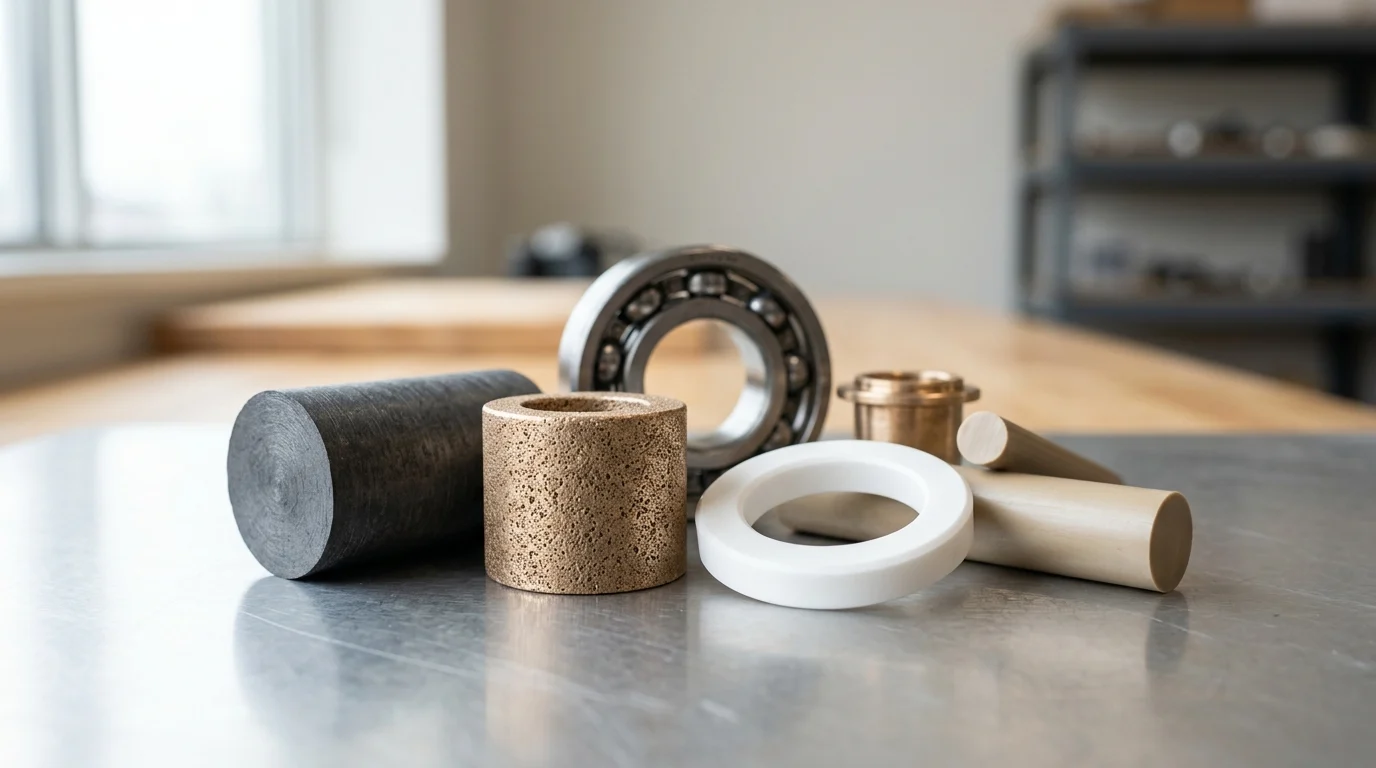
Why Bearing Materials Determine Performance and Total Cost
Procurement professionals and engineering teams recognize that bearing material selection is not merely a technical specification; it is the primary driver of operational performance and Total Cost of Ownership (TCO). In industrial applications, the initial purchase price of a bearing often represents less than 15% of its lifecycle cost. Premature failures caused by incorrect material specifications can result in catastrophic equipment downtime, where replacement and lost production costs frequently exceed 10 to 50 times the component’s original value. Consequently, B2B buyers must critically evaluate base materials to align with expected fatigue life, maintenance intervals, and environmental exposures.
How Load, Speed, and Environment Affect Material Choice
The fundamental variables dictating material viability are dynamic load, rotational speed, and ambient operating conditions. Standard bearing steels excel under high radial and axial loads but suffer severe degradation when operating temperatures exceed 120°C (248°F) without special heat stabilization. Conversely, high-speed applications require materials with lower density and high stiffness to minimize centrifugal forces on the rolling elements. Environmental factors, particularly exposure to corrosive chemicals, moisture, or vacuum conditions, immediately disqualify standard high-carbon steels, necessitating a shift toward highly alloyed or non-metallic alternatives to prevent rapid oxidation and spalling.
Which Selection Criteria Matter Most for OEM Buyers
For Original Equipment Manufacturers (OEMs), the selection criteria extend beyond basic load ratings (Cr) and static load capacities (Cor). Procurement teams prioritize the L10 fatigue life—the statistical metric indicating that 90% of a bearing population will meet or exceed a specified number of revolutions before the first evidence of fatigue flaking. Buyers must also evaluate the material’s dimensional stability over time, its compatibility with specified lubricants, and its acoustic profile. In applications such as automotive alternators or precision electric motors, noise, vibration, and harshness (NVH) metrics are paramount, requiring materials that can be ground and honed to exceptionally tight surface finishes.
How Industrial Bearing Materials Compare
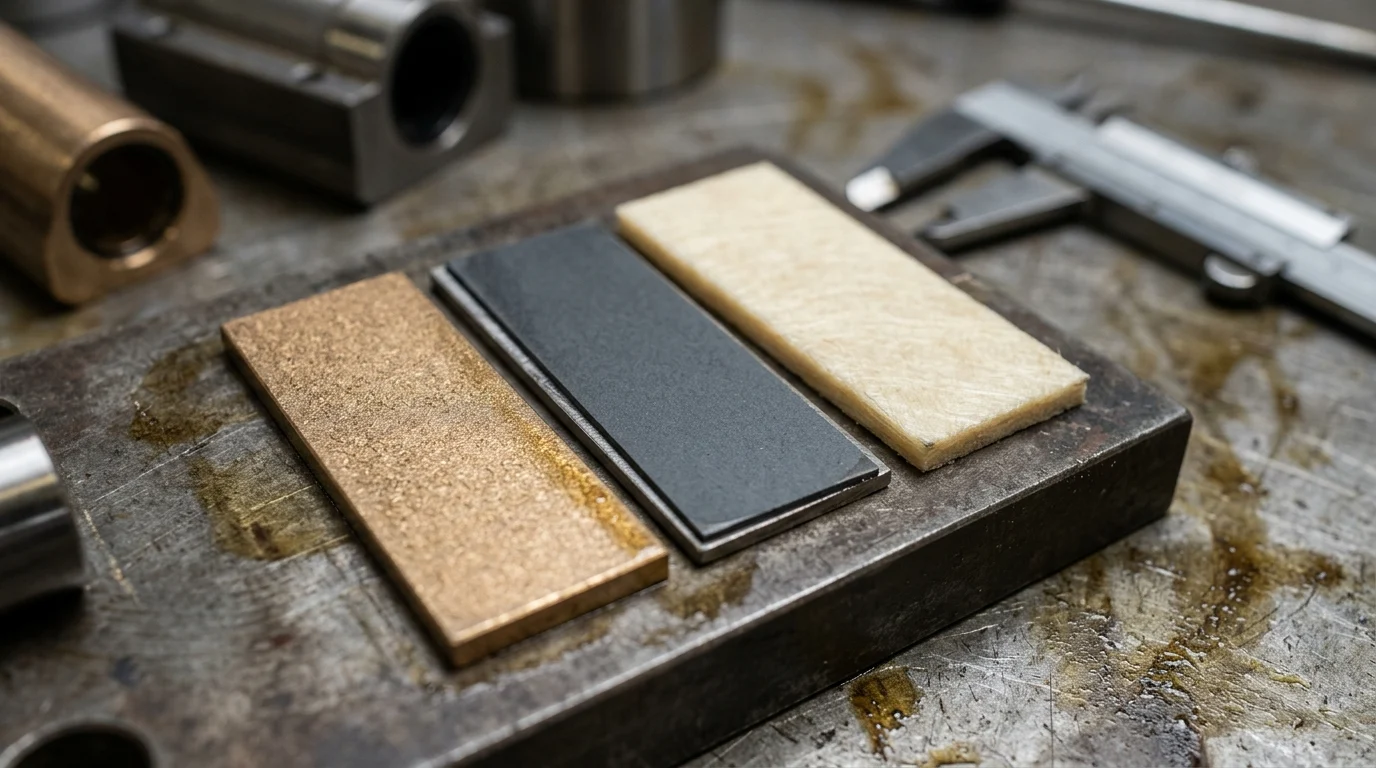
Navigating the landscape of industrial bearing materials requires a comparative understanding of metallurgy and polymer science. Manufacturers engineer specific alloys and compounds to solve distinct mechanical challenges, balancing hardness, fracture toughness, and cost.
Chrome Steel vs Stainless Steel vs Ceramic
High-carbon chrome steel, primarily SAE 52100 or GCr15, remains the industry standard, accounting for the vast majority of industrial bearings. It offers exceptional fatigue strength and wear resistance, typically heat-treated to a hardness of 60 to 64 HRC. However, its low chromium content makes it highly susceptible to rust. When corrosion resistance is paramount, 440C stainless steel is specified. While 440C withstands moisture and mild chemicals, it sacrifices some load capacity due to a slightly lower maximum hardness (58 to 60 HRC) and carries a cost premium of roughly 30% to 50% over chrome steel. For extreme environments, ceramic materials—specifically Silicon Nitride (Si3N4)—are utilized. Ceramic rolling elements possess a density of 3.2 g/cm³ (approximately 40% that of steel), drastically reducing centrifugal loads at high speeds, and can operate continuously at temperatures exceeding 800°C.
When to Use Bronze, Polymer, and Self-Lubricating Materials
Beyond rolling element bearings, plain bearings and bushings rely heavily on bronzes, engineered polymers, and sintered metals. Cast and machined bronze alloys excel in high-load, low-speed applications subject to heavy shock loads, such as agricultural machinery and heavy construction equipment. Engineered polymers, including PTFE and PEEK, provide excellent chemical resistance and are ideal for washdown environments in food processing where traditional lubrication is prohibited. Sintered, oil-impregnated bronze or iron bearings offer self-lubricating properties via capillary action. These porous materials typically hold 15% to 20% oil by volume, making them a maintenance-free solution for fractional horsepower motors and consumer appliances, provided the Pressure-Velocity (PV) limits of the material are strictly observed.
Which Comparison Framework Buyers Should Use
To streamline procurement, buyers should utilize a structured comparison framework that maps material properties directly to application constraints. The following table illustrates baseline metrics for common bearing materials, serving as a foundational guide for initial specification.
| Material Type | Typical Hardness | Max Operating Temp (°C) | Relative Cost Index | Primary Advantage |
|---|---|---|---|---|
| Chrome Steel (52100) | 60 – 64 HRC | 120°C – 150°C | 1.0x | High load capacity, low cost |
| Stainless Steel (440C) | 58 – 60 HRC | 150°C – 250°C | 1.5x – 2.0x | Corrosion resistance |
| Ceramic (Si3N4) | 75 – 80 HRC | 800°C+ | 5.0x – 10.0x | High speed, electrical insulation |
| Engineered Polymer (PEEK) | 85 Shore D | 250°C | 3.0x – 4.0x | Chemical resistance, dry running |
What Buyers Should Verify When Sourcing Bearing Materials
Identifying the correct material is only the first phase of the procurement cycle; validating the physical execution of that material is equally critical. Wholesale buyers and importers must enforce rigorous sourcing protocols to ensure that the delivered bearings match the theoretical performance of their specified materials.
Which Specifications, Tolerances, and Test Data to Review
Procurement specifications must explicitly state the required dimensional and running tolerances, typically defined by ABEC (Annular Bearing Engineering Committee) or ISO standards. While ABEC 1 (ISO P0) is sufficient for standard industrial conveyors, high-speed machine tools demand ABEC 7 (ISO P4) or ABEC 9 (ISO P2) precision. Buyers must also dictate the radial internal clearance (e.g., C2, CN, C3, C4) to accommodate thermal expansion of the specific material during operation. Furthermore, metallurgical integrity should be verified through test data. Buyers should request surface roughness reports, expecting an Ra value of less than 0.2 µm for premium low-noise applications, alongside microstructural analysis to detect non-metallic inclusions that act as stress concentrators and initiate premature fatigue spalling.
How MOQ, Customization, Packaging, and Lead Time Affect Purchasing
Commercial terms heavily influence the viability of sourcing specific bearing materials. Standard chrome steel bearings generally require Minimum Order Quantities (MOQs) ranging from 1,000 to 5,000 pieces due to continuous production runs. Conversely, custom materials, specific internal clearances, or specialized high-temperature greases often push MOQs above 10,000 units. Lead times also vary drastically; while standard commercial off-the-shelf (COTS) bearings may ship in 30 to 45 days, custom ceramic-hybrid or aerospace-grade alloys frequently require 60 to 120 days for raw material procurement and precision grinding. Packaging is another critical detail; buyers importing steel bearings via ocean freight must specify Volatile Corrosion Inhibitor (VCI) paper and heavy-duty vacuum sealing to prevent saltwater-induced oxidation during transit.
How Quality, Compliance, and Supplier Capability Influence Selection
The inherent properties of a bearing material are only fully realized when processed by a capable manufacturer. B2B buyers must look beyond product specifications and conduct comprehensive evaluations of supplier quality management systems and production infrastructure.
Which Certifications, Traceability, and Inspection Standards Matter
For industrial and automotive applications, baseline ISO 9001 certification is mandatory, but IATF 16949 certification is the gold standard, demonstrating a supplier’s capability to maintain defect rates below 50 Parts Per Million (PPM). Material traceability is non-negotiable for critical applications. Buyers should mandate EN 10204 3.1 Material Test Reports (MTRs) to verify the chemical composition and heat treatment batch of the raw steel or ceramic blanks. Furthermore, rigorous inspection standards must be enforced at the factory level, including non-destructive testing (NDT) such as eddy current or magnetic particle inspection to detect subsurface micro-cracks before assembly.
How to Assess Supplier Manufacturing Capability
Assessing a supplier’s manufacturing capability requires analyzing their capital equipment and quality control instrumentation. Top-tier exporters utilize fully automated, CNC-controlled grinding and super-finishing lines, which minimize human error and ensure batch-to-batch consistency. Buyers should inquire about the facility’s metrology lab capabilities. Specifically, the supplier must possess equipment to perform roundness testing, profile measurement, and automated noise and vibration testing. Bearings destined for electric motors or precision machinery are often graded by vibration velocity (e.g., V1, V2, V3) and acceleration (e.g., Z1, Z2, Z3); a supplier lacking the acoustic testing chambers to validate these metrics cannot reliably supply premium low-noise bearings, regardless of the base material used.
Which Bearing Material Strategy Supports Better Purchasing Decisions
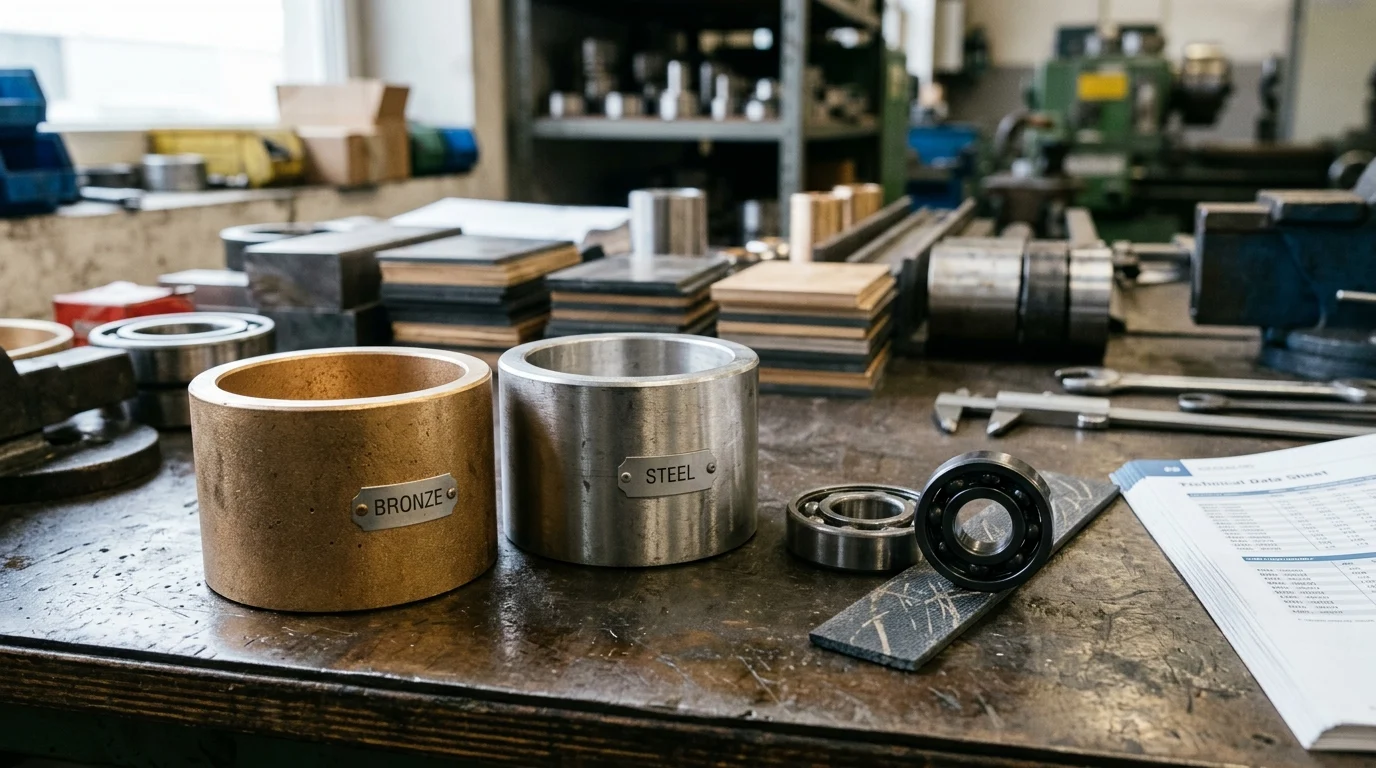
Developing a robust bearing material sourcing strategy is essential for protecting supply chain resilience and maximizing corporate profitability. Procurement leaders must balance the technical demands of their engineering teams with the commercial realities of global trade.
How OEMs, Importers, and Distributors Should Build a Sourcing Strategy
OEMs, importers, and distributors must tailor their sourcing strategies to their distinct market positions. OEMs typically pursue direct partnerships with primary manufacturers, seeking long-term price stability and collaborative engineering for custom materials. Importers and wholesale distributors, however, must balance a broader portfolio. Distributors supplying aftermarket replacement parts often aim for gross margins between 20% and 35%, which requires strategic consolidation of standard chrome steel inventory while maintaining agile supply lines for niche, high-margin materials like ceramics or specialized polymers. A dual-sourcing strategy—pairing a high-volume overseas manufacturer for standard components with a domestic specialty supplier for low-volume, exotic materials—optimizes both inventory turnover and capital allocation.
What Decision Framework to Use for Supplier Shortlisting
To execute this strategy, procurement teams should implement a weighted decision matrix for supplier shortlisting. This framework standardizes the evaluation of potential bearing manufacturing partners across both technical and commercial dimensions, ensuring objective decision-making.
| Evaluation Criteria | Weight | Minimum Acceptable Threshold | Strategic Implication |
|---|---|---|---|
| Quality Certifications | 30% | ISO 9001 (IATF 16949 preferred) | Ensures baseline defect control |
| Manufacturing Capability | 25% | Automated grinding, Z3/V3 testing | Dictates precision and noise levels |
| Material Traceability | 20% | EN 10204 3.1 MTR availability | Mitigates risk of counterfeit steel |
| Commercial Terms | 15% | MOQ < 5,000; Lead time < 60 days | Impacts inventory holding costs |
| Engineering Support | 10% | Dedicated application engineers | Accelerates custom material design |
By rigorously applying this framework, B2B buyers can confidently navigate the complexities of bearing material selection, securing components that deliver optimal performance, extend maintenance intervals, and drive long-term value across industrial applications.
Key Takeaways
- Wholesale sourcing and supply-chain implications for Bearing materials
- Specifications, compliance, and commercial terms buyers should validate
- Actionable recommendations for distributors and procurement teams
Frequently Asked Questions
Which bearing material is best for general industrial machinery?
For most standard loads and speeds, chrome steel (52100/GCr15) is the default choice because it offers strong fatigue life, wear resistance, and cost efficiency.
When should I choose stainless steel bearings instead of chrome steel?
Choose stainless steel when moisture, washdown, or mild chemicals are present. It resists corrosion better than chrome steel, though load capacity and cost are typically less favorable.
Are ceramic bearings worth the higher price?
Yes, for very high speed, high temperature, or electrically sensitive applications. Ceramic rolling elements cut centrifugal load, reduce heat, and improve performance in demanding motor systems.
What material works best for low-maintenance or lubricant-free applications?
Self-lubricating sintered bearings or PTFE/PEEK polymer bearings are practical options. They suit light-duty motors, appliances, and washdown environments where regular relubrication is difficult.
Can DEMY Bearings help match material choice to OEM applications?
Yes. DEMY’s catalog covers chrome steel, stainless, ceramic, and self-lubricating bearing options for motors, automotive, conveyors, and other OEM uses.
Post time: Apr-17-2026