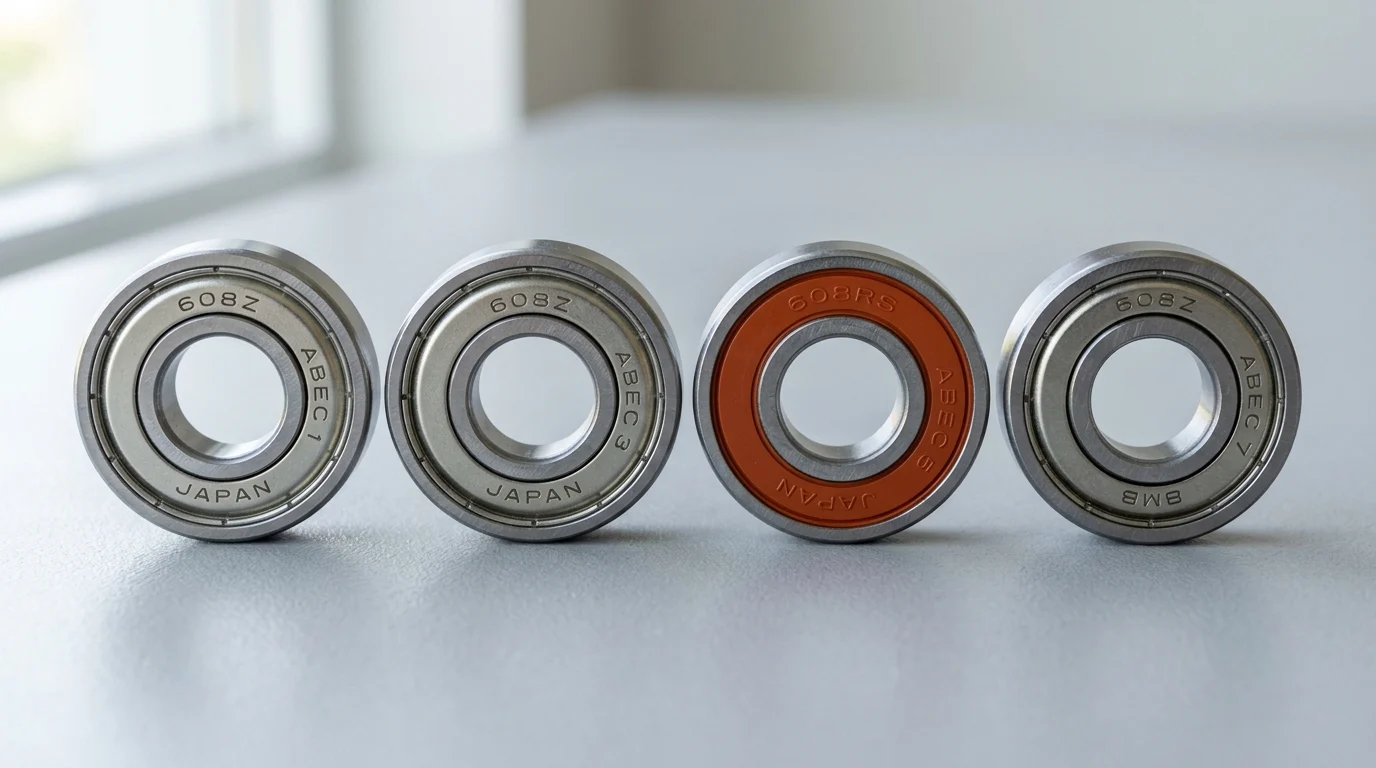
Why Bearing ABEC Ratings Matter in Bearing Manufacturing
The Annular Bearing Engineering Committee (ABEC) scale remains a foundational metric for evaluating the dimensional precision of rolling-element bearings. Developed by the American Bearing Manufacturers Association (ABMA), the ABEC system provides a standardized framework that dictates the acceptable manufacturing tolerances for a bearing’s inner ring, outer ring, and width.
For B2B wholesale buyers and OEM procurement teams, understanding these ratings is not merely a technical exercise; it is a critical commercial driver. The scale includes five primary classes: ABEC 1, 3, 5, 7, and 9. As the number increases, the permitted tolerance decreases, resulting in a bearing with higher dimensional accuracy and tighter runout specifications. However, this increased precision requires advanced automatic grinding and extended production cycles, which directly impact unit costs and lead times.
Impact on procurement decisions
Procurement teams must recognize that ABEC ratings directly dictate the core manufacturing costs of the bearing. Over-specifying an ABEC 7 bearing for an application that only requires ABEC 1 can inflate unit costs by 300% to 500% without delivering tangible performance benefits to the end user. Conversely, under-specifying the tolerance class for high-speed applications will lead to excessive vibration, thermal expansion, and premature mechanical failure, ultimately driving up warranty claims and total cost of ownership (TCO).
Strategic sourcing requires aligning the tolerance threshold precisely with the mechanical load, operating speed (RPM), and expected service life of the equipment. By establishing strict specification boundaries, buyers can filter out incompatible suppliers early in the Request for Quotation (RFQ) process, ensuring that bids are normalized against the correct precision tier.
Where ABEC classes add commercial value
Commercial value is maximized when the ABEC class aligns flawlessly with the performance demands of the target market. Standard industrial applications, such as agricultural machinery, low-speed gearboxes, and heavy-duty conveyor rollers operating below 500 RPM, derive maximum commercial value from ABEC 1 and ABEC 3 bearings. These classes offer the optimal balance of high-volume availability, low Minimum Order Quantities (MOQs), and cost efficiency.
In contrast, premium applications unlock commercial value through the stringent tolerances of ABEC 5, 7, and 9. Electric vehicle (EV) motors, high-speed CNC spindles, and aerospace actuators—often operating at speeds exceeding 20,000 RPM—demand these higher classifications to mitigate centrifugal forces and heat generation. In these sectors, the premium paid for an ABEC 7 bearing is easily offset by the resulting reduction in noise, enhanced energy efficiency, and extended maintenance intervals, allowing OEMs to command higher retail margins for their finished equipment.
Comparing Bearing ABEC Ratings with ISO Standards
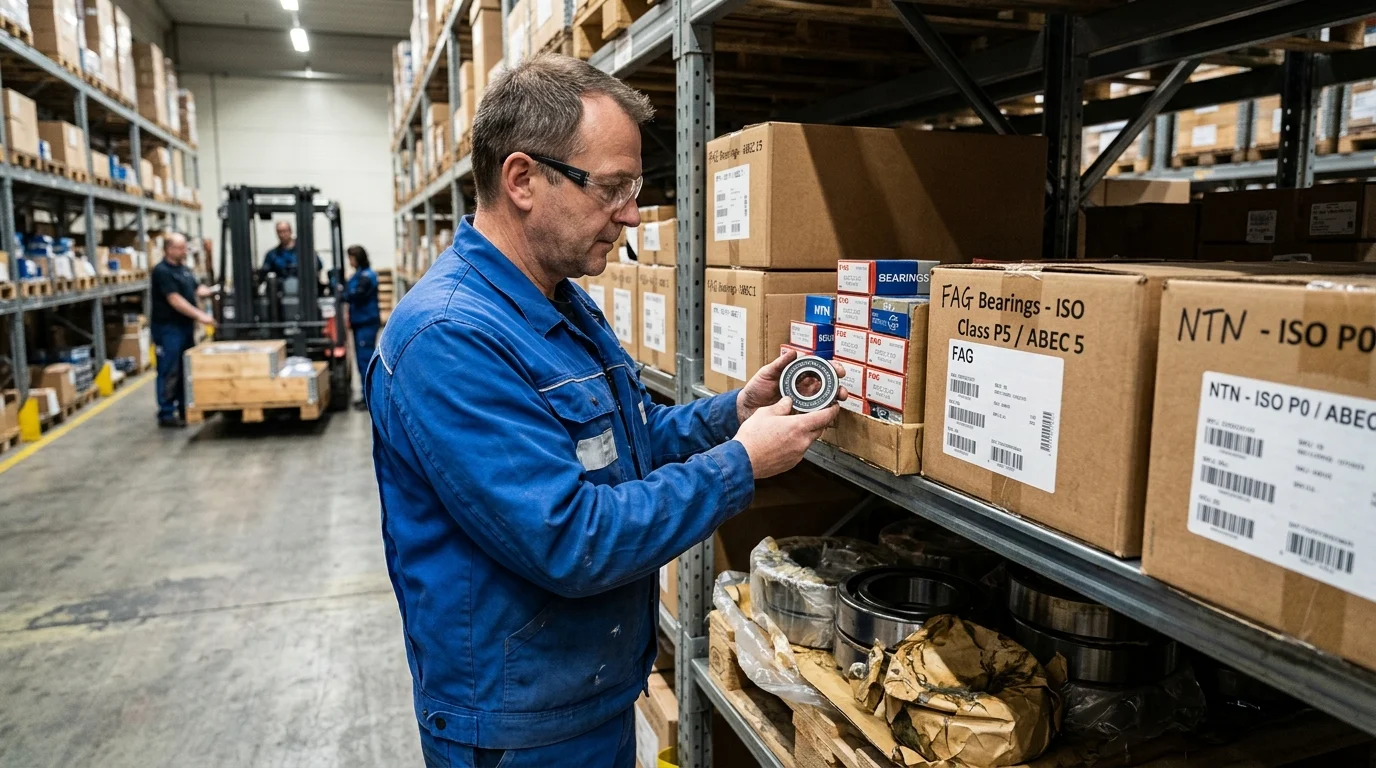
While the ABEC scale is deeply entrenched in North American markets, global procurement necessitates fluency in equivalent international standards. Relying solely on ABEC ratings can artificially limit a buyer’s sourcing pool, particularly when evaluating top-tier manufacturers in Europe and Asia who default to ISO (International Organization for Standardization) or DIN (Deutsches Institut für Normung) classifications.
Bridging the gap between ABEC and ISO is essential for accurate cross-border RFQs, ensuring that dimensional tolerances, material grades, and performance expectations remain consistent regardless of the supplier’s geographic location.
What ABEC classes measure
ABEC classes strictly measure dimensional accuracy and radial runout. The primary metrics evaluated include the bore diameter, outer diameter (OD), ring width, and the radial runout of both the inner and outer rings. The system is entirely focused on the physical geometry of the steel components.
To illustrate the quantitative difference, consider a standard deep groove ball bearing with a 20mm bore. Under the ABEC 1 classification, the acceptable bore tolerance might range from +0.000 mm to -0.008 mm. If that same bearing is manufactured to ABEC 7 standards, the tolerance window tightens dramatically to +0.000 mm to -0.0025 mm. This sub-micron precision minimizes internal clearances, ensuring that the rolling elements maintain perfect concentricity at high rotational velocities.
How ISO standards differ from ABEC
Unlike ABEC, which isolates dimensional constraints, the ISO 492 standard provides a more holistic evaluation framework for rolling bearings. ISO classifications (Normal, Class 6, Class 5, Class 4, and Class 2) incorporate the same dimensional tolerance limits as ABEC but are often utilized in conjunction with parallel standards that define material properties, dynamic load capacities, and internal radial clearances (e.g., C2, CN, C3, C4).
Crucially, neither ABEC nor ISO strictly defines noise and vibration thresholds by default. However, ISO-centric manufacturers frequently append vibration ratings (such as Z1V1 through Z3V3) to their class specifications, offering buyers a more comprehensive understanding of how the bearing will perform acoustically—a factor that ABEC ignores completely.
Comparison points for procurement teams
To prevent cross-border sourcing errors, procurement teams must utilize standardized conversion metrics when evaluating international supplier catalogs and technical drawings.
| ABEC Standard | ISO 492 Equivalent | DIN 620 Equivalent | Typical Tolerance (20mm Bore) |
|---|---|---|---|
| ABEC 1 | Normal (Class 0) | P0 | +0 / -8 µm |
| ABEC 3 | Class 6 | P6 | +0 / -7 µm |
| ABEC 5 | Class 5 | P5 | +0 / -5 µm |
| ABEC 7 | Class 4 | P4 | +0 / -2.5 µm |
| ABEC 9 | Class 2 | P2 | +0 / -1.5 µm |
Using this mapping ensures that RFQs sent to international manufacturers yield accurately specified components. Buyers should mandate that suppliers explicitly state both the ISO class and the equivalent ABEC rating on the Certificate of Analysis (CoA) prior to shipment.
Evaluating Manufacturing, Quality Control, and Compliance
Validating a supplier’s capacity to consistently produce high-ABEC bearings requires rigorous audits of their manufacturing infrastructure and quality control protocols. The leap from manufacturing an ABEC 1 bearing to an ABEC 7 bearing is not merely a matter of adjusting machine settings; it requires an entirely different tier of capital equipment, environmental control, and metallurgical expertise.
Procurement teams must evaluate potential partners based on their integration of automated technologies and their adherence to globally recognized quality management systems.
Production capability and metrology systems
Achieving ABEC 5 or higher tolerances demands advanced automatic grinding and assembly lines. Buyers should verify the presence of CNC-controlled raceway grinders capable of sub-micron precision, as older manual or semi-automatic equipment cannot reliably maintain the concentricity required for high-tier ratings.
Furthermore, a supplier’s metrology lab is just as critical as the factory floor. Leading facilities utilize advanced roundness measuring instruments, contour tracers, and Bearing Vibration Testers (BVT) to validate that production batches maintain defect rates below 50 Parts Per Million (PPM). Temperature-controlled inspection rooms (typically held at a strict 20°C) are mandatory, as thermal expansion during the measurement phase can easily skew sub-micron tolerance readings.
Required certifications and traceability documents
Paper trails and traceability are non-negotiable for high-precision components. Leading manufacturers maintain active ISO 9001:2015 and ISO/TS16949 certifications, the latter being an absolute prerequisite for automotive and high-stress industrial applications.
Procurement contracts should mandate Level 3 Production Part Approval Process (PPAP) documentation for new custom runs. Additionally, buyers must require comprehensive material certificates confirming the use of high-grade GCr15 bearing steel or equivalent stainless/ceramic materials, complete with heat treatment logs proving appropriate Rockwell Hardness (typically HRC 60-64).
Assessing China-based bearing suppliers
China-based bearing suppliers have evolved significantly over the past decade. Top-tier manufacturers have successfully transitioned from focusing exclusively on low-cost, high-volume ABEC 1 production to engineering high-precision ABEC 5 and 7 components that rival traditional European and Japanese outputs.
When assessing these partners, buyers should prioritize vertically integrated facilities. Suppliers that control their own in-house heat treatment processes and utilize fully automated assembly lines are far more capable of ensuring low noise, long service life, and consistent quality across multi-million-unit production runs. Establishing direct relationships with these large-scale exporters eliminates intermediary markups and secures reliable capacity for broad bearing portfolios, from deep groove to complex spherical and thrust bearings.
Sourcing Bearings by ABEC Rating
Transitioning from technical evaluation to commercial sourcing requires structured RFQ parameters tailored specifically to the desired ABEC rating. Sourcing high-precision bearings fundamentally alters the supply chain dynamics, impacting everything from minimum order quantities to packaging protocols and transit times.
Buyers must construct a comprehensive supplier matrix that weighs the total landed cost against the manufacturer’s verified precision capabilities and historical lead times.
RFQ data and tolerance requirements
An effective RFQ must move beyond the basic ABEC number to encompass the full operational profile of the component. It should explicitly state the required radial internal clearance (e.g., C2, CN, C3, C4) to account for thermal expansion in the specific end-use environment.
Additionally, the RFQ must mandate specific noise and vibration ratings (e.g., Z1V1 up to Z3V3) and define the lubrication standard, specifying the exact grease brand and fill percentage (typically 25% to 35% of the internal free space). Failing to specify these parallel metrics can result in an ABEC 7 bearing that is dimensionally accurate but acoustically or thermally unsuitable for the application.
MOQ, private labeling, and packaging terms
Commercial terms scale inversely with precision. Standard ABEC 1 and 3 bearings often carry Minimum Order Quantities (MOQs) ranging from 5,000 to 10,000 pieces, supported by bulk industrial packaging (e.g., rolled in anti-rust paper tubes of 10 pieces).
Conversely, ABEC 7 and 9 components may have MOQs as low as 500 pieces due to their specialized nature. These high-precision units often require individual vacuum-sealed VCI (Volatile Corrosion Inhibitor) bags or hard plastic vials to protect the micro-finished surfaces from atmospheric moisture and transit shock. Private labeling via laser marking on the outer ring is standard across all tiers but may add $0.02 to $0.05 per unit depending on the complexity of the logo and batch size.
Supplier comparison criteria
Evaluating bids requires comparing the total cost of ownership against lead times and precision capabilities. The following table illustrates typical commercial scaling based on precision tiers:
| Precision Rating | Relative Cost Multiplier | Standard Lead Time | Recommended MOQ Range |
|---|---|---|---|
| ABEC 1 | 1.0x (Baseline) | 30 – 45 Days | 5,000 – 10,000 pcs |
| ABEC 3 | 1.2x – 1.5x | 45 – 60 Days | 3,000 – 5,000 pcs |
| ABEC 5 | 2.5x – 3.0x | 60 – 75 Days | 1,000 – 3,000 pcs |
| ABEC 7 | 5.0x – 8.0x | 90 – 120 Days | 500 – 1,000 pcs |
Suppliers quoting ABEC 7 lead times under 45 days should be heavily scrutinized. The thermal stabilization, multi-pass grinding, and rigorous metrology processes required for such precision inherently demand longer, uninterrupted production cycles.
Decision Framework for Selecting Bearing ABEC Ratings

Establishing a standardized decision framework ensures that procurement teams consistently balance mechanical requirements with budgetary constraints. A successful sourcing strategy prevents both costly over-engineering and the catastrophic risks of under-specifying critical rotational components.
By mapping application demands directly to ABEC classifications and executing a disciplined, multi-phase vetting process, buyers can optimize their global supply chain and secure sustainable margins.
Matching ABEC ratings to application needs
Aligning the ABEC rating with the end-use environment is the first step in cost optimization. Low-speed, high-load applications such as agricultural machinery, heavy conveyors, and standard hand tools (typically operating under 1,000 RPM) are perfectly served by ABEC 1 or ABEC 3 bearings. Upgrading to higher precision in these environments offers zero return on investment.
Mid-range applications, including general-purpose electric motors, household appliances, and automotive wheel hubs, require ABEC 3 to ABEC 5 ratings to achieve necessary noise reduction and longevity. Ultra-high-speed and mission-critical environments, such as aerospace actuators, medical centrifuges, and precision machine tool spindles (exceeding 20,000 RPM), strictly mandate ABEC 7 or ABEC 9 to prevent catastrophic thermal expansion and dynamic imbalance.
Step-by-step sourcing process
A robust sourcing process begins with the engineering department defining the maximum operating RPM, load vectors, and acceptable runout limits. Procurement then translates these technical limits into the appropriate ABEC or ISO equivalent standard.
The next step involves shortlisting qualified suppliers,
Key Takeaways
- Wholesale sourcing and supply-chain implications for Bearing ABEC ratings
- Specifications, compliance, and commercial terms buyers should validate
- Actionable recommendations for distributors and procurement teams
Frequently Asked Questions
What does an ABEC rating actually measure?
ABEC measures dimensional tolerance and radial runout of the bearing rings. It does not rate material quality, lubrication, noise, or service life by itself.
How do I choose the right ABEC class for my application?
Match it to speed, load, and cost targets. For low-speed conveyors or farm equipment, ABEC 1 or 3 is often enough; high-speed motors or spindles may need ABEC 5 or higher.
Is a higher ABEC rating always better?
No. Higher ABEC increases precision, cost, and often lead time. If your machine does not need tight tolerances, over-specifying can raise procurement cost without improving performance.
How do ABEC ratings compare with ISO standards?
ABEC focuses mainly on dimensional accuracy and runout, while ISO 492 provides broader tolerance classes used globally. When sending RFQs, ask suppliers to confirm the exact ISO equivalent.
Can DEMY Bearings supply bearings by ABEC or ISO precision class?
Yes. DEMY Bearings offers a broad bearing range and supports industrial and OEM buyers with catalog-based selection. Share your application, RPM, load, and target standard to request a suitable precision grade.
Post time: Apr-20-2026