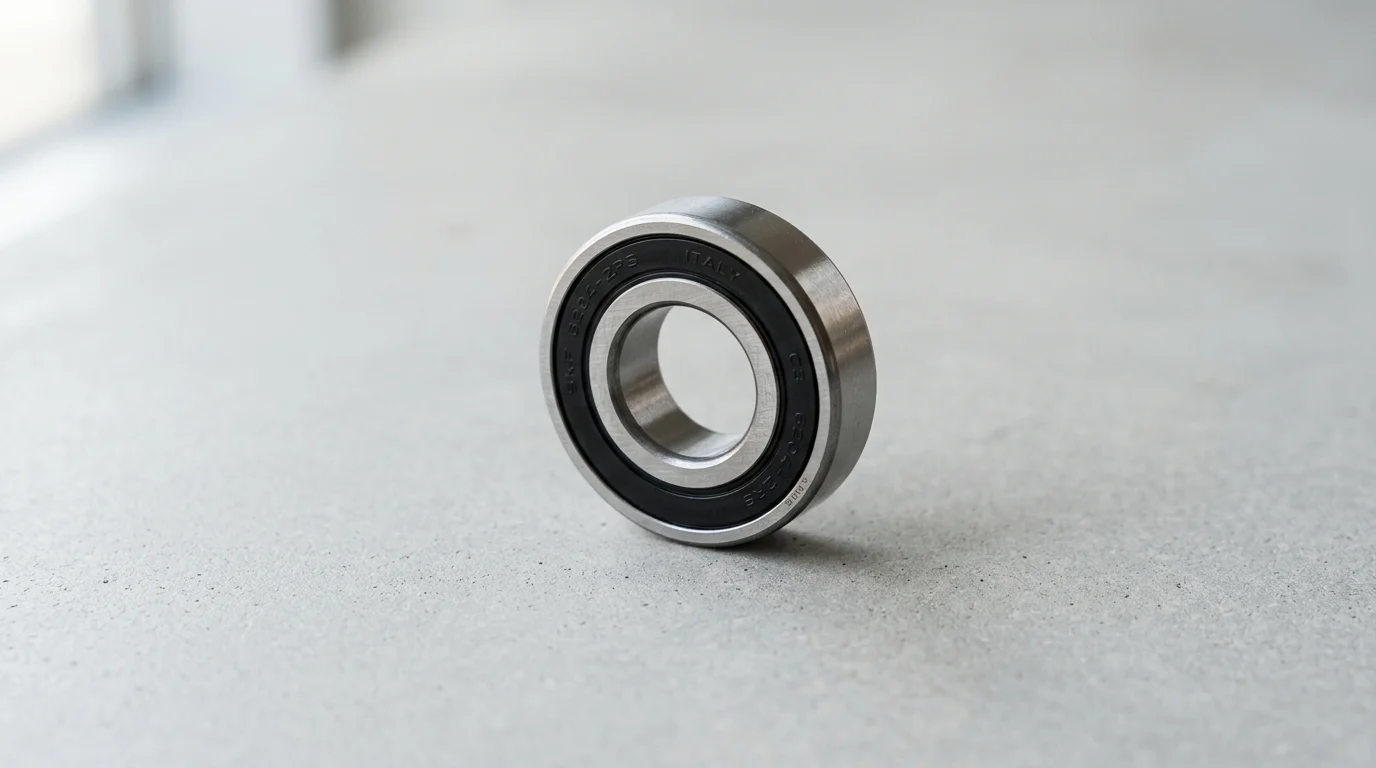
Bearing Life Strategy and Equipment Performance
In modern industrial operations, rotating equipment forms the backbone of production, and the reliability of this equipment is fundamentally tied to bearing performance. Treating bearings merely as consumable commodities is a widespread but costly operational error. When organizations shift their perspective to view these components as critical assets, they unlock significant improvements in overall equipment effectiveness (OEE). A comprehensive bearing life strategy integrates precision engineering, rigorous maintenance protocols, and lifecycle data analysis to maximize the operational lifespan of machinery.
The economic implications of bearing failure extend far beyond the procurement cost of the replacement part. Industry data indicates that bearing-related issues account for approximately 51% of all electric motor failures, making them the leading cause of unplanned mechanical downtime. By implementing targeted strategies to extend bearing life, industrial facilities can transition from reactive firefighting to predictive asset management, stabilizing production schedules and optimizing maintenance budgets.
Why Bearing Reliability Should Be Strategic
Elevating bearing reliability to a strategic level requires aligning maintenance practices with broader corporate objectives regarding production output and capital efficiency. In high-stakes environments such as continuous process manufacturing, power generation, or petrochemical refining, a single catastrophic bearing failure can halt an entire production line. Organizations that achieve top-quartile reliability metrics do so by establishing strict standards for bearing selection, storage, installation, and monitoring, effectively engineering out the root causes of premature failure.
A strategic approach also involves cross-functional collaboration between procurement, engineering, and maintenance departments. Rather than purchasing the lowest-cost component, procurement teams must work with reliability engineers to source bearings that meet exact application specifications. This alignment ensures that the total cost of ownership (TCO) is prioritized over initial purchase price, fostering a culture where precision and long-term performance dictate supply chain decisions.
Key Bearing Life Outcomes: Uptime, Cost, and Risk
The primary outcomes of a successful bearing life strategy are measurable increases in equipment uptime, reductions in maintenance costs, and the mitigation of operational risk. Unplanned downtime in heavy industry can carry staggering financial penalties, often ranging from $10,000 to over $250,000 per hour depending on the sector. When a bearing achieves its maximum potential service life, the frequency of these high-cost outage events drops precipitously, directly protecting the facility’s bottom line.
Cost optimization is achieved not only through fewer replacement parts but also through reduced labor requirements and lower secondary damage. When a bearing fails catastrophically, it frequently destroys adjacent components such as shafts, housings, and seals, turning a minor repair into a major overhaul. By managing risk through predictive maintenance and precise operational controls, facilities ensure that bearings are replaced during scheduled downtime windows, significantly lowering the safety risks and logistical chaos associated with emergency repairs.
Bearing Life Definitions and Failure Modes
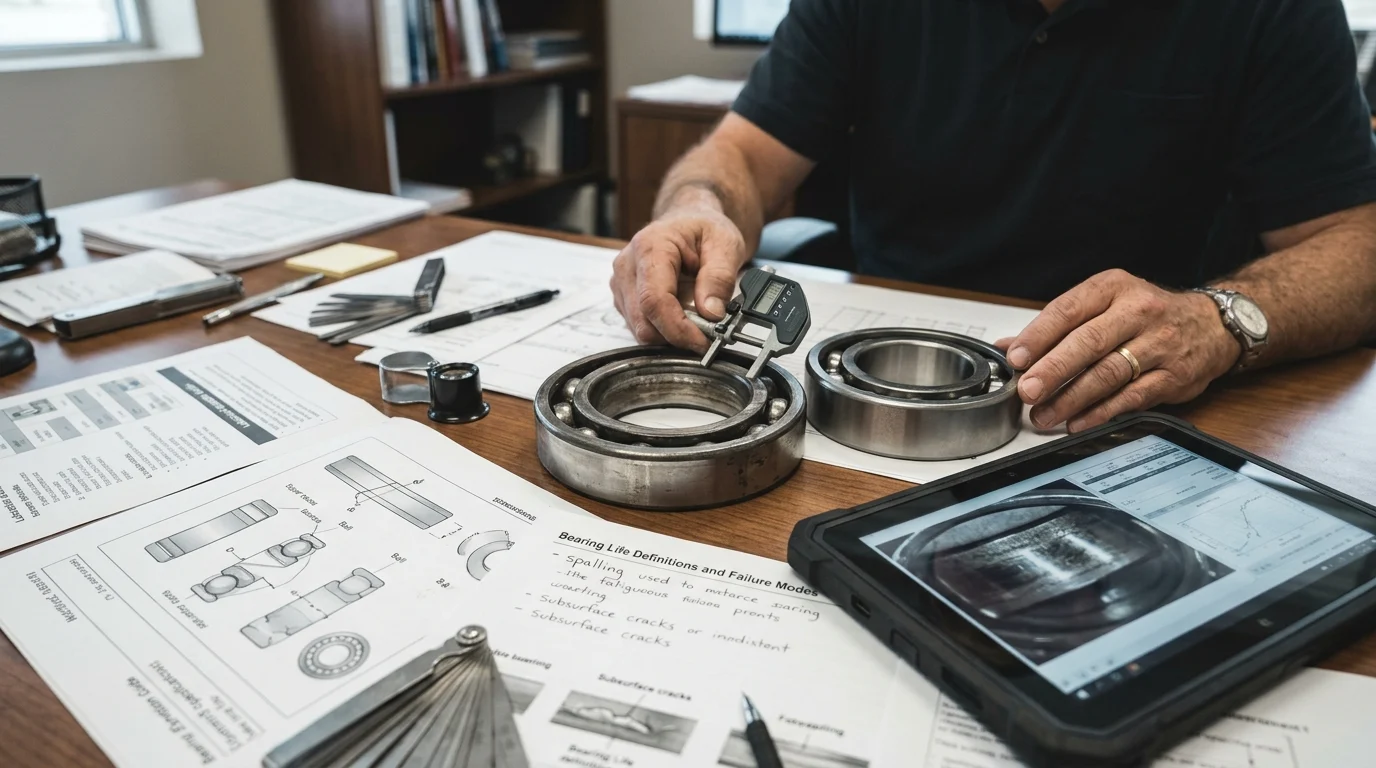
Understanding how bearing life is calculated, defined, and ultimately compromised is essential for any reliability program. The terminology surrounding bearing longevity often causes confusion between engineering design targets and real-world operational realities. Bridging the gap between theoretical models and actual machinery performance requires a deep understanding of failure kinematics and the environmental factors that degrade rolling elements.
Engineers and technicians must speak the same language when assessing bearing health. By standardizing the definitions of life expectancy and systematically categorizing the ways in which bearings fail, organizations can implement highly effective root cause analysis (RCA) programs. This analytical rigor transforms failed components from scrap metal into valuable data points that drive continuous improvement.
Rated Life vs. Service Life
The foundational metric for bearing longevity is the L10 (or L10h for hours) rated life. Defined by ISO 281, the L10 life represents the number of revolutions or operating hours that 90% of a group of identical bearings will exceed before the first evidence of metal fatigue (spalling) occurs. The calculation relies heavily on the dynamic load rating (C) and the equivalent dynamic bearing load (P), using the formula L10 = (C/P)^p, where ‘p’ is 3 for ball bearings and 10/3 for roller bearings.
In stark contrast to rated life is the actual service life, which is the duration a bearing remains functional in a specific application before failing or being removed for maintenance. While an L10h calculation might project a theoretical lifespan of 100,000 hours under ideal laboratory conditions, the actual service life in a harsh industrial environment may average only 10,000 to 20,000 hours. This massive discrepancy is almost entirely driven by external variables such as contamination, improper lubrication, and installation errors, rather than inherent material fatigue.
Common Failure Modes and Root Causes
According to ISO 15243, bearing failure modes are classified into distinct categories: fatigue, wear, corrosion, electrical erosion, plastic deformation, and fracture. Industry analyses consistently reveal that pure material fatigue accounts for a surprisingly small percentage of failures—typically less than 10% in real-world applications. Instead, lubrication issues (including over-lubrication, under-lubrication, and incorrect viscosity) are the root cause of approximately 36% of premature failures.
Contamination is another leading culprit, responsible for roughly 14% of failures, while improper installation and handling account for another 16%. Solid particle contamination breaches the elastohydrodynamic lubrication (EHL) film, causing abrasive wear that rapidly degrades the internal geometry of the raceways. Similarly, poor handling can cause true brinelling—permanent plastic deformation of the raceways—before the machine is even energized.
Inspection Evidence to Document
Documenting the visual and microscopic evidence of a failed bearing is critical for preventing recurrence. When a bearing is removed from service, it should be treated as forensic evidence. Technicians must inspect the raceway load zones, the condition of the rolling elements, the integrity of the cage, and the state of the residual lubricant.
| Failure Mode | Visual Evidence | Common Root Cause |
|---|---|---|
| Abrasive Wear | Dull, matte surfaces; loss of internal clearance | Ingress of particulate contamination; ineffective sealing |
| Electrical Fluting | Washboard-like ridges (flutes) on raceways; darkened grease | High-frequency VFD shaft currents exceeding 0.5V |
| True Brinelling | Indentations matching rolling element spacing | Impact loading during static state or improper hammer installation |
| False Brinelling | Elliptical wear marks at roller pitch; no raised metal edges | External vibration while equipment is stationary |
| Adhesive Wear (Smearing) | Torn, frosted, or scuffed metal surfaces | Skidding due to insufficient load or inadequate lubrication viscosity |
For example, if inspection reveals fluting patterns on the inner ring raceway, the root cause is almost certainly electrical discharge machining (EDM) caused by variable frequency drives (VFDs) inducing shaft voltages. In such cases, simply replacing the bearing will result in another failure. The documented evidence dictates a systemic fix, such as installing shaft grounding rings or upgrading to hybrid ceramic bearings that provide electrical insulation.
Bearing Selection and Application Factors
The foundation of extended bearing life is laid during the initial engineering and selection phase. Specifying a bearing is a complex balancing act that requires matching the internal geometry, material science, and kinematic capabilities of the component to the exact demands of the application. A bearing that is perfectly suited for a high-speed machine tool spindle will fail rapidly if installed in a low-speed, high-impact rock crusher.
Modern bearing manufacturers offer an overwhelming array of configurations, variants, and specialized technologies. Navigating this landscape requires a rigorous evaluation of the operating envelope. By carefully analyzing the dynamic forces, environmental challenges, and spatial constraints of the machinery, engineers can select a bearing configuration that inherently resists the dominant failure modes of that specific application.
Load, Speed, Temperature, and Clearance
The operational envelope is defined by four primary pillars: load, speed, temperature, and internal clearance. The equivalent dynamic load must be accurately calculated to ensure it falls within the bearing’s optimal operating range. While overloading accelerates fatigue, underloading can be equally destructive, causing rolling elements to skid rather than roll, leading to rapid adhesive wear. Speed limitations are dictated by the bearing’s pitch diameter and cage design, often expressed as the NDm factor, which governs the maximum permissible RPM before centrifugal forces and friction generate uncontrollable heat.
Temperature and internal clearance are deeply interconnected. Standard bearing steel (such as 52100) undergoes dimensional stabilization treatments allowing continuous operation up to 120°C. If operational temperatures exceed this threshold, the steel undergoes metallurgical phase changes, resulting in permanent dimensional growth and loss of hardness. To accommodate thermal expansion during normal operation, bearings are manufactured with specific internal clearances (e.g., CN, C3, C4). A C3 clearance, for instance, provides approximately 13 to 28 micrometers of extra radial play in a medium-sized bearing, preventing catastrophic binding when the inner ring runs hotter than the outer housing.
Bearing Type Comparison
Selecting the correct bearing type requires matching the mechanical design to the primary direction and magnitude of the applied loads. Deep groove ball bearings are highly versatile, accommodating moderate radial and axial loads at high speeds, but lack the load-carrying capacity for heavy industrial applications. Cylindrical roller bearings offer massive radial load capacity due to line contact rather than point contact, but they generally cannot tolerate axial loads or misalignment.
| Bearing Type | Primary Load Capacity | Speed Capability | Misalignment Tolerance |
|---|---|---|---|
| Deep Groove Ball | Moderate Radial / Light Axial | Very High | Poor (< 0.15 degrees) |
| Cylindrical Roller | Extremely High Radial | High | Poor (< 0.1 degrees) |
| Spherical Roller | Very High Radial / Moderate Axial | Low to Moderate | Excellent (up to 2.0 degrees) |
| Tapered Roller | High Radial / High Axial (Unidirectional) | Moderate | Poor (< 0.05 degrees) |
When shaft deflection or housing misalignment is unavoidable, spherical roller bearings are often the optimal choice. Their self-aligning geometry allows them to accommodate up to 2.0 degrees of misalignment without generating edge-loading stresses that would immediately destroy a rigid cylindrical roller bearing. Conversely, applications with combined heavy radial and axial loads, such as automotive wheel hubs or industrial gearboxes, rely heavily on tapered roller bearings mounted in opposing pairs.
Materials, Seals, Cages, and Lubrication Fit
Beyond the macro-geometry, the micro-components of a bearing dictate its survivability in harsh environments. The standard material for rolling elements and rings is through-hardened high-carbon chromium steel, typically hardened to 58-65 HRC. However, for applications plagued by poor lubrication or electrical currents, hybrid bearings utilizing silicon nitride (ceramic) rolling elements offer superior wear resistance and inherent electrical insulation.
Cages and seals also play pivotal roles. Stamped steel cages are standard, but machined brass cages provide superior performance in high-vibration environments, while glass-fiber reinforced polyamide 66 (PA66) cages offer excellent sliding properties and emergency running characteristics. Sealing selection is a trade-off between protection and speed capability. Non-contact metallic shields (Z) allow for high-speed operation but offer minimal protection against liquids, whereas heavy-duty contact seals (RS) provide excellent exclusion of moisture and particulate matter but generate friction that limits maximum rotational speeds and increases operating temperatures.
Maintenance Practices That Extend Bearing Life
Even the most perfectly engineered bearing will fail prematurely if subjected to substandard maintenance practices. The lifecycle of a bearing in the field is heavily dictated by the precision with which it is installed, the cleanliness and accuracy of its lubrication regime, and the vigilance with which its condition is monitored. Maintenance is the frontline defense against the external variables that degrade bearing performance.
Transitioning from traditional, wrench-turning maintenance to precision reliability requires investment in tools, training, and culture. Technicians must understand that bearings are precision instruments, often manufactured to tolerances measured in the single microns. Handling them with brute force or exposing them to shop floor contaminants fundamentally compromises their engineered capabilities.
Installation, Shaft Fits, and Housing Fits
Proper installation begins with strict adherence to shaft and housing fit tolerances. Bearings rely on specific interference and clearance fits to prevent fretting corrosion and ring creep. The ISO tolerance system dictates these fits; for example, a rotating solid shaft typically requires an interference fit (e.g., k5 or m5), while a stationary housing uses a transition or clearance fit (e.g., H7 or J7). Measuring the shaft and housing journals with micrometers prior to installation is a non-negotiable step to verify these tolerances.
Mounting techniques must eliminate the risk of shock loading. Cold mounting using a hammer and drift should be avoided; if necessary, specialized impact rings that distribute force equally across both the inner and outer rings must be used to prevent brinelling. For interference fits, thermal expansion via induction heating is the industry standard. Bearings should typically be heated to a target of 110°C (and never exceeding 120°C) to allow them to slide effortlessly onto the shaft. The use of open flames or dirty oil baths introduces severe thermal gradients and contamination, irreparably damaging the bearing before it enters service.
Lubrication Program Best Practices
Lubrication is the lifeblood of a bearing, responsible for separating the metal surfaces, dissipating heat, and preventing corrosion. A best-practice lubrication program relies on calculating the precise kappa value (κ = ν / ν1), which is the ratio of the actual operating viscosity to the rated viscosity required for the specific speed and pitch diameter. A kappa value between 1.5 and 4.0 indicates a full elastohydrodynamic (EHL) film, ensuring optimal surface separation.
Relubrication intervals and quantities must be mathematically determined rather than based on guesswork. Over-greasing is a rampant industry problem; packing a bearing housing completely full of grease leads to severe fluid friction and churning. This churning can cause operating temperatures to spike by 15°C to 20°C, which rapidly oxidizes the base oil and destroys the thickener matrix. Implementing ultrasound-assisted greasing allows technicians to listen to the acoustic friction of the bearing, injecting exact quantities of grease until the friction baseline drops to optimal levels, thereby eliminating both over- and under-lubrication.
Condition Monitoring for Early Degradation
Proactive condition monitoring detects the earliest stages of bearing degradation, allowing facilities to plan replacements weeks or months before functional failure occurs. Vibration analysis is the cornerstone of this approach. Advanced techniques like envelope demodulation or high-frequency acceleration capture the microscopic shock pulses generated when rolling elements pass over a developing spall. Tracking defect frequencies—such as the Ball Pass Frequency Outer (BPFO) or Ball Pass Frequency Inner (BPFI)—allows analysts to pinpoint exactly which component inside the bearing is failing.
For oil-lubricated systems, fluid analysis is equally critical. Monitoring particulate counts according to ISO 4406 standards provides a direct indicator of bearing wear and seal integrity. A critical gearbox might target an ISO 4406 cleanliness code of 16/14/11; an upward trend in the 4-micron and 6-micron particle counts serves as an early warning of active adhesive or abrasive wear. Combined with routine infrared thermography to monitor housing temperatures, these condition monitoring technologies form a comprehensive defense against unexpected catastrophic failures.
Replacement, Upgrade, and Redesign Decisions
When bearing failures become chronic, organizations must transition from routine replacement to strategic redesign. Continually replacing failed bearings without addressing the underlying systemic issues is a drain on maintenance budgets and a massive liability for production schedules. Recognizing the threshold where maintenance ends and engineering intervention begins is a critical competency for reliability teams.
Upgrading or redesigning a bearing arrangement involves evaluating the entire mechanical ecosystem. This phase requires rigorous quality control, adherence to compliance standards, and a holistic financial analysis to justify the capital expenditure required for engineered upgrades. The goal is to implement a permanent solution that fundamentally alters the lifecycle trajectory of the equipment.
When Repeated Failure Signals a Deeper Problem
Repeated failures of the same bearing position strongly indicate a mismatch between the bearing’s design capabilities and the actual operating conditions. If a system engineered for a 5-year L10h life consistently exhibits a Mean Time Between Failures (MTBF) that drops below 6 months, a deeper investigation is mandatory. This scenario often points to uncalculated loads, such as thermal expansion binding the shaft, severe structural resonance, or process changes that have increased the operational demands beyond the original OEM specifications.
In these situations, a redesign may involve upgrading to a bearing with a higher dynamic load rating, altering the arrangement to include a distinct fixed and floating position to accommodate thermal growth, or changing the bearing type entirely. For example, replacing a standard deep groove ball bearing with a matched set of angular contact bearings can dramatically increase axial rigidity and load capacity in a problematic pump shaft application.
Quality, Traceability, and Compliance Checks
When sourcing replacement bearings, stringent quality and traceability checks are vital to ensure that substandard components do not compromise the redesign. The industrial market is heavily infiltrated by counterfeit bearings, which utilize inferior metallurgy and poor manufacturing tolerances. Facilities must mandate that purchasing departments source components exclusively from authorized, manufacturer-certified distributors. Verification involves checking factory seals, laser-etched traceability codes, and demanding Certificates of Compliance (CoC) for critical applications.
Engineers must also verify that the replacement bearings meet the required tolerance classes. For standard industrial applications, ISO Class 0 (ABEC 1) is sufficient. However, for high-speed machine tool spindles or precision robotics, bearings must meet ISO Class 4 or Class 2 (ABEC 7 or ABEC 9) standards. These precision classes enforce strict limits on radial runout—often requiring runout to be less than 5 micrometers—ensuring the rotational accuracy necessary for vibration-free operation at extreme speeds.
Cost, Risk, and Lifecycle Decision Framework
The decision to upgrade or redesign must be supported by a robust Total Cost of Ownership (TCO) framework. While engineered bearing solutions carry a higher initial procurement cost, they must be evaluated against the financial risk of continued downtime. The lifecycle decision framework factors in the cost of the bearing, labor for installation, secondary damage risk, and the hourly cost of lost production.
For instance, upgrading from an open bearing to a premium sealed spherical roller bearing in a highly contaminated mining conveyor application might increase the unit cost by 40%.
Key Takeaways
- Treat bearings as strategic assets rather than low-cost consumables to improve uptime, OEE, and long-term equipment reliability.
- Because bearing-related issues cause about 51% of electric motor failures, maintenance teams should prioritize selection, lubrication, installation, and monitoring practices.
- Unplanned downtime can cost from $10,000 to more than $250,000 per hour, making predictive bearing maintenance financially critical.
- Use application-specific bearings that match load, speed, temperature, precision, contamination exposure, and operating environment.
- Prevent catastrophic failures by monitoring vibration, heat, noise, lubricant condition, and wear trends before damage spreads to shafts, housings, and seals.
- Align procurement, engineering, and maintenance teams so bearing decisions are based on total cost of ownership instead of initial purchase price alone.
Frequently Asked Questions
Why is bearing life important for equipment performance?
Bearing life directly affects uptime, energy efficiency, vibration, noise, and maintenance cost. Since bearing-related issues account for about 51% of electric motor failures, improving bearing reliability can significantly reduce unplanned downtime.
What are the most common causes of premature bearing failure?
Common causes include incorrect bearing selection, poor lubrication, contamination, misalignment, improper installation, excessive load, overheating, and inadequate condition monitoring.
How can proper lubrication extend bearing service life?
Using the right lubricant type, viscosity, quantity, and relubrication interval reduces friction, heat, wear, and corrosion. Both over-lubrication and under-lubrication can shorten bearing life.
When should bearings be replaced?
Bearings should be replaced during planned maintenance when vibration, temperature, noise, lubricant analysis, or inspection data show deterioration. Predictive replacement helps avoid emergency shutdowns and secondary damage.
How does bearing selection affect total cost of ownership?
Choosing bearings by application requirements—not just purchase price—reduces failure risk, downtime, labor, and damage to shafts, housings, and seals. The right bearing often lowers total lifetime cost.
Demy
holder bearings and roller chain accessories. Proprietary hightemp rubber seal technology outperforms standard NBR seals,providing tight sealing and extended product lifespan.
Equipped with semi-automatic and fully automatic production lines for high-quality, efficient manufacturing with fast delivery for urgent orders.
Post time: Jun-16-2026