Deep groove ball bearings are among the most widely used types of rolling bearings in various applications, ranging from household appliances to heavy machinery. Their design allows them to accommodate both radial and axial loads, making them versatile and efficient. In this article, we will provide a comprehensive analysis of deep groove ball bearing models, exploring their features, applications, and advantages.
1. Understanding Deep Groove Ball Bearings
Definition:
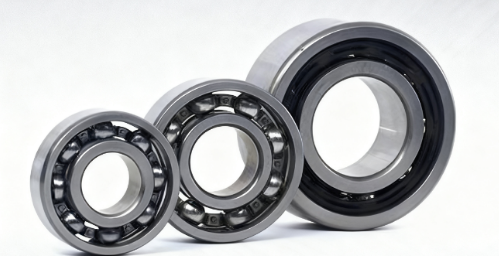
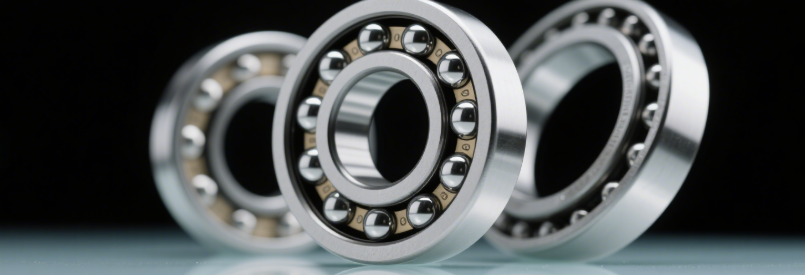
Deep groove ball bearings consist of an inner ring, an outer ring, a cage, and balls. The deep raceway grooves in both the inner and outer rings enable the bearing to support high radial and axial loads.
Key Features:
• Versatility: Suitable for various applications due to their ability to handle both radial and axial loads.
• Durability: Designed to withstand high speeds and heavy loads, ensuring a long service life.
• Low Friction: The design minimizes friction, enhancing efficiency and reducing energy consumption.
2. Types of Deep Groove Ball Bearings
a. Single Row Deep Groove Ball Bearings
• Description: The most common type, featuring a single row of balls. They are ideal for applications with moderate loads and speeds.
• Applications: Used in electric motors, pumps, and general machinery.
b. Double Row Deep Groove Ball Bearings
• Description: These bearings have two rows of balls, providing increased load capacity and stability.
• Applications: Suitable for applications requiring higher load capacities, such as gearboxes and heavy machinery.
c. Angular Contact Ball Bearings
• Description: Designed to accommodate axial loads in one direction, these bearings have a contact angle that allows for higher speeds and loads.
• Applications: Commonly used in high-speed applications, such as spindles and machine tools.
d. Sealed and Shielded Deep Groove Ball Bearings
• Description: These bearings come with seals or shields to protect against contaminants and retain lubrication.
• Applications: Ideal for environments where dust, dirt, or moisture is present, such as automotive and industrial applications.
3. Performance Characteristics
a. Load Capacity
Deep groove ball bearings can handle both radial and axial loads. The load capacity varies based on the bearing size, design, and material. Larger bearings typically have higher load capacities.
b. Speed Ratings
These bearings are designed for high-speed applications. The speed rating is influenced by factors such as lubrication, temperature, and load conditions. Proper lubrication is essential to maintain performance and extend service life.
c. Temperature Range
Deep groove ball bearings can operate effectively in a wide temperature range, typically from -30°C to +120°C. However, specific materials and lubricants can extend this range.
d. Friction and Efficiency
The design of deep groove ball bearings minimizes friction, which enhances efficiency and reduces energy consumption. This is particularly important in applications where energy efficiency is a priority.
4. Applications of Deep Groove Ball Bearings
Deep groove ball bearings are utilized in a wide range of industries and applications, including:
• Automotive: Used in engines, transmissions, and wheel hubs.
• Industrial Machinery: Found in conveyors, pumps, and compressors.
• Electronics: Common in motors, fans, and household appliances.
• Aerospace: Employed in various components requiring high reliability and performance.
—————————————————————————————————————————————————————————————————————————————————————————
5. Conclusion
Deep groove ball bearings are essential components in numerous applications due to their versatility, durability, and efficiency. Understanding the different models and their performance characteristics can help you select the right bearing for your specific needs.
For high-quality deep groove ball bearings tailored to your requirements please contact us. Let us provide you with the perfect bearing solutions to enhance your machinery’s performance and reliability!
Post time: Dec-08-2025