Introduction
Choosing the right automotive bearing is a design and sourcing decision that directly affects durability, noise, efficiency, and safety across both OEM programs and replacement markets. The right specification must match load profiles, speed ranges, temperature exposure, sealing needs, lubrication strategy, and expected service life, while also reflecting manufacturing tolerances and cost targets. This guide explains the key selection factors for auto bearing applications, highlights where OEM and aftermarket priorities differ, and helps readers evaluate bearing types and performance requirements with enough clarity to support better engineering, purchasing, and product decisions.
Why Auto Bearing Selection Matters for OEM and Aftermarket
The specification and procurement of an auto bearing represent a critical intersection of mechanical engineering, metallurgical science, and supply chain management. Whether integrated into a newly designed electric vehicle (EV) drivetrain or manufactured as a replacement component for the global aftermarket, bearings must endure severe operational extremes. A miscalculated specification does not merely result in premature wear; it can precipitate catastrophic mechanical failure, leading to costly warranty claims and compromised vehicle safety. Modern automotive architectures routinely demand bearings capable of sustaining radial loads exceeding 50 kN while maintaining strict dimensional stability.
Operating conditions and duty cycles
Automotive bearings are subjected to highly variable duty cycles, dictating stringent design parameters. Rotational speeds can vary from a few hundred revolutions per minute (RPM) in wheel hub assemblies to upwards of 20,000 RPM in modern EV traction motors and turbochargers. Consequently, the operating environment introduces severe thermal fluctuations, with ambient temperatures ranging from -40°C in cold-weather startups to continuous operating temperatures exceeding 150°C in engine and exhaust-adjacent compartments.
These conditions require precise calculation of dynamic and static load ratings. Engineers must account for shock loads from uneven road surfaces, which drastically alter the stress distribution across the rolling elements. Lubrication breakdown under high thermal stress remains a primary failure mode, necessitating advanced grease formulations and specialized seal designs to maintain the hydrodynamic film required for continuous operation.
Failure consequences and reliability needs
The consequences of auto bearing failure extend far beyond localized component damage. In an internal combustion engine, a spun main bearing can destroy the crankshaft, while a seized wheel hub bearing can result in total loss of vehicle control. Reliability engineers quantify these risks using the L10 life metric, which represents the operational hours or mileage at which 10% of a given bearing population will show signs of fatigue failure (such as spalling or brinelling).
For passenger vehicles, OEMs typically target an L10 life expectancy of 150,000 miles, whereas heavy-duty commercial applications often require a baseline of 300,000 miles. Achieving this reliability threshold necessitates rigorous validation against noise, vibration, and harshness (NVH) standards, as micro-pitting on bearing raceways will manifest as unacceptable cabin noise long before catastrophic mechanical failure occurs.
Auto Bearing Types, Specifications, and Materials
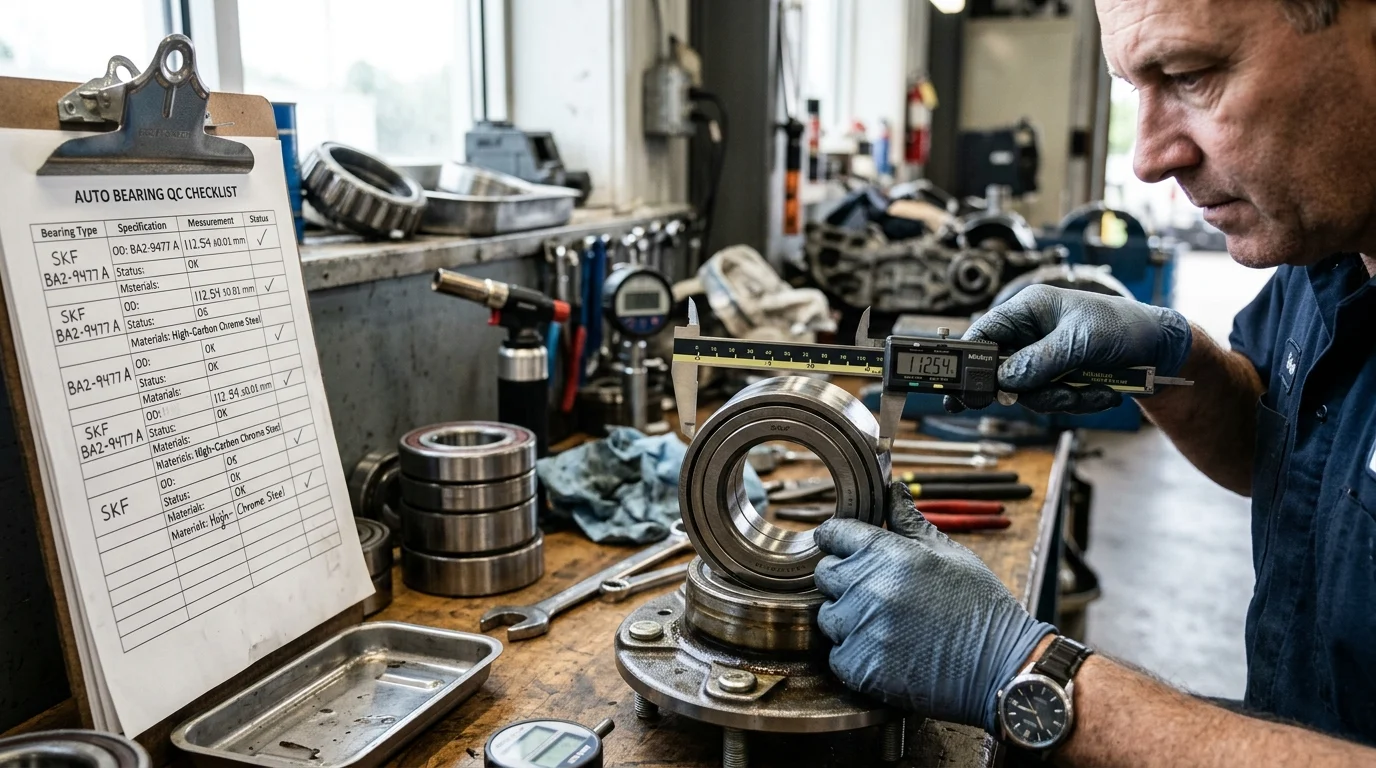
Selecting the correct auto bearing architecture requires aligning the internal geometry of the component with the specific kinetic and dynamic demands of the vehicle subsystem. Engineers must evaluate the primary load vectors, available envelope space, and required rotational speeds to determine the optimal configuration.
Ball, roller, and tapered roller bearings
The automotive industry relies heavily on three primary rolling element designs. Deep groove ball bearings are ubiquitous in alternators, air conditioning compressors, and electric motors due to their ability to accommodate high rotational speeds and moderate radial loads with minimal friction. Cylindrical roller bearings, which maximize the contact area between the rolling element and the raceway, are deployed in transmissions and gearboxes where high radial load capacity is paramount.
Tapered roller bearings are engineered to handle simultaneous radial and axial (thrust) loads. This dual-load capability makes them the definitive choice for wheel hub assemblies and differential pinions. By utilizing conical rollers, these bearings efficiently transfer complex dynamic forces to the vehicle chassis.
| Bearing Type | Primary Load Vector | Typical Automotive Application | Relative Speed Limit |
|---|---|---|---|
| Deep Groove Ball | Radial (Moderate) | Alternators, A/C Compressors | Very High (up to 20k RPM) |
| Tapered Roller | Combined Radial/Axial | Wheel Hubs, Differentials | Moderate (up to 3k RPM) |
| Cylindrical Roller | Radial (Heavy) | Transmissions, Gearboxes | High (up to 10k RPM) |
Key specifications for fit and function
Dimensional accuracy and internal clearances are foundational to bearing function. Tolerance classes, standardized by ISO 492 (ranging from Normal class P0 to high-precision class P4) or the ABEC scale, dictate the maximum permissible runout. While standard P0/ABEC 1 tolerances are sufficient for most chassis components, precision engine internals may require P6/ABEC 3 or higher to mitigate vibration.
Internal clearance—the total distance one ring can move relative to the other—is equally critical. A C3 (greater than normal) clearance is frequently specified for automotive applications to accommodate the thermal expansion of the inner ring during high-speed, high-temperature operation, preventing the bearing from seizing under operating preload.
Material options and performance trade-offs
Metallurgical composition directly influences bearing fatigue life. The industry standard is high-carbon, chromium-alloyed anti-friction steel, notably SAE 52100, which is typically heat-treated to achieve a surface hardness of 60 to 64 HRC. This provides an optimal balance of wear resistance and structural toughness.
However, the transition to electric mobility has introduced new material paradigms. High-frequency electrical currents in EV motors can cause electrical arcing across standard steel bearings, leading to rapid raceway fluting. To counteract this, manufacturers are increasingly specifying ceramic hybrid bearings that utilize silicon nitride (Si3N4) rolling elements, or applying specialized aluminum oxide insulating coatings to the outer rings, despite a cost premium that can exceed 300% over standard steel variants.
OEM vs Aftermarket Auto Bearing Requirements
While the fundamental physics of an auto bearing remain constant, the commercial and engineering requirements diverge significantly depending on whether the component is destined for an OEM assembly line or the independent aftermarket.
Validation, documentation, and traceability
OEMs enforce rigorous validation protocols before a bearing is approved for production. Suppliers must complete a Production Part Approval Process (PPAP), typically at Level 3, which mandates comprehensive documentation including Design Failure Mode and Effects Analysis (DFMEA), control plans, and dimensional results. Traceability is absolute; OEMs require the ability to trace a failed bearing back to its specific heat treatment lot and raw steel batch.
Conversely, aftermarket suppliers focus on reverse-engineering OEM specifications to provide viable replacements. While top-tier aftermarket brands maintain robust quality management systems, the documentation burden is generally lower, focusing more on cataloging, cross-referencing OEM part numbers, and ensuring immediate availability rather than providing exhaustive metallurgical traceability to the end-user.
Interchangeability and repair environment
The repair environment heavily influences aftermarket bearing design. Independent mechanics require components that minimize installation time and reduce the risk of assembly errors. This has driven the evolution of wheel bearings from Generation 1 (simple double-row angular contact bearings requiring precise pressing and manual greasing) to Generation 3 hub assemblies.
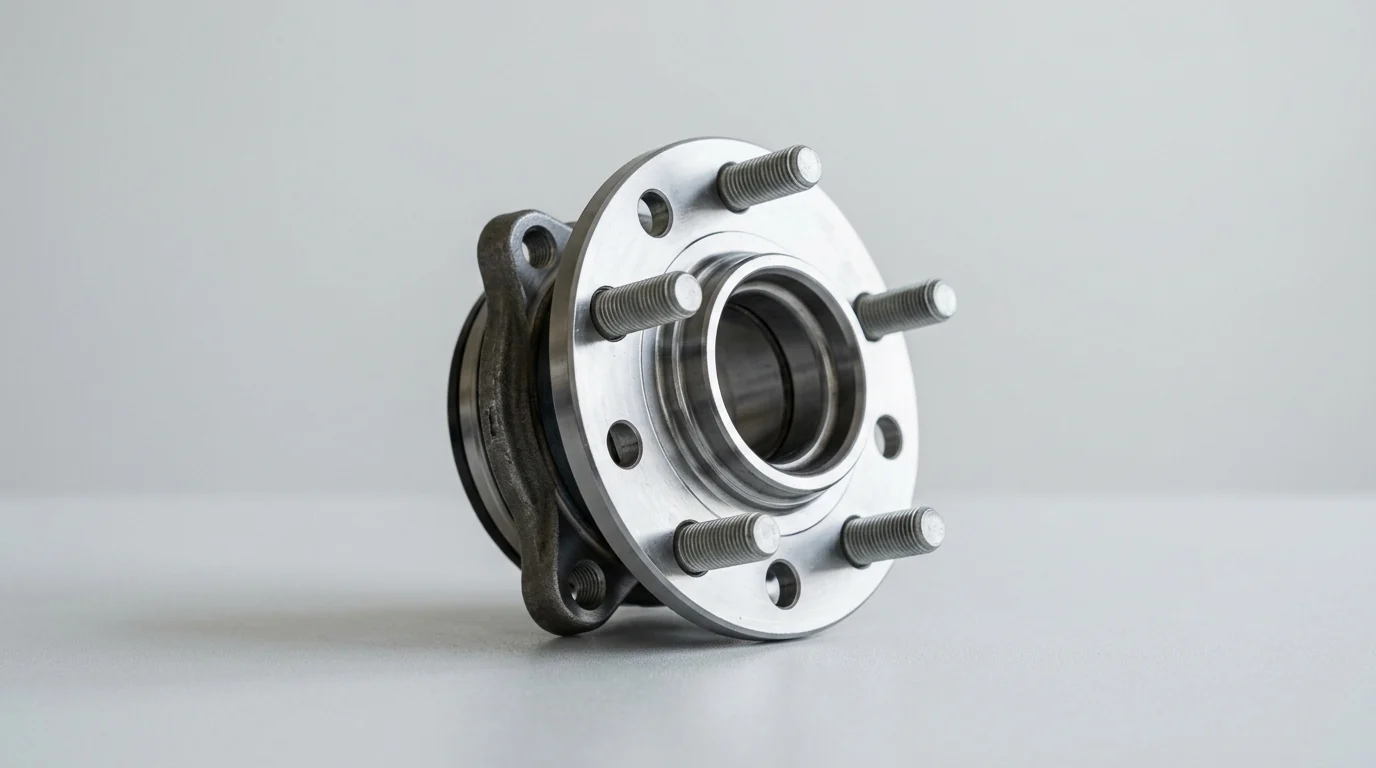
Generation 3 units are fully integrated, pre-lubricated, sealed assemblies featuring mounting flanges for the wheel and suspension, alongside integrated ABS sensors. For the aftermarket, these drop-in replacements mitigate the risk of incorrect preload application during installation, dramatically reducing early life failure rates in the field.
Selection criteria by application
Selection criteria vary sharply by market channel. OEMs procure at massive scale, often demanding minimum order quantities (MOQs) exceeding 50,000 units per month. At this volume, unit cost is scrutinized down to the fraction of a cent, and bearings are custom-engineered for specific vehicle platforms to optimize weight and parasitic drag.
The aftermarket prioritizes SKU consolidation. An aftermarket supplier may engineer a single bearing to cover a slightly wider tolerance band, allowing one part number to service multiple vehicle models across different makes. Here, the selection criteria favor versatility, robust anti-corrosion coatings for varied climates, and shelf-life stability for pre-applied lubricants.
Sourcing, Compliance, and Supply Chain Risks
Sourcing an auto bearing involves navigating a complex, globally distributed supply chain. Ensuring consistent quality while managing procurement costs requires a granular understanding of supplier capabilities, international trade frameworks, and logistical realities.
Supplier capability and manufacturing quality
Supplier capability is measured in parts per million (PPM) defect rates. Tier 1 automotive suppliers operate under a mandate of zero defects, generally targeting a maximum allowable defect rate of less than 50 PPM. Achieving this requires highly automated manufacturing environments equipped with in-line, non-destructive testing.
Procurement teams must audit suppliers for advanced metrology capabilities, such as eddy current testing to detect sub-surface metallurgical cracks, and automated optical inspection (AOI) to verify seal integrity. A supplier’s inability to demonstrate statistical process control (SPC) with a Cpk (process capability index) greater than 1.33 is a critical red flag for automotive sourcing.
Compliance, certification, and trade factors
Regulatory compliance serves as the baseline for market entry. Any facility manufacturing an auto bearing for OEM use must hold an active IATF 16949 certification, which builds upon ISO 9001 by adding automotive-specific requirements for continuous improvement and defect prevention.
Beyond manufacturing certifications, the materials used within the bearing—specifically the greases, rust-preventative oils, and elastomeric seals—must comply with global chemical regulations such as REACH and RoHS. Failure to document chemical compliance can result in immediate customs impoundment and severe supply chain disruption.
Cost drivers and logistics variables
The total landed cost of an auto bearing is highly sensitive to external variables. Raw material indices, particularly the global spot price for high-carbon chromium steel, dictate baseline costs. Furthermore, bearings are dense, heavy components, making them highly susceptible to fluctuations in freight rates.
| Cost Driver | Typical Impact on Unit Price | Mitigation Strategy |
|---|---|---|
| Steel Commodity Pricing | 15% – 30% | Long-term indexed raw material contracts |
| Tolerance/Precision Class | 20% – 50% premium per tier | Specify standard ISO classes unless NVH demands higher |
| Specialized Coatings/Ceramics | 100% – 300% | Reserve for high-voltage EV or extreme friction environments |
| Ocean Freight/Logistics | 5% – 15% | Regionalize warehousing; maintain 12-week buffer stock |
Standard lead times for high-volume automotive bearings typically range from 12 to 24 weeks from order placement to delivery. Supply chain managers must balance inventory carrying costs against the risk of stockouts, often utilizing localized warehousing hubs near major OEM assembly plants to ensure just-in-time (JIT) delivery.
A Practical Auto Bearing Selection Process
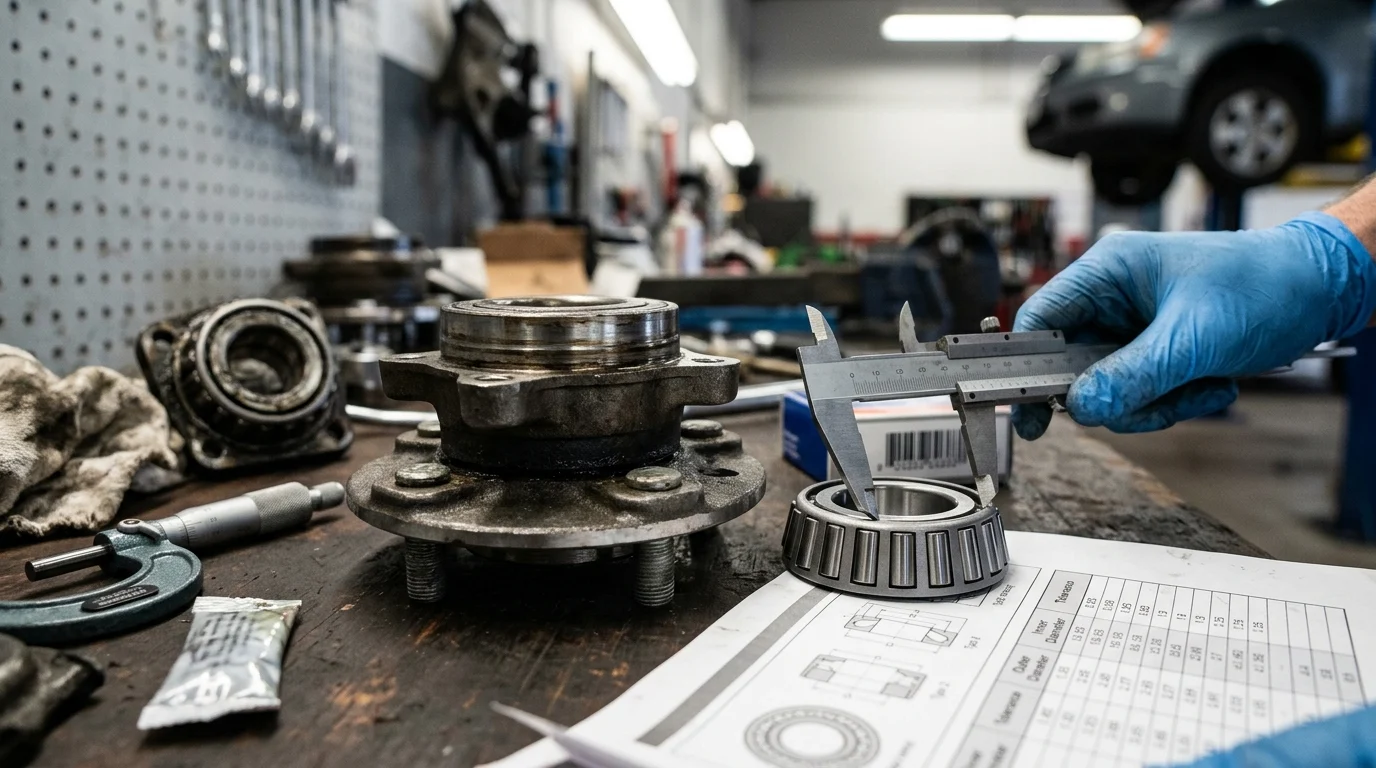
Implementing a structured, data-driven selection process minimizes engineering rework and supply chain friction. By systematically evaluating loads, environment, and commercial constraints, organizations can identify the optimal auto bearing for any given application.
Step-by-step selection workflow
The selection workflow must begin with kinematic analysis. Engineers calculate the equivalent dynamic bearing load (P) using the standard formula P = XFr + YFa, where Fr and Fa are the radial and axial loads, and X and Y are bearing-specific geometry factors. Once the dynamic load is established, it is cross-referenced with the required L10 life to determine the necessary basic dynamic load rating (C).
Following load calculations, the envelope dimensions (bore diameter, outer diameter, and width) are selected to fit the housing and shaft. The final steps involve specifying the internal clearance (e.g., C3), selecting the appropriate seal type (such as a dual-lip contact seal for heavy contamination environments), and defining the grease fill volume, which typically ranges from 30% to 50% of the internal free space to prevent churning and overheating.
Common mistakes to avoid
A frequent engineering error is over-specifying tolerance classes. Demanding an ABEC 5 precision rating for a low-speed wheel hub application can introduce a 40% cost premium without delivering any measurable performance benefit. Precision should be scaled strictly to the RPM and NVH requirements of the application.
Another common pitfall is neglecting the impact of housing materials on bearing preload. When a steel bearing is pressed into an aluminum housing, the different coefficients of thermal expansion can cause the housing to expand faster than the bearing outer ring at high temperatures. This can lead to outer ring rotation (spinning) within the housing if proper interference fits and anti-rotation features are not calculated at the upper limit of the thermal operating band.
Balancing cost, performance, and availability
Ultimately, successful auto bearing selection is an exercise in optimization. Engineers must secure a component that meets the 99.9% reliability threshold required by modern automotive standards without over-engineering the solution into commercial unviability.
By leveraging standardized ISO metric dimensions wherever possible, buyers can ensure multi-sourcing capability, reducing dependency on single-source suppliers.
Key Takeaways
- The most important conclusions and rationale for Auto Bearing(
- Specs, compliance, and risk checks worth validating before you commit
- Practical next steps and caveats readers can apply immediately
Frequently Asked Questions
How do I choose between ball, cylindrical roller, and tapered roller auto bearings?
Match the load and speed: deep groove ball for high speed/moderate radial load, cylindrical roller for heavy radial load, and tapered roller for combined radial and axial loads such as wheel hubs.
What bearing specifications matter most for OEM and aftermarket applications?
Focus on load rating, speed, operating temperature, internal clearance, tolerance class, sealing, and lubrication. Confirm shaft/housing fit and target life to avoid premature noise or failure.
When should I select a higher precision class for auto bearings?
Use higher precision when vibration, runout, or noise control is critical, such as in motors, gearboxes, or precision assemblies. Standard P0 fits many chassis uses; tighter classes help demanding systems.
How can DEMY Bearings support OEM and distributor sourcing needs?
DEMY offers a broad catalog of ball and roller bearings, ISO/TS16949-backed production, and support through its e-catalog, FAQ, videos, and news resources for faster product matching.
What signs suggest an auto bearing is mismatched for the application?
Early indicators include overheating, abnormal noise, vibration, grease leakage, and short service life. Recheck load assumptions, speed, seal type, clearance, and lubrication against the actual duty cycle.
Post time: Apr-27-2026