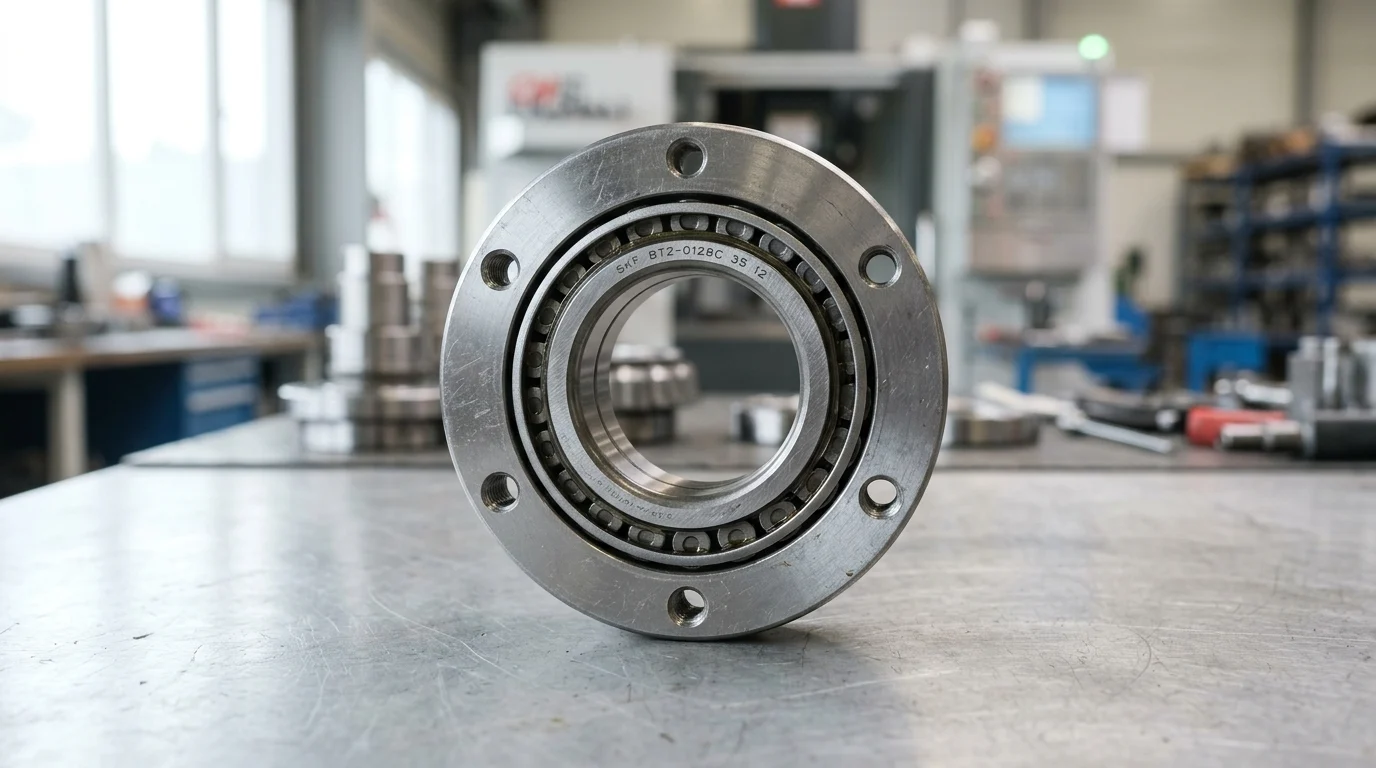
How to Evaluate OEM Auto Wheel Bearing Manufacturers
Selecting an Original Equipment Manufacturer (OEM) for auto wheel bearings is a strategic procurement decision that directly impacts vehicle safety, assembly line efficiency, and long-term brand reputation. Wheel bearings are critical chassis components subjected to extreme dynamic loads, thermal stress, and environmental contamination. Consequently, evaluating potential manufacturing partners requires a rigorous, multi-disciplinary approach that spans engineering, quality assurance, and supply chain management.
The cost of a localized bearing failure resulting in a vehicle recall can easily exceed $500,000, dwarfing any initial unit cost savings achieved through substandard sourcing. Therefore, automotive procurement teams must look beyond unit pricing to evaluate the holistic capabilities of a supplier, ensuring they possess the metallurgical expertise, precision machining infrastructure, and financial stability required for long-term production partnerships.
Key commercial risks to assess
Evaluating commercial risks is the first phase of the qualification process. Procurement engineers must analyze the supplier’s financial stability, manufacturing capacity, and exposure to geopolitical or raw material supply chain disruptions. A manufacturer operating near maximum capacity or lacking a minimum 30% financial liquidity buffer presents a severe risk to continuous assembly line operations.
Furthermore, intellectual property protection and exclusivity agreements must be scrutinized. This is particularly crucial when co-developing proprietary active sensor integration for modern electric vehicle (EV) platforms. Buyers must ensure that any shared CAD data or proprietary tolerance requirements are protected by robust non-disclosure frameworks and that the supplier does not have a history of unauthorized aftermarket distribution of OEM-contracted designs.
OEM wheel bearing definitions and fitment categories
Before finalizing a Request for Quotation (RFQ), it is essential to categorize the exact fitment requirements based on wheel bearing generations. Generation 1 (Gen 1) bearings are traditional double-row angular contact ball or tapered roller bearings requiring external seals and precise hub pressing. These are commonly found in entry-level or legacy vehicle architectures.
Generation 2 (Gen 2) bearings incorporate an integrated mounting flange for the wheel or suspension, significantly reducing assembly line time by eliminating the need for complex hub pressing. Generation 3 (Gen 3) units represent the modern standard for driven axles, featuring two distinct flanges—one for the wheel and brake rotor, and another for the suspension knuckle—often integrating advanced Anti-lock Braking System (ABS) magnetic encoders.
Procurement teams must match the prospective supplier’s core competency to the specific generation required. Gen 3 production demands significantly tighter machining tolerances, advanced multi-axis CNC turning centers, and sophisticated sensor validation capabilities that many legacy Gen 1 manufacturers simply do not possess.
Technical Specifications to Verify
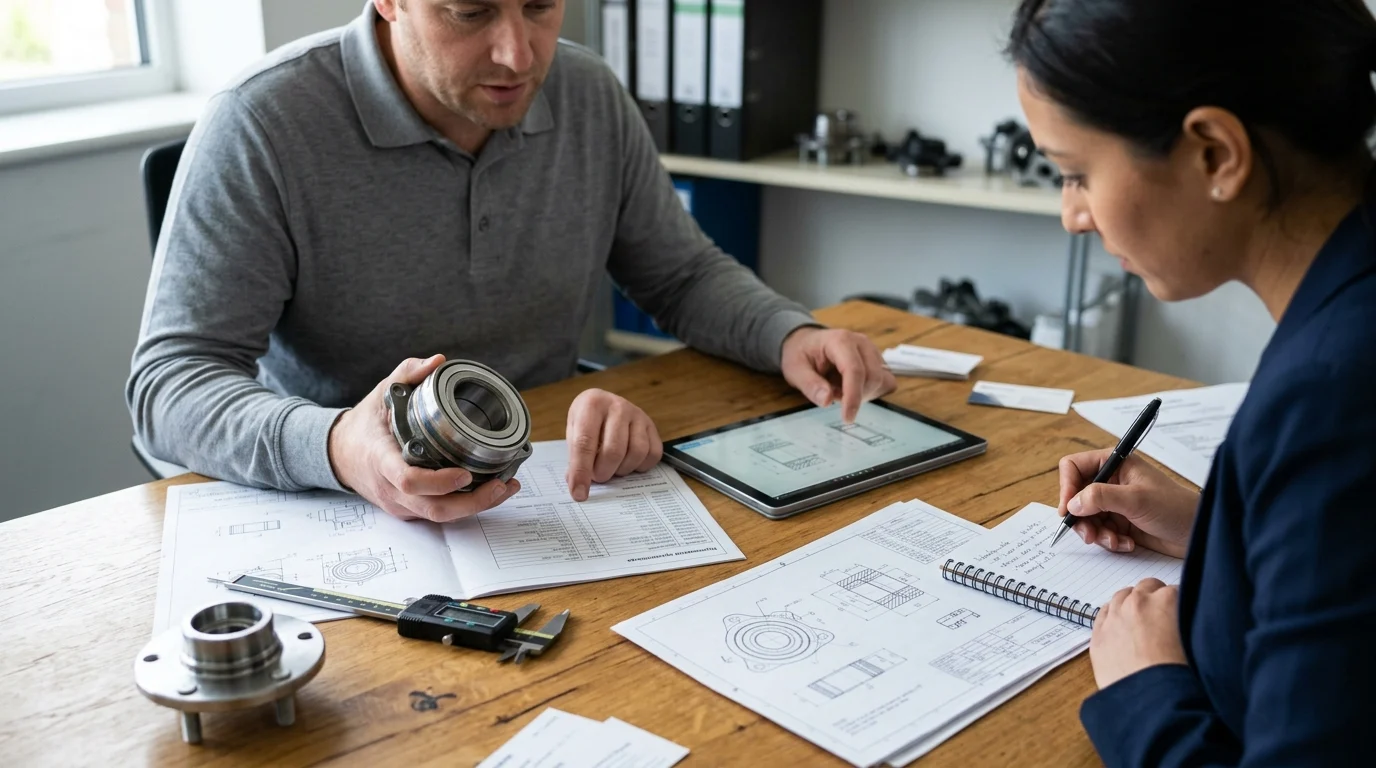
A thorough technical evaluation forms the core of the OEM wheel bearing manufacturer assessment. Because wheel bearings dictate rolling resistance, vehicle handling, and NVH (Noise, Vibration, and Harshness) characteristics, the supplier’s engineering specifications must align perfectly with the automotive platform’s requirements.
Evaluating a manufacturer’s metallurgical expertise, precision machining capabilities, and validation testing protocols ensures that the supplied components will withstand real-world operational stresses over the intended lifecycle of the vehicle.
Bearing type, material grade, and heat treatment
The foundation of bearing performance is the raw material and its subsequent thermal treatment. Top-tier OEM manufacturers utilize high-purity bearing steel, predominantly 100Cr6 (equivalent to SUJ2 or 52100), which offers exceptional fatigue resistance and load-bearing capacity. Auditors must request material certificates to verify the inclusion ratings and oxygen content of the raw steel.
Furthermore, the evaluation must scrutinize the supplier’s heat treatment processes, specifically induction hardening techniques used on raceways and flanges. The required hardness for bearing raceways typically falls between 58 and 64 HRC (Rockwell Hardness Scale C). Deviations in the quenching and tempering cycles can lead to micro-cracking or premature spalling under heavy radial loads. The use of forged steel blanks rather than cast or turned bar stock is also a critical requirement for structural integrity in high-torque applications.
Performance requirements and durability standards
Durability standards must be quantified through rigorous engineering calculations and empirical testing. Suppliers should be required to provide L10 life calculations, representing the lifespan at which 10% of a bearing population will show signs of fatigue spalling. For passenger vehicles, OEM specifications generally demand an L10 life exceeding 300,000 kilometers under standard radial and axial load conditions.
Dimensional precision is equally paramount. Manufacturers must demonstrate the statistical capability to maintain internal clearances (preload) and lateral runout tolerances strictly below 0.015 millimeters. Excessive runout not only accelerates internal bearing wear but also induces brake rotor pulsation, steering wheel shimmy, and uneven tire degradation.
Vehicle platform compatibility and application data
Modern wheel bearings are highly application-specific, requiring seamless integration with the vehicle’s powertrain and electronic safety systems. Suppliers must provide precise application data regarding spline counts for drive axles and the integration mechanics of ABS magnetic encoder rings. The transition from passive tone rings to active multipole magnetic encoders necessitates stringent magnetic flux testing during the production process.
| Bearing Generation | Key Structural Features | Typical Application | Manufacturing Complexity Level |
|---|---|---|---|
| Generation 1 | Double-row angular contact, no flanges | Entry-level passenger cars, rear axles | Low to Medium |
| Generation 2 | Single integrated flange (hub or spindle) | Mid-range vehicles, non-driven axles | Medium |
| Generation 3 | Dual integrated flanges, integrated ABS sensors | Premium vehicles, EVs, driven axles | High |
Engineers must verify that the supplier has the capability to test the multipole encoders for missing poles, signal amplitude, and duty cycle accuracy, ensuring absolute compatibility with the target vehicle’s Electronic Stability Control (ESC) modules.
Quality Systems and Compliance Audits
Technical capability must be backed by an impenetrable quality management system (QMS). In the automotive industry, final end-of-line inspection is insufficient; quality must be engineered into the manufacturing process through preventative controls.
Auditing a prospective OEM wheel bearing manufacturer involves dissecting their quality frameworks, traceability mechanisms, and internal testing infrastructure to ensure that zero-defect manufacturing targets are practically achievable.
Certifications, production controls, and traceability
Compliance with the IATF 16949 standard is the absolute baseline for any automotive OEM supplier, superseding the older ISO/TS 16949 certification. However, an active certificate is merely a prerequisite. Procurement teams should perform VDA 6.3 process audits to evaluate the actual implementation of production controls directly on the shop floor.
The supplier must fully adhere to the Production Part Approval Process (PPAP), typically requiring a Level 3 submission. This includes the provision of comprehensive control plans, Design and Process Failure Mode and Effects Analysis (DFMEA/PFMEA), and detailed dimensional results. Furthermore, component-level traceability is mandatory. Each bearing must feature laser-etched data matrix codes detailing the production batch, heat treatment lot, and specific assembly date, enabling precise containment in the event of a field failure.
Testing capabilities and inspection procedures
A robust internal testing laboratory is a hallmark of a highly qualified OEM bearing manufacturer. Suppliers must possess comprehensive in-house metrology and endurance testing capabilities rather than relying on third-party laboratories. Essential equipment includes Coordinate Measuring Machines (CMM), roundness testers, and profilometers to verify surface finish, with Ra values typically required to be < 0.2 micrometers for rolling raceways.
Environmental testing is equally critical to validate seal designs and lubrication. Flanges and integrated seals must undergo rigorous salt spray testing exceeding 500 hours to validate corrosion resistance. Additionally, dynamic mud slurry tests and extreme temperature cycling (ranging from -40°C to +120°C) must be routinely performed to validate seal integrity and grease retention under adverse environmental conditions.
Warning signs of weak quality management
During facility audits, specific red flags can indicate systemic quality vulnerabilities that pose severe risks to the OEM. A primary warning sign is a high internal scrap rate or a historical customer defect rate exceeding 50 Parts Per Million (PPM). While a supplier might promise zero defects, a lack of automated inline inspection suggests a heavy reliance on error-prone manual sorting.
Critical automated checks should include acoustic resonance testing for microscopic crack detection and automated vision systems for verifying proper seal placement. Additionally, poor segregation of non-conforming materials, disorganized quarantine zones, or outdated calibration records on precision measurement equipment warrant immediate disqualification of the supplier.
Commercial, Logistics, and Supply Chain Factors
Once technical and quality parameters are validated, the evaluation pivots to commercial viability and supply chain resilience. The lowest per-unit cost rarely equates to the lowest Total Cost of Ownership (TCO).
Procurement professionals must meticulously analyze tooling investments, production minimums, and the logistical complexities of transporting heavy, dense automotive components across global supply chains to ensure uninterrupted assembly line operations.
MOQ, tooling cost, pricing, and lead time
Commercial negotiations require a deep understanding of the manufacturer’s operational cost structure. Minimum Order Quantities (MOQ) for custom-engineered wheel bearings typically range from 500 to 2,000 pieces per SKU, depending on the supplier’s production line setup and batch processing requirements.
Tooling and fixturing costs are another critical financial factor. Creating custom forging dies and assembly jigs for a new Generation 3 hub unit can range from $5,000 to $15,000. Buyers must negotiate tooling amortization schedules and clarify ownership rights of the physical tools. Standard production lead times usually span 60 to 90 days, but raw material shortages or specialized high-temperature grease requirements can extend this timeline significantly, requiring careful forward planning.
Logistics, regional sourcing, and delivery reliability
Wheel bearings are exceptionally heavy components, making freight costs a substantial percentage of the final landed price. When evaluating offshore versus nearshore suppliers, logistics reliability and transit times must be modeled accurately. Evaluating Incoterms (such as FOB vs. DDP) will clarify liability, insurance, and transit costs.
Furthermore, buyers must assess the supplier’s regional warehousing capabilities. A manufacturer that maintains a domestic distribution center capable of holding 4 to 6 weeks of buffer inventory provides a massive advantage. This buffer mitigates the risks associated with maritime shipping delays, port congestions, and customs holds, ensuring that Just-In-Time (JIT) assembly lines remain fed without costly air-freight interventions.
Supplier comparison matrix for price and quality
To objectively compare multiple shortlisted suppliers, procurement teams should utilize a weighted evaluation matrix. This mathematical approach removes subjective bias and highlights the optimal balance between commercial terms, logistical reliability, and manufacturing excellence.
| Evaluation Criteria | Weight (%) | Key Metrics Assessed | Minimum Acceptable Threshold |
|---|---|---|---|
| Quality & Compliance | 40% | IATF 16949, PPAP Level 3, Defect PPM | < 50 PPM, Active IATF Certification |
| Commercial Pricing | 30% | Unit cost, Tooling fees, Payment terms | Alignment with target TCO |
| Logistics & Delivery | 20% | Lead times, Buffer stock, Freight costs | > 98% On-Time Delivery (OTD) rate |
| Engineering & Support | 10% | In-house R&D, Testing labs, Responsiveness | In-house CMM and endurance testing |
By applying this matrix, procurement teams can quantify the risks and advantages of each supplier, ensuring that an apparently inexpensive unit price does not mask severe deficiencies in quality control or delivery reliability.
Final Supplier Selection Process
The final phase of evaluating an OEM auto wheel bearing manufacturer culminates in a structured selection and onboarding process. This phase synthesizes all engineering, quality, and commercial data gathered during the evaluation to make a definitive sourcing decision.
Executing a disciplined final approval process prevents costly late-stage failures, establishes legal protections, and sets a clear framework for continuous supplier performance management throughout the component’s lifecycle.
Step-by-step shortlisting process
The shortlisting process should follow a rigid, step-by-step methodology to ensure comprehensive vetting. It begins with a Request for Information (RFI) to filter out manufacturers lacking mandatory IATF certifications or the specific generation capabilities required. Mutual Non-Disclosure Agreements (NDAs) are then executed before sharing proprietary vehicle platform blueprints and load data.
This is followed by a detailed Request for Quotation (RFQ). The top two or three respondents are then subjected to exhaustive on-site VDA 6.3 audits by the OEM’s supplier quality engineers. Finally, the leading candidate must produce validation samples from actual production tooling, culminating in a ‘Run at Rate’ audit. This critical test proves the supplier’s capacity to meet peak volume demands—often simulating a full shift of production—without any degradation in dimensional accuracy or product quality.
Acceptance criteria, warranty terms, and documentation
Before issuing a blanket purchase order, strict acceptance criteria and warranty frameworks must be legally codified. Standard automotive warranty terms for wheel bearings typically mandate coverage for 3 years or 100,000 kilometers, depending on the specific vehicle segment.
The contract must explicitly outline chargeback procedures for field failures, including labor costs for bearing replacement at dealerships and potential recall liabilities. Furthermore, the supplier must agree to strict 8D (Eight Disciplines) problem-solving reporting timelines for any non-conformances identified at the assembly plant. Industry standards dictate an initial containment response within 24 hours and a comprehensive root cause analysis with corrective actions implemented within 14 days.
When to approve, reject, or continue qualification
The final sourcing decision involves three potential outcomes: full approval, immediate rejection, or conditional qualification. Full approval is reserved for suppliers meeting all technical, PPAP, and commercial requirements with zero critical audit findings, allowing them to enter serial production.
Rejection is immediate if a supplier fails material validation, exhibits forged raw material certifications, or refuses to accept standard warranty liabilities. Conditional qualification may be granted if minor, non-systemic audit findings are identified. In such cases, the supplier is awarded a limited prototype or aftermarket production run. Full OEM volume is then strictly contingent upon the successful closure of a formal Corrective Action Plan (CAP) within a rigid 60-day window, ensuring all systemic gaps are closed before mass production commences.
Key Takeaways
- Evaluate OEM wheel bearing manufacturers on financial stability, capacity, IP protection, and supply chain resilience before comparing unit prices.
- Match the supplier’s production capability to the required bearing generation, especially for Gen 3 units with flanges and ABS encoder requirements.
- Confirm that the manufacturer has automotive-grade quality systems such as ISO/TS16949 and documented traceability from raw material to finished bearing.
- Audit technical capabilities including metallurgy, heat treatment, precision grinding, automated assembly, seal performance, and noise testing.
- Consider total risk cost because a localized wheel bearing failure and recall can exceed $500,000, outweighing short-term sourcing savings.
Frequently Asked Questions
What should buyers verify first when evaluating OEM auto wheel bearing manufacturers?
Start with commercial risk: financial stability, production capacity, raw material sourcing, and IP protection. A supplier should have enough liquidity, scalable output, and clear confidentiality controls before receiving CAD files, tolerance data, or proprietary fitment requirements.
Why is certification important for OEM wheel bearing suppliers?
Certifications such as ISO/TS16949 indicate that production follows automotive quality management standards. They help buyers confirm process control, traceability, corrective action systems, and consistency across high-volume bearing production.
How do Gen 1, Gen 2, and Gen 3 wheel bearings affect supplier selection?
Each generation requires different capabilities. Gen 1 bearings need precise pressing and sealing knowledge, Gen 2 adds integrated flanges, and Gen 3 often requires tighter tolerances, multi-axis machining, and ABS encoder validation.
What technical capabilities should an OEM wheel bearing manufacturer have?
Look for metallurgical expertise, precision grinding, automated assembly, heat treatment control, seal validation, noise testing, and dimensional measurement systems. These capabilities directly affect bearing life, NVH performance, and vehicle safety.
How can buyers reduce the risk of wheel bearing failures?
Avoid choosing on unit price alone. Review validation testing, lifecycle data, raw material quality, production audits, and traceability. A recall caused by bearing failure can cost far more than savings from a low-cost supplier.
Demy
holder bearings and roller chain accessories. Proprietary hightemp rubber seal technology outperforms standard NBR seals,providing tight sealing and extended product lifespan.
Equipped with semi-automatic and fully automatic production lines for high-quality, efficient manufacturing with fast delivery for urgent orders.
Post time: Jun-23-2026