Why Insert Bearings and Housing Units Matter for B2B Buyers
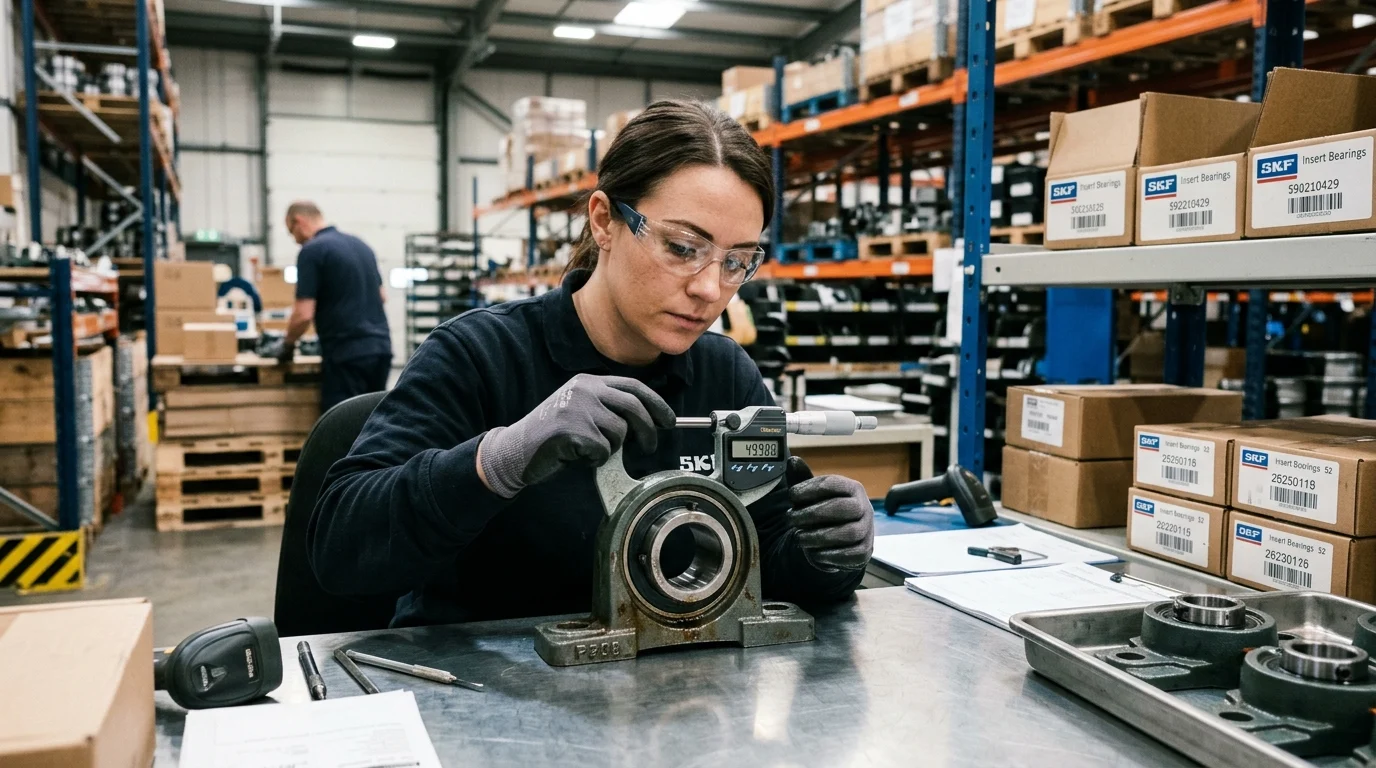
Insert bearings and housing units represent a vital segment of the global industrial power transmission market. These components combine standard ball bearings with versatile mounting housings, offering ready-to-mount solutions that simplify installation and maintenance for end-users. For B2B procurement teams, securing a reliable supply chain for these units is essential to servicing diverse industrial sectors such as agriculture, manufacturing, and conveying.
Sourcing these assemblies in bulk demands a strategic approach to balancing unit cost, mechanical reliability, and availability. Buyers must evaluate supplier capabilities, interchangeability with established premium brands, and the specific material demands of target markets. Partnering with a competent bearing manufacturer ensures access to consistent dimensional tolerances and robust supply lines that can scale with market demand.
Aftermarket, OEM, and MRO demand drivers
The demand for mounted ball bearings is heavily driven by Original Equipment Manufacturers (OEMs) building new machinery and Maintenance, Repair, and Operations (MRO) channels replacing worn components. The aftermarket requires high availability and broad interchangeability, while OEMs often prioritize long-term pricing stability and just-in-time (JIT) delivery capabilities.
Key commercial factors in wholesale purchasing
Wholesale buyers must evaluate total landed costs rather than just the ex-works price. Key commercial factors include volume discounts, currency exchange stability, freight costs, and the supplier’s ability to maintain safety stock. Distributors must also consider the breadth of the catalog to ensure they can meet diverse customer requests without fracturing their supply base.
When to expand a product line
Expanding a bearing portfolio is typically justified when distributors observe consistent inquiries for specialized variants, such as stainless steel or thermoplastic housings for the food and beverage industry. Introducing custom bearings into the catalog allows distributors to capture niche, high-margin segments that standard cast-iron units cannot service effectively.
Product Types and Configurations
The market for mounted ball bearings encompasses a wide array of configurations designed to accommodate different shaft sizes, mounting surfaces, and load directions. Understanding these distinctions is crucial for procurement specialists to avoid stocking obsolete or incompatible inventory. Standardizing the catalog based on regional demand helps optimize warehouse space and capital allocation.
Fundamentally, these assemblies consist of an insert bearing and a housing unit. The insert features a spherical outer ring that mates with a corresponding concave surface in the housing, allowing for initial misalignment compensation during installation. Finding a reliable deep groove ball bearings manufacturer China is often the first step in ensuring the core rolling element of the mounted unit performs to industrial standards.
Insert bearings vs. mounted units
Insert bearings are the internal rolling elements sold independently, often used as replacement parts for existing housings. Mounted units refer to the complete assembly containing both the bearing and the housing. Distributors must decide the optimal inventory ratio between complete units and standalone replacement inserts based on their specific MRO customer purchasing habits.
Pillow block, flange, and take-up units
The housing shape dictates the mounting orientation and structural support. Pillow blocks are base-mounted to support rotating shafts parallel to the mounting surface. Flange units mount perpendicular to the shaft axis, while take-up units are used to adjust shaft center distances.
| Housing Type | Primary Application | Mounting Orientation |
|---|---|---|
| Pillow Block | General machinery, conveyors | Parallel to shaft |
| Flange (2/4-Bolt) | Heavy-duty side mounting | Perpendicular to shaft |
| Take-Up Unit | Conveyor belt tensioning | Adjustable sliding frame |
Locking systems, housing materials, and seals
Insert bearings utilize various locking mechanisms to secure the shaft, including set screws, eccentric locking collars, and adapter sleeves. Housing materials range from standard cast iron to ductile iron, pressed steel, and thermoplastics. Sealing arrangements vary from standard single-lip seals to heavy-duty triple-lip seals designed for highly contaminated environments.
Standards and interchangeability checks
B2B buyers must ensure products comply with international standards (ISO, JIS, ABMA) to guarantee interchangeability with major global brands. Cross-referencing part numbers and verifying critical dimensions—such as shaft height, bolt hole spacing, and bore size—prevents costly mismatches in the aftermarket sector.
Specifications to Compare Before Bulk Orders
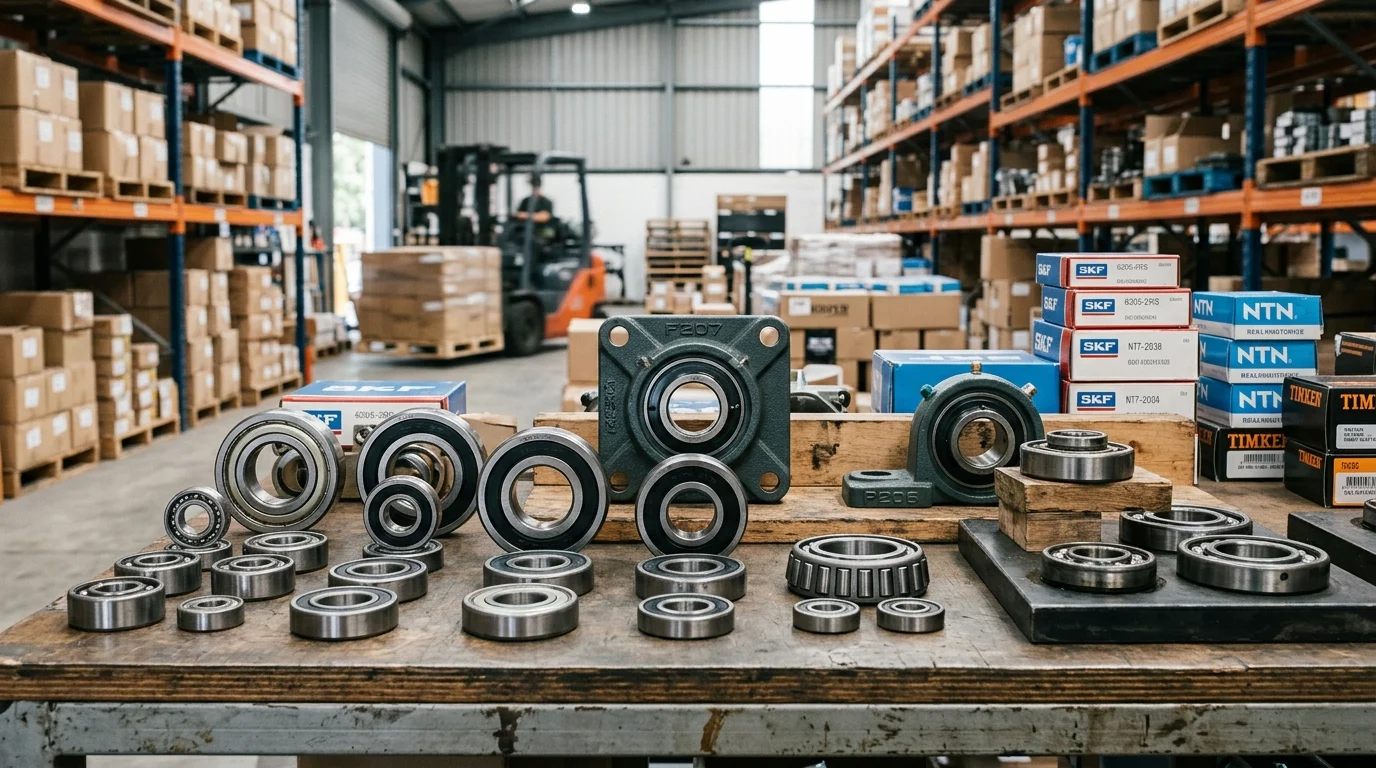
Bulk purchasing of ball bearings requires rigorous technical evaluation to ensure the sourced products meet the operational demands of the end-user. Procurement teams cannot rely solely on part numbers; they must scrutinize the underlying engineering specifications to validate that the product matches the application’s severity.
Failure to specify the correct load ratings, speed limits, and environmental protections can lead to premature mechanical failures, resulting in warranty claims and reputational damage. Engaging with a qualified high precision ball bearings factory provides the technical assurance needed to confidently place large-volume orders and guarantee mechanical integrity.
Bore size, load, speed, and temperature
Procurement specifications must clearly define metric or imperial bore sizes, dynamic and static load capacities, and maximum operational speeds. Additionally, standard operating temperature ranges must be evaluated, as extreme heat or cold requires specialized grease and heat-stabilized steel components.
Lubrication, relubrication, and sealing
While many insert bearings are greased for life, heavy-duty applications demand relubricatable housings equipped with grease zerks. Buyers must specify the grease fill percentage and the type of lubricant. Robust sealing is equally critical to retain this lubrication and exclude abrasive contaminants from the raceway.
Corrosion resistance and operating environment
For environments exposed to moisture, chemicals, or frequent washdowns, standard cast iron is insufficient. In these scenarios, buyers should partner with a stainless steel bearings supplier bulk to source housings and inserts made from 440C stainless steel or thermoplastic materials that resist degradation.
Application-based comparison criteria
Different industries impose unique demands on ball bearings. Agricultural applications prioritize robust sealing against dust and debris, while HVAC systems require low-noise, low-vibration performance. Buyers should tailor their technical checklists based on the dominant industries within their distribution network.
Supplier Sourcing and Factory Assessment
Identifying a manufacturing partner capable of consistently delivering high-quality insert bearings and housings is a complex endeavor. Sourcing professionals must look beyond initial pricing to evaluate the supplier’s overall production maturity, quality control infrastructure, and business stability.
A comprehensive factory assessment minimizes supply chain risks and establishes a foundation for long-term collaboration. This involves auditing manufacturing processes and assessing the supplier’s financial capacity to scale production in response to growing demand without sacrificing precision.
Supplier qualification and production capability
Qualifying a factory involves verifying their machining precision, heat treatment facilities, and assembly lines. Buyers should request equipment lists and assess whether the supplier performs critical processes in-house or relies heavily on subcontractors, which can introduce variability in quality.
MOQ, samples, lead times, and packaging
Minimum Order Quantities (MOQs) dictate inventory flexibility and capital tie-up. Buyers must negotiate realistic MOQs, request pre-production samples for destructive testing, and establish firm lead times. Packaging must also be discussed early, as inadequate boxing can lead to transit damage for heavy cast-iron housings.
Private labeling and customization options
For distributors building their own brand equity, private labeling is a crucial requirement. Sourcing teams should evaluate the supplier’s ability to laser-mark bearing rings, cast custom logos into housings, and design bespoke retail packaging without significantly inflating unit costs.
Pricing, margins, and landed cost
Effective B2B procurement calculates the total landed cost, which incorporates the ex-works price, inland freight, ocean freight, customs duties, and insurance. Analyzing these variables helps buyers accurately forecast their gross margins and position their ball bearings competitively in local markets.
Quality, Compliance, and Risk Control
In the industrial components sector, quality failures carry severe financial and safety implications. Establishing strict compliance protocols and risk control measures is non-negotiable for importers of mounted ball bearings, as a single batch of defective units can jeopardize critical client relationships.
Procurement contracts must explicitly define acceptable quality levels (AQL) and the recourse available in the event of non-conformance. By demanding transparency in material sourcing and testing, buyers can shield their organizations from the liabilities associated with substandard mechanical components.
Material certifications and traceability
Suppliers must provide mill test certificates verifying the chemical composition of the bearing steel and housing materials. Traceability protocols, such as batch numbers etched onto the components, are essential for isolating defective lots and managing targeted recalls if necessary.
Inspection standards and test reports
Pre-shipment inspections should verify dimensional tolerances, radial internal clearance, and surface finish. Buyers should mandate comprehensive test reports covering noise, vibration, and hardness testing before authorizing the release of bulk shipments from the factory.
Counterfeit and failure-risk prevention
The global market is susceptible to counterfeit bearings mimicking premium brands. Direct factory sourcing and stringent vendor audits mitigate this risk. To prevent premature failures, buyers must ensure the factory utilizes advanced metrology equipment to detect microscopic flaws in the raceways and rolling elements.
Warranty, claims, and contract terms
International purchasing contracts must clearly outline warranty periods, claim procedures, and liability for consequential damages caused by defective ball bearings. Negotiating favorable payment terms, such as letters of credit (LC) or milestone payments, further protects the buyer’s capital during dispute resolutions.
Packaging, Shipping, and Inventory Planning
The logistical phase of bulk purchasing is critical for preserving the integrity of heavy, rust-prone industrial components. Proper packaging and strategic shipping arrangements prevent costly delays and product degradation during extended ocean transits.
Additionally, aligning shipping schedules with internal inventory management systems ensures that distributors maintain optimal stock levels without incurring excessive warehousing costs. A synchronized approach to logistics and inventory maximizes working capital efficiency.
Export packaging and rust protection
Bearings are highly susceptible to oxidation. Export packaging must include heavy applications of rust-preventative oils, vacuum-sealed volatile corrosion inhibitor (VCI) bags, and sturdy individual boxes.
| Packaging Tier | Materials Used | Purpose |
|---|---|---|
| Primary (Component) | VCI bags, rust-preventative oil | Prevents oxidation and moisture damage |
| Secondary (Unit) | Corrugated cardboard boxes | Individual unit protection and branding |
| Tertiary (Bulk) | Fumigated wooden pallets, shrink wrap | Facilitates safe forklift handling and sea transit |
Labeling, palletizing, and transit protection
Clear labeling with barcodes, part numbers, and batch codes accelerates warehouse receiving. Bulk orders must be secured on fumigated wooden or plastic pallets, heavily shrink-wrapped, and strapped with steel or PET banding to prevent shifting inside the shipping container.
Incoterms, freight, and customs documents
Buyers must select appropriate Incoterms (e.g., FOB, CIF, DDP) to define risk and cost responsibilities. Accurate commercial invoices, packing lists, and certificates of origin are vital for smooth customs clearance and avoiding unexpected demurrage charges at the destination port.
Inventory strategy and reorder planning
Effective inventory planning requires analyzing historical sales data, lead times, and seasonal demand fluctuations. Implementing min-max inventory systems or Vendor Managed Inventory (VMI) programs helps distributors avoid stockouts of fast-moving pillow block units while minimizing dead stock.
Buyer Checklist and Final Takeaways

Consolidating the procurement process into actionable steps ensures that B2B buyers consistently secure high-quality ball bearings and housing units. A structured approach reduces the likelihood of costly oversights during the sourcing lifecycle.
By adhering to a standardized checklist, import managers can objectively compare different suppliers, enforce technical specifications, and build resilient supply chains that support long-term business growth in the competitive power transmission market.
RFQ and specification checklist
A comprehensive Request for Quotation (RFQ) must detail exact part numbers, required standards, material grades, seal types, and estimated annual volumes. Providing complete technical drawings or specifying interchangeability targets upfront prevents miscommunication and ensures accurate initial pricing.
Sampling, pilot orders, and incoming inspection
Never transition directly from an RFQ to a high-volume order. Buyers must request initial samples for evaluation, followed by a pilot order to test the supplier’s production consistency and logistical reliability. Rigorous incoming inspection upon receipt is mandatory to verify compliance with the approved samples.
Supplier shortlist and approval steps
Creating a supplier shortlist involves scoring candidates based on pricing, communication speed, technical capabilities, and audit results. Final approval should require sign-off from both the procurement and engineering departments to ensure commercial viability aligns with mechanical reliability.
Key sourcing priorities for bulk purchasing
Ultimately, successful bulk purchasing of insert bearings and housings rests on prioritizing total value over the lowest unit price. Ensuring material traceability, maintaining strict quality control, and fostering transparent communication with factory partners are the cornerstones of a profitable and risk-resistant procurement strategy.
Related reading: bearing manufacturer
Key Takeaways
- Wholesale sourcing and supply-chain implications for ball bearings
- Specifications, compliance, and commercial terms buyers should validate
- Actionable recommendations for distributors and procurement teams