Introduction
Choosing between single row and double row deep groove ball bearings affects far more than fit: it changes how a machine handles load, speed, stiffness, and service life. Although both designs share the same basic operating principle, they suit different operating conditions and design priorities. This article explains the practical differences between the two configurations, including where each performs best, what tradeoffs to expect, and how factors such as radial and axial loads, available space, and rotational speed influence the decision. With that context, it becomes easier to match the bearing type to the actual demands of the application rather than relying on rules of thumb.
Why Choose Single Row or Double Row Deep Groove Ball
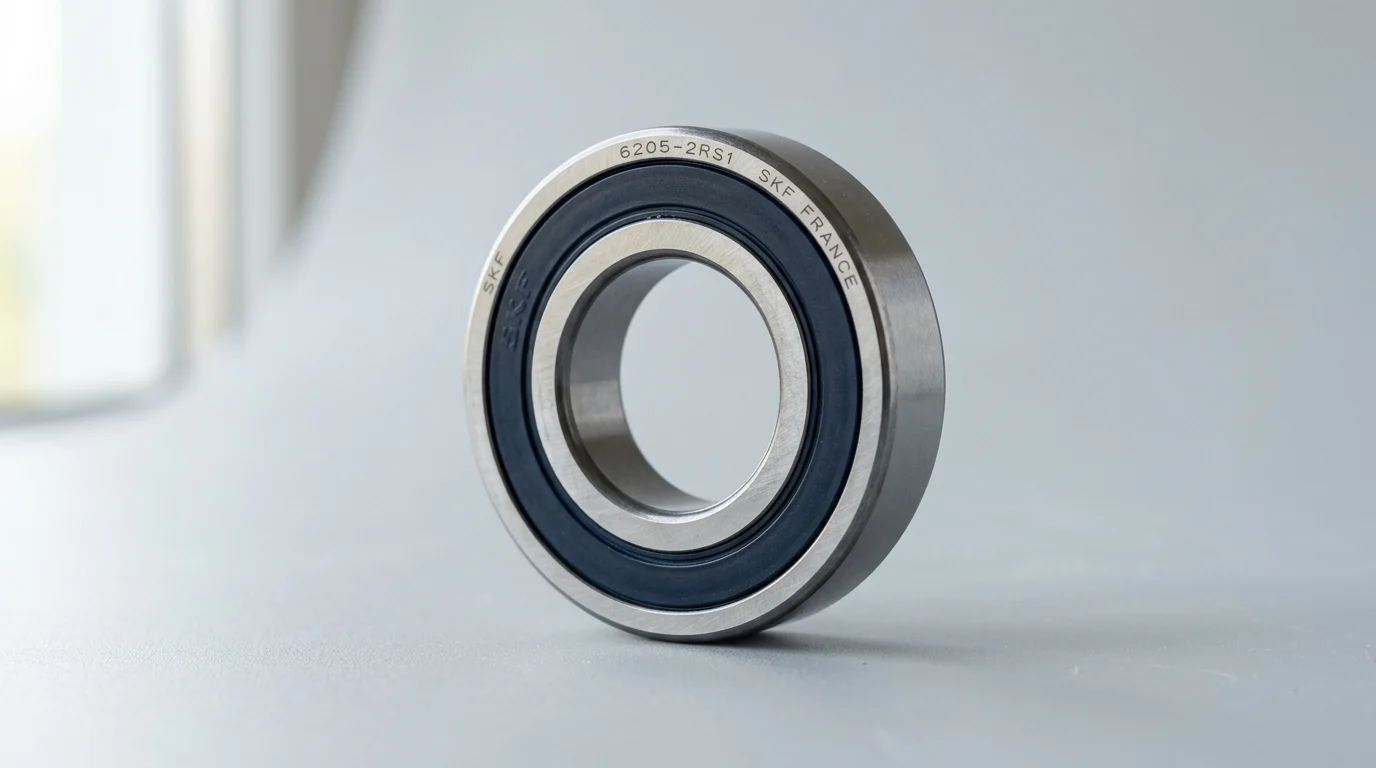
Deep groove ball bearings represent the most widely utilized anti-friction bearing design in industrial and automotive engineering, prized for their low friction, low noise, and ability to accommodate both radial and axial loads. While the fundamental operating principles remain consistent across the category, the choice between a single row and double row configuration fundamentally alters the mechanical capabilities of the rotating assembly. Engineers must balance load demands, spatial constraints, and kinematic targets to determine the optimal bearing architecture for a given application.
Selecting the correct variant is not merely a matter of dimensional fit; it requires a rigorous analysis of the application’s duty cycle. A double row bearing is not universally superior simply because it contains more rolling elements, nor is a single row bearing always the most efficient choice. Understanding the exact performance thresholds of each type is critical to maximizing equipment uptime and minimizing total cost of ownership.
Load profile, space limits, and speed targets
When engineering a rotating assembly, load capacity and spatial availability are the primary driving factors in bearing selection. Single row deep groove ball bearings (such as the ubiquitous ISO 6000, 6200, and 6300 series) are optimized for high-speed operation and moderate load profiles. They provide an excellent balance of radial load support and bidirectional axial load capacity within a narrow axial footprint.
Conversely, double row deep groove ball bearings (such as the 4200 and 4300 series) are engineered for applications where the radial load exceeds the capacity of a single row bearing, but the radial space constraints prohibit moving to a larger outside diameter. By incorporating a second row of balls, these bearings typically deliver 1.5 to 1.8 times the dynamic radial load capacity of a single row bearing of the same bore and outside diameter. However, this increased capacity comes at the cost of a wider axial envelope and a reduction in the maximum permissible operating speed, often dropping the speed limit by 20% to 30% compared to a single row counterpart.
Risks of choosing the wrong bearing type
Specifying an incorrect bearing configuration introduces severe mechanical and financial liabilities. Over-specifying a double row bearing in a high-speed, low-load application unnecessarily increases rotational friction, generating excess heat that can degrade lubrication and lead to premature thermal failure. The wider footprint also consumes valuable shaft space, potentially requiring heavier, more expensive housing designs.
Under-specifying by selecting a single row bearing for a heavy-duty application is equally detrimental. If the radial loads exceed the dynamic load rating (C) by a significant margin, the bearing will suffer an exponential reduction in its L10 fatigue life. For example, operating a single row bearing at 120% of its rated capacity can reduce its operational lifespan by over 40%, resulting in rapid raceway spalling, catastrophic cage failure, and unplanned machine downtime.
Structural and Performance Differences
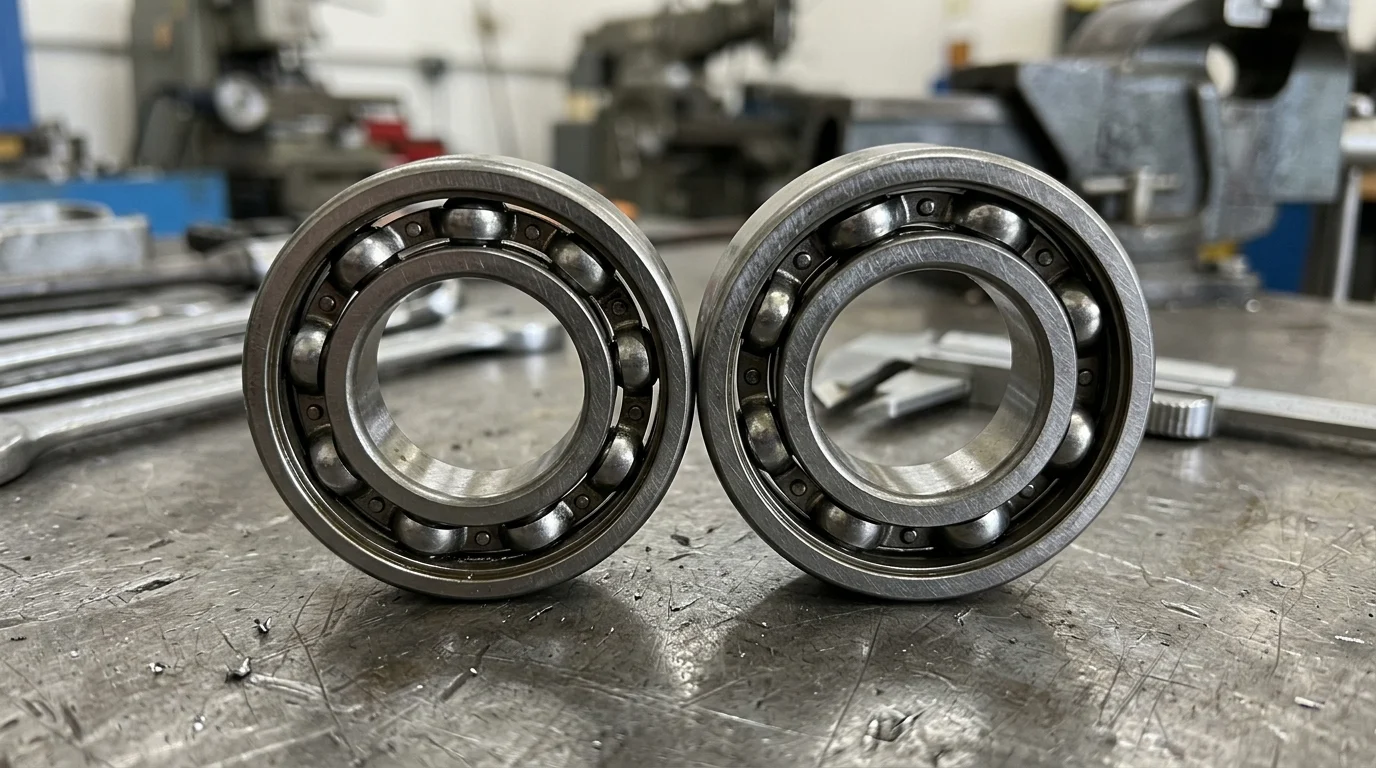
The architectural variations between single and double row deep groove ball bearings dictate their operational boundaries. While both utilize deep, continuous raceway grooves designed to achieve a high degree of conformity with the rolling elements, the internal geometry and structural rigidity differ substantially.
Internal geometry, raceway design, and ball complement
Single row bearings feature an uninterrupted raceway on both the inner and outer rings, allowing them to support axial loads in either direction seamlessly. The ball complement is typically maximized through an eccentric displacement assembly method, which requires no filling slots. This uninterrupted raceway geometry is crucial for maintaining low vibration and noise levels at high rotational frequencies.
Double row bearings incorporate two parallel raceways. Depending on the manufacturer and specific series, some double row bearings utilize filling slots to insert a larger number of balls, significantly boosting radial load capacity. However, the presence of a filling slot breaks the continuity of the raceway shoulder. Bearings with filling slots are strictly limited in their ability to handle axial loads, as heavy thrust forces will push the balls against the slot edges, causing immediate damage. Non-filling slot double row designs exist and offer better bidirectional axial support, though their radial capacity is slightly lower than those with slots.
Speed capability, rigidity, and misalignment tolerance
Dynamic performance diverges significantly when evaluating speed, rigidity, and misalignment tolerance. Single row bearings exhibit lower internal friction due to fewer rolling contacts and simpler cage designs. This allows standard single row bearings to routinely achieve speeds exceeding 30,000 RPM in smaller bore sizes. Furthermore, single row bearings offer a slight degree of flexibility, typically tolerating angular misalignments of 2 to 10 minutes of arc without suffering severe edge loading.
Double row bearings are inherently stiffer. The dual-contact geometry creates a highly rigid support structure that resists shaft deflection. While beneficial for maintaining precise shaft positioning under heavy loads, this rigidity makes double row bearings exceptionally sensitive to misalignment. They generally tolerate a maximum of only 2 minutes of arc. Any misalignment beyond this tight threshold forces unequal load distribution between the two rows, drastically accelerating wear on the overloaded row.
Single row vs double row comparison table
The following table highlights the primary mechanical and performance distinctions between standard single row and double row deep groove ball bearings of equivalent bore and outer diameters.
| Performance Metric | Single Row Deep Groove | Double Row Deep Groove |
|---|---|---|
| Relative Radial Load Capacity | Baseline (1.0x) | 1.5x to 1.8x |
| Axial Load Capability | Moderate (Bidirectional) | Low to Moderate (Design dependent) |
| Maximum Speed Limit | High (Up to 30,000+ RPM) | Moderate (20% to 30% lower) |
| Misalignment Tolerance | 2 to 10 arc minutes | Maximum 2 arc minutes |
| System Rigidity | Moderate | High |
| Axial Width Requirement | Standard / Narrow | Wide (Requires extended shaft/housing) |
How to Evaluate the Right Bearing for Your Application
Selecting the optimal bearing requires a systematic evaluation of the mechanical environment. Engineers must move beyond basic catalog dimensions and analyze the specific dynamic variables, spatial constraints, and long-term economic impacts of the application.
Key duty variables to assess first
The evaluation process must begin with a precise calculation of the equivalent dynamic bearing load (P), utilizing the standard ISO formula: P = XFr + YFa, where Fr is the radial load, Fa is the axial load, and X and Y are the respective radial and axial load factors. This value is critical for determining the required basic dynamic load rating (C) of the bearing.
Once the load is quantified, engineers must establish the target L10h fatigue life. For example, standard household appliances may only require an L10h life of 2,000 to 4,000 hours, allowing for a lighter single row bearing. In contrast, continuous-operation industrial motors or paper mill rollers often demand an L10h life exceeding 40,000 hours. If a single row bearing cannot meet this lifespan under the calculated load without increasing the outside diameter, a double row bearing becomes the necessary engineering solution.
Housing, shaft, and mounting constraints
Housing and shaft designs impose strict limitations on bearing selection. The wider footprint of a double row bearing demands a longer shaft seat and a deeper housing bore. If the surrounding mechanical architecture cannot accommodate this increased width, engineers may be forced to utilize two separate single row bearings, which introduces complex shimming and alignment challenges.
Furthermore, the mating tolerances defined by ISO standard fits (e.g., j5/k5 for rotating shafts, H6/J6 for stationary housings) must be rigorously maintained. Because double row bearings are highly sensitive to misalignment, the shaft must be machined to tighter concentricity and straightness tolerances. If the shaft design is prone to bending under load (deflection exceeding 2 arc minutes), a double row bearing will experience catastrophic edge loading, rendering it an inappropriate choice despite its high theoretical load capacity.
Lifecycle cost, maintenance, and failure risk
Total cost of ownership extends well beyond the initial procurement price. Double row bearings typically carry a premium of 40% to 70% over single row variants of the same bore size, driven by higher material usage and more complex manufacturing and assembly processes.
However, lifecycle costs must account for maintenance intervals and failure risks. If a single row bearing is operating at the absolute limit of its load capacity, the resulting increase in maintenance frequency, lubrication breakdown, and risk of catastrophic failure will quickly eclipse the upfront savings. Conversely, utilizing a double row bearing in a highly rigid, heavily loaded application can extend the mean time between failures (MTBF) by thousands of hours, drastically reducing long-term maintenance expenditures.
Procurement, Quality, and Compliance Factors
Beyond theoretical sizing and mechanical evaluation, the physical performance of a bearing relies heavily on manufacturing standards, material quality, and rigorous supply chain management. Procurement and quality assurance teams must ensure that the specified bearings meet strict international compliance metrics.
Tolerance class, clearance, sealing, and cage material
Bearings must be specified according to recognized tolerance classes, such as the ABEC scale (ABEC 1, 3, 5, 7) or ISO equivalents (P0, P6, P5, P4). For standard industrial applications, ABEC 1 / ISO P0 is generally sufficient, but high-precision machine tools may require ABEC 5 / ISO P5 to minimize runout. Internal radial clearance is equally critical; bearings operating in high-temperature environments (exceeding 100°C) or mounted with heavy interference fits must be specified with C3 or C4 clearance to prevent internal binding due to thermal expansion.
Sealing and cage materials dictate environmental suitability. Contact seals (such as 2RS rubber seals) provide excellent protection against particulate ingress but generate friction that reduces the maximum speed rating by up to 20%. Non-contact metal shields (ZZ) allow for higher speeds but offer less protection against liquids. Cage materials also vary based on duty: standard stamped steel cages are versatile, while glass-fiber reinforced polyamide (PA66) cages offer low friction but are strictly limited to operating temperatures below 120°C. For heavy vibration or extreme temperatures, machined brass cages are preferred.
Supplier qualification, traceability, and inspection
Ensuring bearing reliability requires stringent supplier qualification. Manufacturers should hold certifications such as ISO 9001 or IATF 16949 (for automotive applications), ensuring robust quality management systems. Material traceability is non-negotiable; premium deep groove ball bearings must be manufactured from high-purity, vacuum-degassed bearing steel (e.g., 100Cr6 or SAE 52100) heat-treated to a uniform hardness of 58 to 65 HRC.
Quality control inspections must include rigorous testing for noise and vibration (often categorized under standards like Z1/V1 to Z4/V4), as well as dimensional verification. For critical aerospace or medical applications, the acceptable defect rate must be tightly controlled, often mandated to be less than 50 Parts Per Million (PPM). Procurement teams should demand comprehensive inspection reports and material certificates to verify compliance before authorizing bulk installation.
Selection Process and Application Examples
Transitioning from theoretical evaluation to final specification requires a structured methodology to ensure all mechanical, spatial, and economic variables are addressed. Applying a step-by-step decision framework prevents critical oversight and guarantees optimal application matching.
Step-by-step decision process
A rigorous selection process should follow a systematic checklist to isolate the correct bearing configuration. First, map the primary load vectors to determine if radial or axial forces dominate. Second, establish the maximum operating RPM and verify it against the bearing’s thermal reference speed. Third, calculate the required L10h fatigue life based on the equivalent dynamic load. Finally, assess the available axial space within the housing.
To streamline this process, engineers can utilize the following decision matrix to quickly identify the most appropriate bearing architecture based on dominant application parameters.
| Application Parameter | Favor Single Row | Favor Double Row | | :— | :— | :— | | Primary Load Type | Light/Moderate Radial, High Thrust | Heavy Radial, Low Thrust | | Available Axial Space | Restricted / Narrow | Generous / Wide | | Operating Speed | High (> 15,000 RPM) | Low to Moderate (< 10,000 RPM) | | Shaft Deflection / Bending | Moderate (up
Key Takeaways
- The most important conclusions and rationale for Deep Groove Ball Bearings
- Specs, compliance, and risk checks worth validating before you commit
- Practical next steps and caveats readers can apply immediately
Frequently Asked Questions
When should I choose a single row deep groove ball bearing?
Choose single row for high-speed, moderate-load applications with limited axial space, such as motors, fans, and conveyors.
When is a double row deep groove ball bearing the better option?
Use double row when radial loads are higher but you cannot increase outside diameter. It offers roughly 1.5–1.8× radial capacity with a wider bearing.
Does a double row deep groove ball bearing handle more speed?
No. Double row bearings usually run 20%–30% slower than comparable single row types because of higher friction and heat generation.
Can double row deep groove ball bearings take axial load in both directions?
Some can, but designs with filling slots have limited axial capacity. Check the series and catalog data before using them under thrust load.
How can DEMY help me select the right deep groove ball bearing?
Send DEMY your load, speed, space, and application details. Their e-catalog and technical support can match the right series for OEM or industrial use.
Post time: Jun-04-2026