Introduction
Across modern industry, deep groove ball bearings appear in far more places than many engineers realize, from high-speed electric motors to everyday conveyor systems. Their popularity comes from a practical mix of low friction, simple installation, high-speed capability, and the ability to carry radial loads with moderate axial loads in both directions. This article highlights ten common industrial applications and explains why this bearing type fits each one so well. By the end, readers will have a clearer sense of where deep groove ball bearings deliver the most value and what operating demands make them the preferred choice.
Why Deep Groove Ball Bearings Are the Default Choice
Deep groove ball bearings (DGBBs) consistently account for approximately 70% to 80% of global rolling bearing production, establishing them as the undisputed default choice for rotating machinery. Their market dominance stems from a highly versatile design that accommodates a wide spectrum of industrial demands without requiring complex mounting procedures or specialized maintenance.
Unlike specialized bearings engineered for singular extreme conditions, deep groove ball bearings offer an optimal equilibrium of performance metrics. They deliver reliable operation across diverse environments, making them the foundational component for power transmission and motion control systems.
How They Balance Speed and Load
The fundamental architecture of a deep groove ball bearing relies on uninterrupted raceway grooves that closely conform to the ball diameter. This geometry yields an exceptionally low coefficient of friction, typically ranging from µ = 0.0010 to 0.0015, which minimizes energy loss and heat generation during operation. Because of this low friction profile, DGBBs are capable of sustaining exceptionally high rotational speeds.
Mechanically, the deep raceways allow the bearing to support substantial radial loads while simultaneously accommodating moderate axial loads in both directions. In standard configurations, the permissible axial load can reach up to 50% of the static radial load rating, providing critical versatility for shafts subjected to dynamic, multi-directional forces.
Which Operating Conditions Shape Fit, Lubrication, and Sealing
Operating conditions directly dictate the internal clearance, lubrication strategy, and sealing configuration of the bearing. Standard clearance (CN) is suitable for normal ambient conditions, but applications involving significant temperature differentials require larger clearances, such as C3 or C4, to prevent thermal expansion from causing premature seizing. For example, a C3 clearance on a 50mm bore bearing provides 13 to 28 micrometers of internal radial play, accommodating thermal growth without increasing friction.
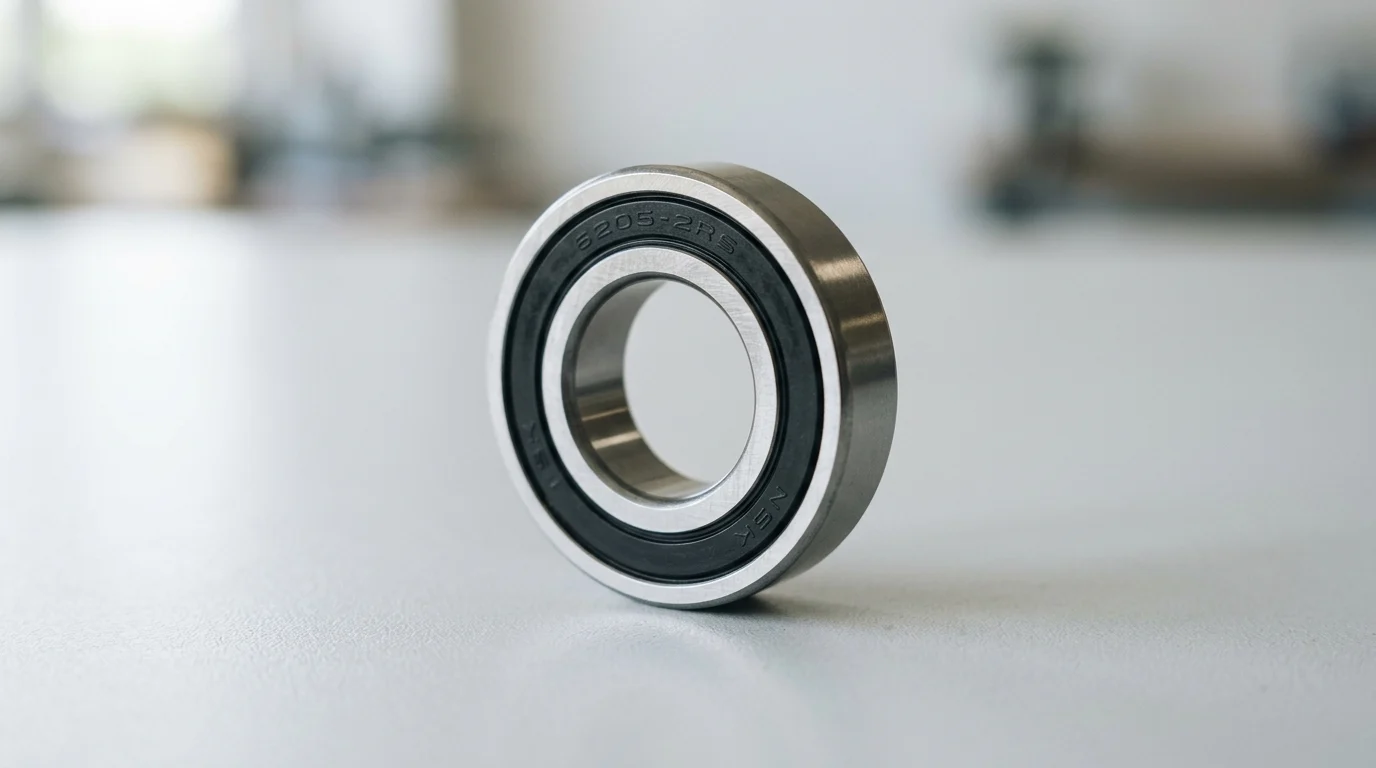
Lubrication and sealing must be matched to the operational environment. Standard grease fills occupy 25% to 35% of the internal free space, providing sufficient lubrication for the bearing’s lifespan without causing excessive churning and overheating. Sealing options range from non-contact metal shields (ZZ) for clean, high-speed environments to dual-lip contact rubber seals (2RS) designed to block moisture and particulate ingress in harsh industrial settings.
Top Applications of Deep Groove Ball Bearings
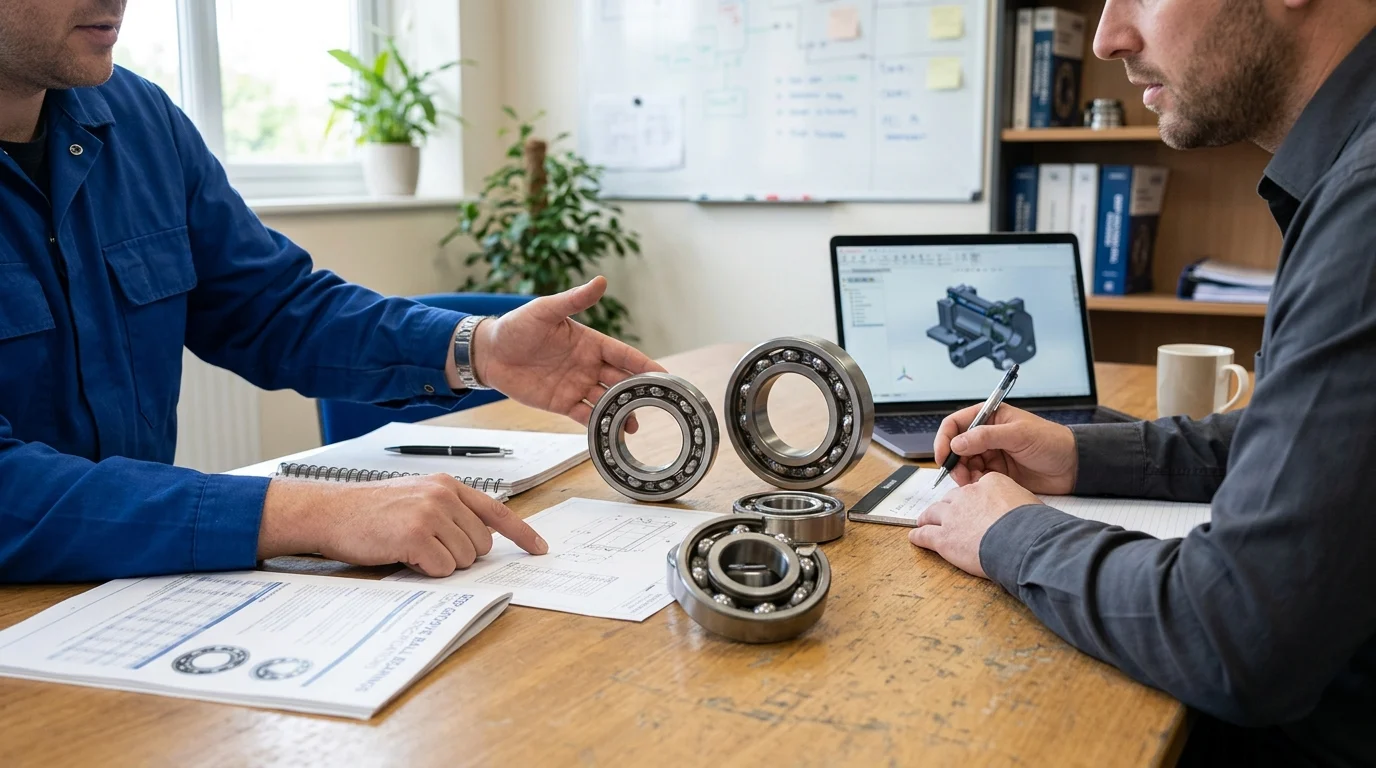
The operational flexibility of deep groove ball bearings enables their integration into a vast spectrum of industrial and consumer applications. While they are recognized for general-purpose use, the top applications demand specific engineering optimizations to maximize lifespan and efficiency.
From micro-bearings in precision medical instruments to heavy-duty variants in mining conveyors, DGBBs are engineered to meet strict vibration, noise, and load criteria across distinct sectors.
How They Are Used in Electric Motors
Electric motors represent one of the most critical and highest-volume applications for deep groove ball bearings. In these environments, bearings must operate with minimal acoustic noise and negligible vibration. Manufacturers produce Electric Motor Quality (EMQ) bearings specifically for this purpose, adhering to strict vibration velocity limits such as V3 or V4 grades.
Bearings in electric motors frequently spin between 1,500 and 30,000 RPM, depending on the frame size and application. To prevent electrical arcing and subsequent fluting damage on the raceways—a common issue in modern variable frequency drive (VFD) motors—premium DGBBs used in this sector are often equipped with ceramic coatings or hybrid ceramic balls.
Where They Deliver Value Across Industries
Beyond electric motors, deep groove ball bearings deliver critical value across a multitude of top-tier industrial applications. In the automotive sector, they are indispensable in alternators, water pumps, and gearboxes, where they must endure under-hood temperatures exceeding 120°C. Household appliances, particularly washing machines, rely on DGBBs to support drum assemblies during spin cycles reaching 1,500 RPM under highly unbalanced loads.
Other primary applications include industrial fluid pumps, HVAC centrifugal fans, conveyor rollers, agricultural machinery, medical centrifuges, textile spindles, and robotics. In each of these domains, the bearing provides a standardized, cost-effective solution that simplifies OEM assembly lines and aftermarket maintenance.
What Performance Trade Offs Matter by Application
Application-specific performance trade-offs largely center on the tension between speed capability, friction reduction, and contamination protection. Engineers must carefully evaluate the operating environment to specify the correct component.
For instance, specifying a dual-lip contact seal (2RS) provides excellent protection against liquid and particulate ingress in an agricultural application. However, the physical drag of the rubber seal against the inner ring increases torque and can reduce maximum permissible speeds by up to 30% compared to an open or shielded (ZZ) bearing. Conversely, prioritizing speed by using an open bearing necessitates external housing seals and continuous lubrication systems, increasing the overall complexity of the machine design.
How Deep Groove Ball Bearings Compare with Other Bearing Types
While deep groove ball bearings offer unmatched versatility, engineers must rigorously evaluate them against alternative rolling-element designs to ensure system reliability. Understanding the boundary limits of DGBBs prevents premature failures in extreme load or precision scenarios.
Selecting the correct bearing type requires a holistic analysis of the primary load vectors, spatial constraints, and required rotational speeds.
When to Choose Them Instead of Other Bearings
The decision to specify a deep groove ball bearing over angular contact or cylindrical roller bearings depends primarily on the nature of the applied loads. DGBBs are ideal when loads are predominantly radial with light-to-moderate axial components. When machinery subjects shafts to heavy unidirectional axial loads, angular contact ball bearings become necessary. For pure, extreme radial loads without axial forces, cylindrical roller bearings are the superior choice.
Below is a comparative baseline for standard bearing types of equivalent bore sizes:
| Bearing Type | Radial Load Capacity | Axial Load Capacity | Speed Limit | Friction Profile |
|---|---|---|---|---|
| Deep Groove Ball | Moderate | Moderate (Bidirectional) | Very High | Very Low |
| Angular Contact Ball | Moderate | High (Unidirectional) | High | Low |
| Cylindrical Roller | Very High | Zero to Very Low | High | Low to Moderate |
| Spherical Roller | Very High | Moderate | Low to Moderate | Moderate |
Which Differences in Load Capacity and Speed Limits Matter
Most
Load capacity and speed limit differentials act as the primary engineering constraints when comparing bearing types. Because cylindrical roller bearings use line contact rather than point contact, they can typically support two to three times the radial load of a similarly sized deep groove ball bearing. However, this line contact generates higher friction, limiting their maximum speed.
Conversely, deep groove ball bearings excel in high-speed applications due to their minimal point contact friction. They routinely achieve Ndm (speed factor) values exceeding 500,000 mm/min, a threshold where standard roller bearings would suffer from rapid thermal degradation. Understanding these specific numerical thresholds ensures that engineers do not over-specify a heavy-duty roller bearing when a high-speed DGBB would operate more efficiently.
Sourcing, Quality, and Compliance Factors
Securing reliable deep groove ball bearings requires strict adherence to metallurgical standards, precision manufacturing, and supply chain integrity. The bearing is a highly stressed component; a minor deviation in material quality or handling can reduce its operational life from years to mere hours.
Procurement professionals and engineers must align on quality assurance protocols, ensuring that the components sourced meet the rigorous demands of their intended industrial applications.
How Material, Heat Treatment, Cage Design, and Precision Affect
Performance
Standard deep groove ball bearings are manufactured from through-hardened carbon chromium steel, most commonly specified as 100Cr6 or SAE 52100. This steel undergoes precise heat treatment to achieve a surface hardness of 58 to 65 HRC, ensuring maximum fatigue resistance under cyclic loading. The precision of the raceway grinding is graded by ABEC (or ISO) standards; an ABEC 1 (ISO P0) bearing is suitable for standard electric motors, while machine tool spindles require ABEC 7 (ISO P4) tolerances.
Cage materials also dictate performance boundaries. Standard stamped steel cages are robust and operate reliably up to 300°C. However, high-speed or low-noise applications increasingly utilize glass-fiber reinforced polyamide (PA66) cages. These polymer cages reduce friction and noise but are strictly limited to maximum continuous operating temperatures of 120°C, requiring careful thermal management in the application.
Which Supplier Qualification and Inspection Standards Matter
Supplier qualification in the bearing industry relies heavily on standardized defect thresholds and process audits. Tier-1 automotive and aerospace suppliers mandate exceptionally tight quality control, often demanding defect rates below 10 PPM (parts per million).
Compliance with ISO 9001 is a mandatory baseline for any commercial bearing supplier, while IATF 16949 certification is required for automotive applications. Furthermore, metallurgical inspections—such as evaluating non-metallic inclusion ratings—are critical, as microscopic impurities in the steel act as stress concentrators that initiate early subsurface spalling.
How Storage, Logistics, and Counterfeit Prevention Affect Reliab
ility
The reliability of a bearing is highly sensitive to post-manufacturing logistics. Bearings pre-lubricated with grease typically have a strict shelf life of three to five years when stored in temperature-controlled environments. Beyond this window, base oil separation occurs, compromising the lubricant’s efficacy and necessitating component replacement even if the bearing has never been installed.
Counterfeit bearings represent a massive threat to global industrial reliability, with the illicit market estimated to cost the industry billions annually. Fake bearings often utilize inferior steel and inaccurate tolerances, leading to catastrophic machinery failure. To combat this, buyers must source exclusively through authorized distributors and utilize authentication technologies, such as the World Bearing Association (WBA) verification applications, to validate packaging QR codes before installation.
How Buyers and Engineers Should Choose Deep Groove Ball Bearings
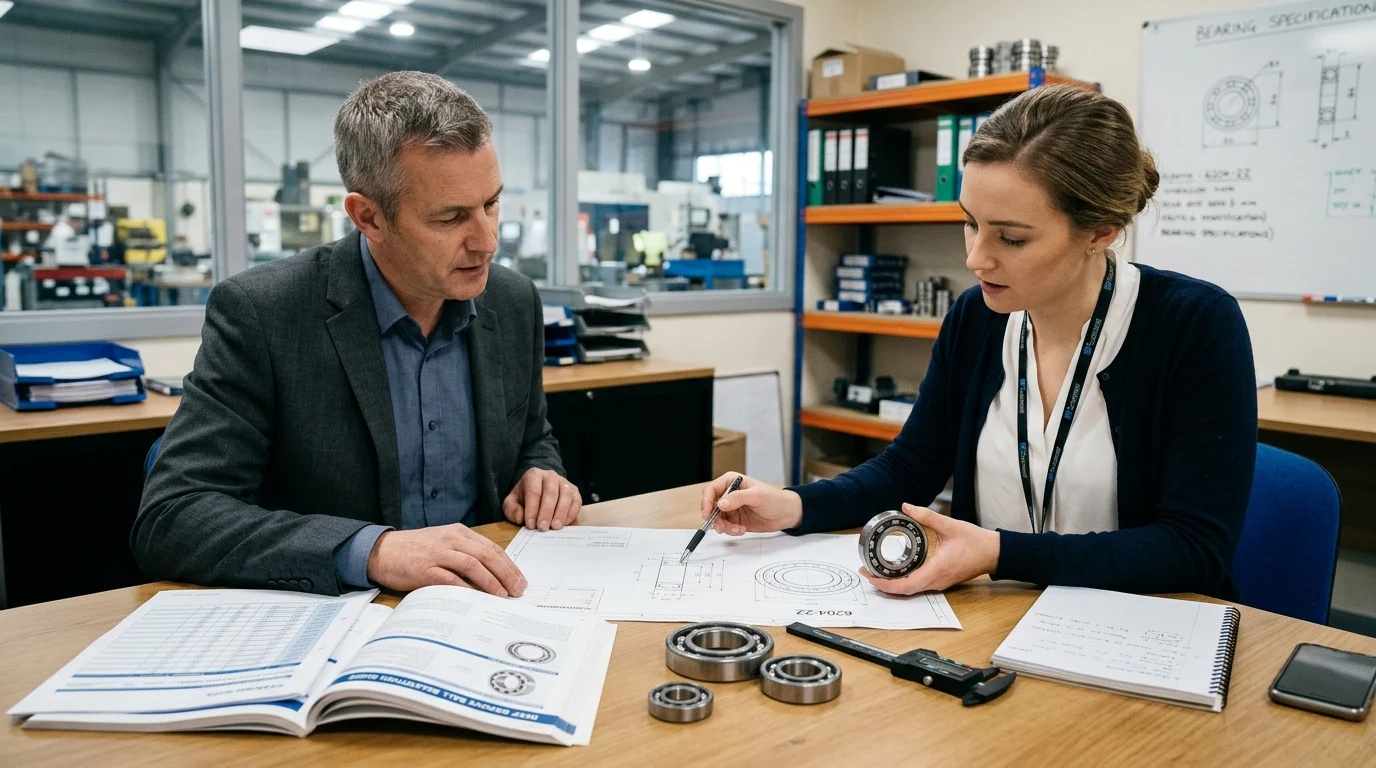
Selecting the optimal deep groove ball bearing requires a systematic approach that bridges mechanical engineering requirements with procurement realities. A successful specification process ensures the component meets theoretical life calculations while remaining financially viable.
Buyers and engineers must collaborate to move beyond simple dimensional matching, evaluating the long-term operational impact of their bearing selection.
What Step by Step Selection Process to Follow
The selection process begins with calculating the required dynamic load rating (C) and static load rating (C0) based on the application’s maximum operational forces. Engineers utilize the L10 life equation to target specific operational lifespans. For standard industrial machinery, the target is typically 20,000 to 50,000 hours, whereas critical infrastructure components, such as continuous-duty power generation turbines, may require an L10 life exceeding 100,000 hours.
After defining the load and life requirements, engineers select the bore size, internal clearance class, and sealing arrangement. This step must account for environmental factors, such as ambient dust, moisture, and operational temperatures, ensuring the chosen seal and grease combination will survive the application.
Which Decision Criteria Help Balance Uptime and Cost
Balancing uptime and cost requires shifting focus from the initial unit purchase price to the Total Cost of Ownership (TCO). A premium bearing might carry a higher upfront cost but significantly reduce maintenance intervals and energy consumption over its lifecycle.
Below is a matrix outlining key decision criteria when evaluating bearing procurement:
| Decision Criteria | Standard Commercial Grade | Premium/Precision Grade | Cost Impact |
|---|---|---|---|
| Initial Unit Price | Baseline ($) | High ($$$) | Immediate CAPEX |
| Defect Rate Target | < 1,000 PPM | < 10 PPM | Warranty & Replacement Costs |
| Standard MOQ | Low (Off-the-shelf) | High (1,000+ units) | Inventory Holding Costs |
| Expected L10 Life | 10,000 Hours | 50,000+ Hours | Long-term OPEX & Downtime |
While a premium bearing may cost $15 compared to a $5 commercial alternative, the extended L10 life can prevent a $5,000 factory downtime event. Furthermore, procurement teams must consider Minimum Order Quantities (MOQs). Standard SKUs are available off-the-shelf with low MOQs, but requesting custom grease fills or specialized clearances often triggers MOQs of 1,000 units or more, directly impacting inventory management and capital allocation.
Key Takeaways
- The most important conclusions and rationale for Deep Groove Ball Bearings
- Specs, compliance, and risk checks worth validating before you commit
- Practical next steps and caveats readers can apply immediately
Frequently Asked Questions
Why are deep groove ball bearings used so widely in industry?
They combine low friction, high speed capability, and support for radial plus moderate axial loads, making them a practical default for many rotating machines.
Which applications commonly use deep groove ball bearings?
Typical uses include electric motors, pumps, HVAC fans, conveyor rollers, automotive alternators, agricultural equipment, textile machines, and household appliances.
How do I choose between ZZ and 2RS deep groove ball bearings?
Use ZZ shields for clean, high-speed environments. Choose 2RS seals when dust, moisture, or debris is present and contamination protection matters more than maximum speed.
When should I select C3 clearance instead of standard CN?
Choose C3 when the bearing runs hotter, faster, or under tighter fits, such as in motors or pumps, to allow thermal expansion and avoid premature seizure.
Can DEMY supply deep groove ball bearings for OEM and distributor needs?
Yes. DEMY offers catalog-based deep groove ball bearings with precision, low-noise, and long-life options suited for OEMs, distributors, motors, conveyors, and automotive applications.
Post time: Apr-22-2026